Dark matter accumulation in celestial bodies studied by researchers
Researchers have investigated dark matter accumulation within planets and stars, using theoretical calculations combined with existing observations.
Dark matter continues to elude direct detection, but researchers are exploring alternative approaches to tracking it down. One potential method is to look for signs of dark matter accumulation within celestial bodies like planets and stars.
Alejandro Ibarra and his team have been investigating this scenario by combining theoretical calculations with existing observations. By doing so, they hope to uncover subtle effects that might betray the presence of dark matter particles.
The researchers' study, published in a leading astrophysics journal, has shed new light on our understanding of dark matter's properties. Although it accounts for approximately 85% of the universe's mass-energy budget, dark matter remains frustratingly elusive.
Dark matter is thought to interact with normal matter primarily through gravity, but some theories propose that it may also possess electric or magnetic properties. If this is the case, its particles might exhibit tiny electric charges or behave like miniature magnets.
Detecting dark matter particles can be a challenging task due to their potential to interact with celestial bodies in various ways. If a particle collides with material in a detector at a low speed, it might not transfer enough energy to leave a measurable signal.
However, the situation changes when such particles pass through a massive object like a planet or star. In this scenario, they would need to lose only a small amount of energy during collisions to become trapped by the celestial body's gravity.
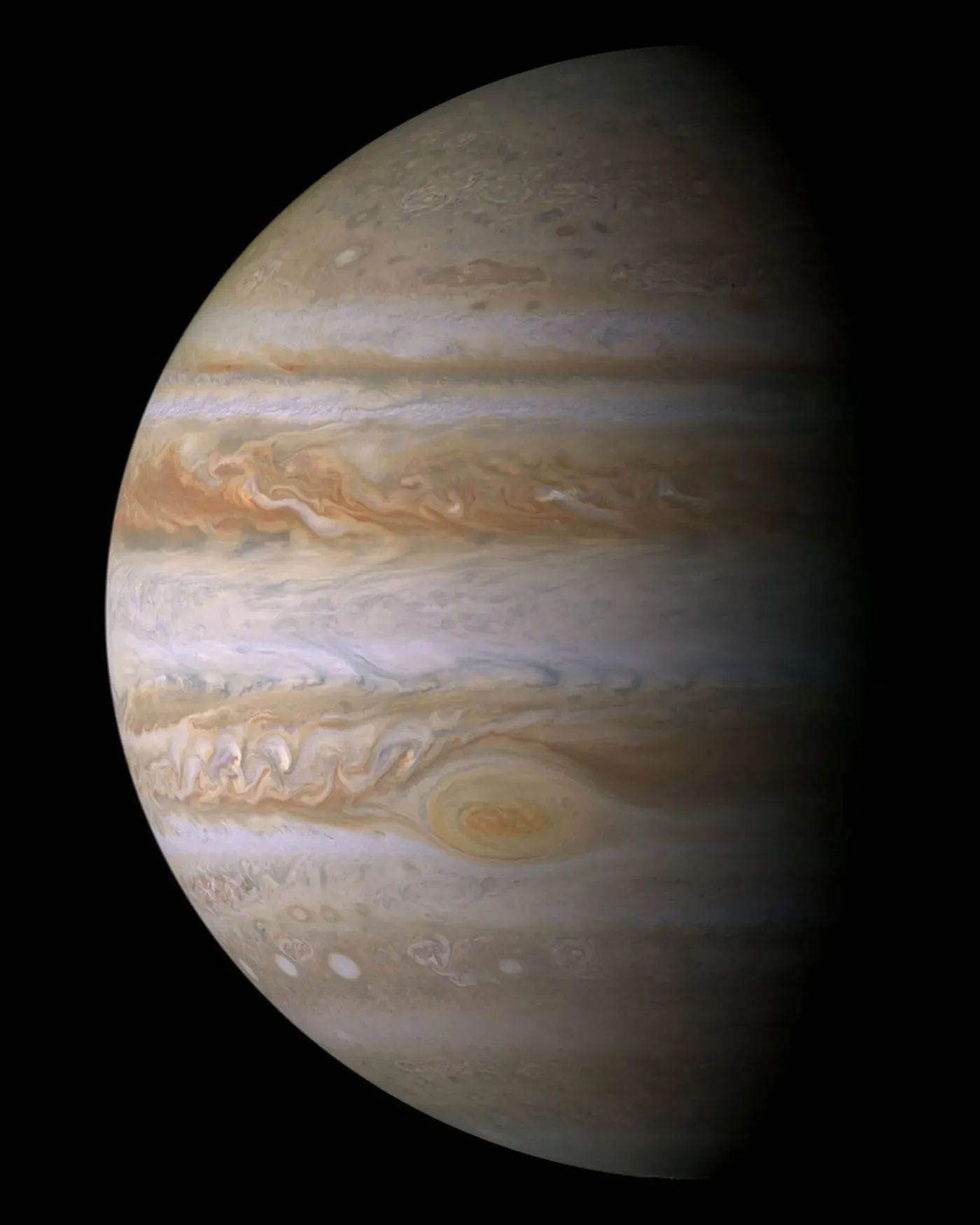
The team's calculations for Jupiter and white dwarfs focused on heat production rather than nuclear fusion. This was because these celestial bodies are not powered by nuclear reactions, making them more suitable for detecting additional heat sources. By determining how much heat dark matter would generate, the researchers compared it with the actual energy emitted by each body.
The analysis revealed that some combinations of particle mass and properties, previously left open by other experiments, could be ruled out based on their findings. Earth proved to be an effective testing ground for a specific property, the possibility of a tiny electric charge. In contrast, white dwarfs provided valuable insights into the limits of other electromagnetic characteristics.
The researchers' results rely heavily on assumptions made during calculations, including estimates of dark matter surrounding the stars. The more dark matter present in the vicinity, the greater the potential for particles to be captured by the star over time.
The accuracy of these findings is sensitive to variations in estimated values, particularly those related to the M4 cluster. This cluster contains white dwarfs studied in the research and has an unmeasured, estimated dark matter density based on theoretical models.
The research suggests that future searches for dark matter should focus on even colder white dwarfs located within denser regions of dark matter. These areas would be ideal for detecting any additional heating caused by interactions between dark matter and electromagnetic forces.
In addition to these celestial bodies, the study also points to exoplanets as potential traps for dark matter beyond our solar system.
Facts based on reporting originally published by Phys.org.
You may republish this story, in full or in part, if you credit News Central Site and link to it (licence CC BY 4.0). Photos are not included.