Tulåh Clinical Wellness Opens in Kerala Combining Ayurveda and Modern Medicine
The wellness retreat in Kerala, India blends ancient traditions with modern medicine to offer a unique approach to longevity-focused care.
A new wellness retreat has opened in Kerala, India, blending ancient traditions with modern medicine in a unique approach to longevity-focused care.
The country's rich spiritual heritage is evident in its numerous wellness centers, scattered across the Himalayas, Goa's beaches, and Varanasi's sacred riverbanks.
As an author who explores ancient health traditions worldwide, I've had the privilege of visiting many such centers over the past decade.
My husband, a Delhiite by birth, often joins me on these trips to India, where we live in New York but visit regularly to stay with family and explore the country together.
That's why I was intrigued when I heard about Tulåh Clinical Wellness, which opened earlier this year in Kerala and combines traditional Ayurveda with modern diagnostic testing.
While some Indian wellness retreats have already incorporated a mix of global healing traditions, Tulåh's blend is more akin to a clinical European med spa, but one rooted in ancient medicine.
Its location in Kerala was particularly notable, given the state's history as the epicenter of Ayurveda in India.
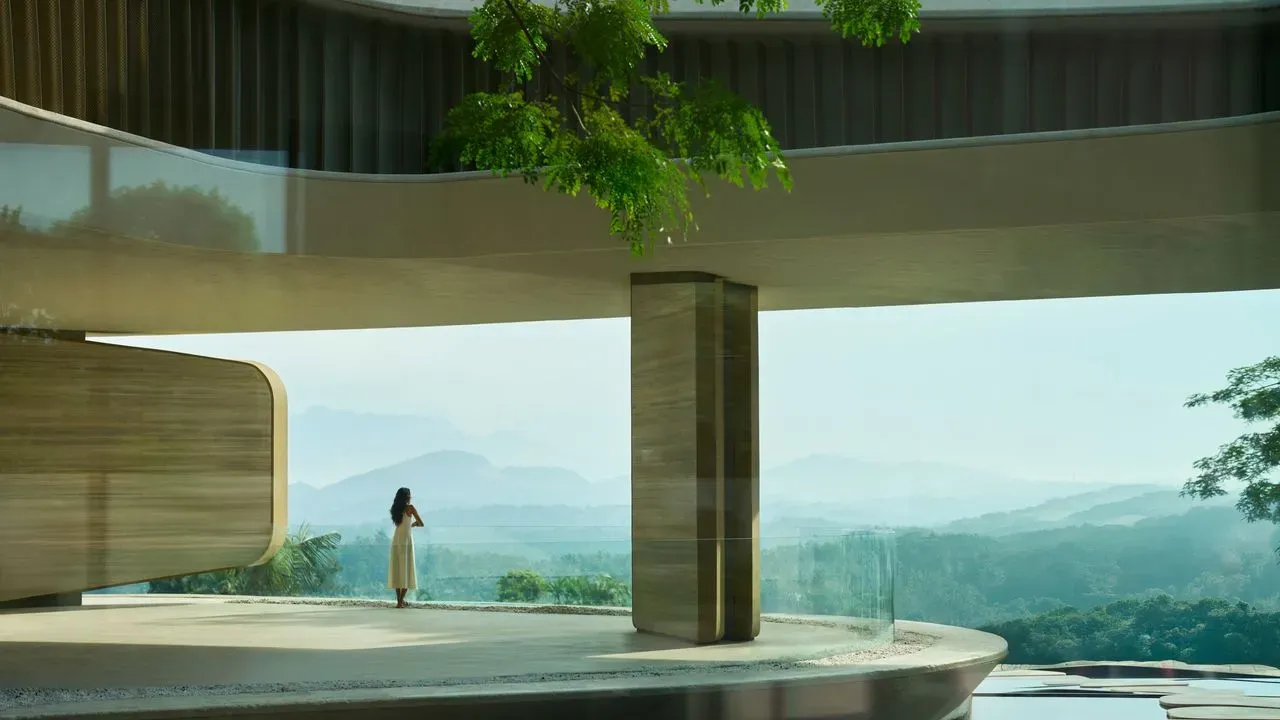
The 30-acre property of Tulåh is situated amidst a rewilded forest and medicinal gardens within the Western Ghats mountain range. The lush surroundings are characterized by an abundance of healing herbs and plants that infuse the air with a distinct earthy scent.
As I began my stay, I was greeted with a refreshing watermelon elixir welcome drink and given a tour of the property. This international wellness campus-like setting is enhanced by its Indian heritage, making it feel even more global than expected.
The sanctuary's design draws inspiration from Auroville, an experimental community in Tamil Nadu that brings people together to live in harmony across cultures. Tulåh, which means "balance" in Sanskrit, embodies a similar world-blending vibe.
The property's 65 suites were designed by Lami Architects and are built on the site of a former cotton mill. From the outside, the sleek, flowing curves give a nod to the legendary Zaha Hadid's style.
Inside the nine main buildings, minimalist interiors focus on Indian craftsmanship, featuring terrazzo floors sourced from artisans in Rajasthan, handwoven earth-toned rugs, and marble from Uttar Pradesh. Plush furniture designed by a studio in Kerala adds a touch of local elegance.
As I explored the property, the soundscape shifted seamlessly between French electro-pop duo Poom's music and a bamboo flutist performing peaceful South Indian Carnatic meditations in the lobby. This deliberate mix of influences is thoughtfully curated to create an immersive experience.
The brain behind this unique blend of traditions is founder Faizal Kottikollon, an entrepreneur and philanthropist born in Kerala who later settled in Dubai. He drew from his upbringing in Ayurveda and his engineering background to craft a holistic wellness retreat that blends the best of both worlds.
Kottikollon's wellness retreat, Tulåh, has been making waves since its February opening, and it seems his holistic approach is paying off.
The 21-day panchakarma treatment and mamsa kizhi massages with warm cloth bundles of goat meat, milk, rice, and herbs are just a few examples of the traditional Ayurvedic practices being used at Tulåh.
These treatments have been shown to be highly effective in strengthening muscle tissues, as evidenced by Kottikollon's own experience.
He underwent the treatment after suffering from compression issues, and his subsequent MRI scans revealed that he had made significant progress towards recovery.
In fact, today Kottikollon claims to be 99% recovered from his condition, a testament to the effectiveness of Ayurvedic medicine in conjunction with modern medical practices.
When asked about his experience, Kottikollon emphasized the importance of integrating traditional and modern medicine rather than pitting them against each other as separate entities.
He believes that this integration is key to unlocking the full potential of holistic wellness.
Kottikollon's vision for Tulåh has come a long way since its inception, with his $100 million investment being put towards creating a truly unique and effective wellness retreat.
The wellness program continued with a series of treatments aimed at reducing kapha, a concept rooted in ancient Ayurvedic practices. These sessions were interspersed with more modern medical testing to assess overall health and longevity.
Tests included a chest X-ray, a CAC scan, a DXA scan, an MRI - a daunting prospect for those who fear enclosed spaces - as well as dental appointments, psychological assessments, and mobility and fitness consultations. The variety of tests was extensive, but each one contributed to the bigger picture of overall health.
The contrast between ancient therapies like shirodhara and modern medical procedures could be jarring at times. However, the underlying goal remained constant: self-knowledge and understanding. This focus on personal growth made even the most intimidating experiences feel worthwhile.
The experience had a familiar quality to it - attending classes in school, with each subject represented by a different teacher. In this case, the subjects were aspects of one's own health and wellness, brought together in the MDM meeting.
This multidisciplinary team gathering is at the heart of Kottikollon's vision for Tulåh: representatives from nine departments converge to discuss individual results and create customized plans for the duration of their stay. The meeting is a testament to the integration of different approaches to health and wellness.
The thought of all these experts discussing one's progress and needs can be unsettling, but in this context, it was clear that every decision was made with the best interests at heart. This emphasis on collaboration and comprehensive care is a hallmark of Tulåh's approach.
One key aspect of the MDM meeting is the calculation of an individual's Tulåh Life Index - a proprietary score derived from bloodwork, body composition results, lifestyle factors, and more. The index provides a snapshot of one's overall function, with a target score of 70 or above considered optimal.
The wellness retreat in Kerala has taken a holistic approach by incorporating modern medicine into its traditional practices.
Fertility doctors advise against strength training during IVF treatments due to the risk of ovarian torsion, which is a valid concern for those undergoing this procedure.
A period of IVF can be daunting and intimidating, but it's essential to prioritize one's overall health, especially when trying to conceive.
Regaining muscle mass becomes more pressing with age, and in this case, the doctors recommended making it a top priority due to the individual's advancing years.
The personalized approach to treatments and meals at the retreat is tailored to each guest's specific needs, taking into account their unique circumstances and requirements.
Customized high-protein meals were prepared using locally-grown ingredients, incorporating South Indian fish curries and North Indian specialties like chicken tikka and chana masala.
In addition to traditional Ayurvedic treatments, the retreat now offers a range of modern therapies including aquatic fitness and clinical yoga with a focus on alignment.
The staff at the retreat is known for their exceptional care and kindness, going above and beyond to ensure each guest feels comfortable and supported throughout their stay.
The staff at this wellness retreat goes above and beyond to ensure each guest feels comfortable throughout their stay, including providing a personalized service after treatments.
Guests are treated to a post-treatment care package that includes a shampoo and condition on the spot, eliminating the need for them to rinse off medicated oil in the shower. This thoughtful gesture is especially appreciated by those who have struggled with removing Ayurvedic oil from their skin.
The retreat's founder hopes this approach will make ancient traditions like Ayurveda more accessible to mainstream audiences. By blending traditional practices with modern medicine, he believes Ayurveda can be adopted more widely and become a more integral part of people's lives.
According to the founder, one reason why Ayurveda has not been more widely adopted is because of its association with slippery wooden beds that leave guests covered in oil. He argues that this practical issue has contributed to Ayurveda's relatively low profile.
The retreat's unique approach has a lasting impact on guests, who often report making positive changes to their lifestyle after leaving. For one guest, the experience was so transformative that they continued their wellness journey at home, incorporating strength training into their routine as part of a broader commitment to self-care.
Facts based on reporting originally published by Vogue.
You may republish this story, in full or in part, if you credit News Central Site and link to it (licence CC BY 4.0). Photos are not included.