Sequencing a Whole Humpback Whale Genome Using Drones
Researchers have successfully sequenced a whole humpback whale genome using drones to collect blow samples, eliminating invasive sampling methods.
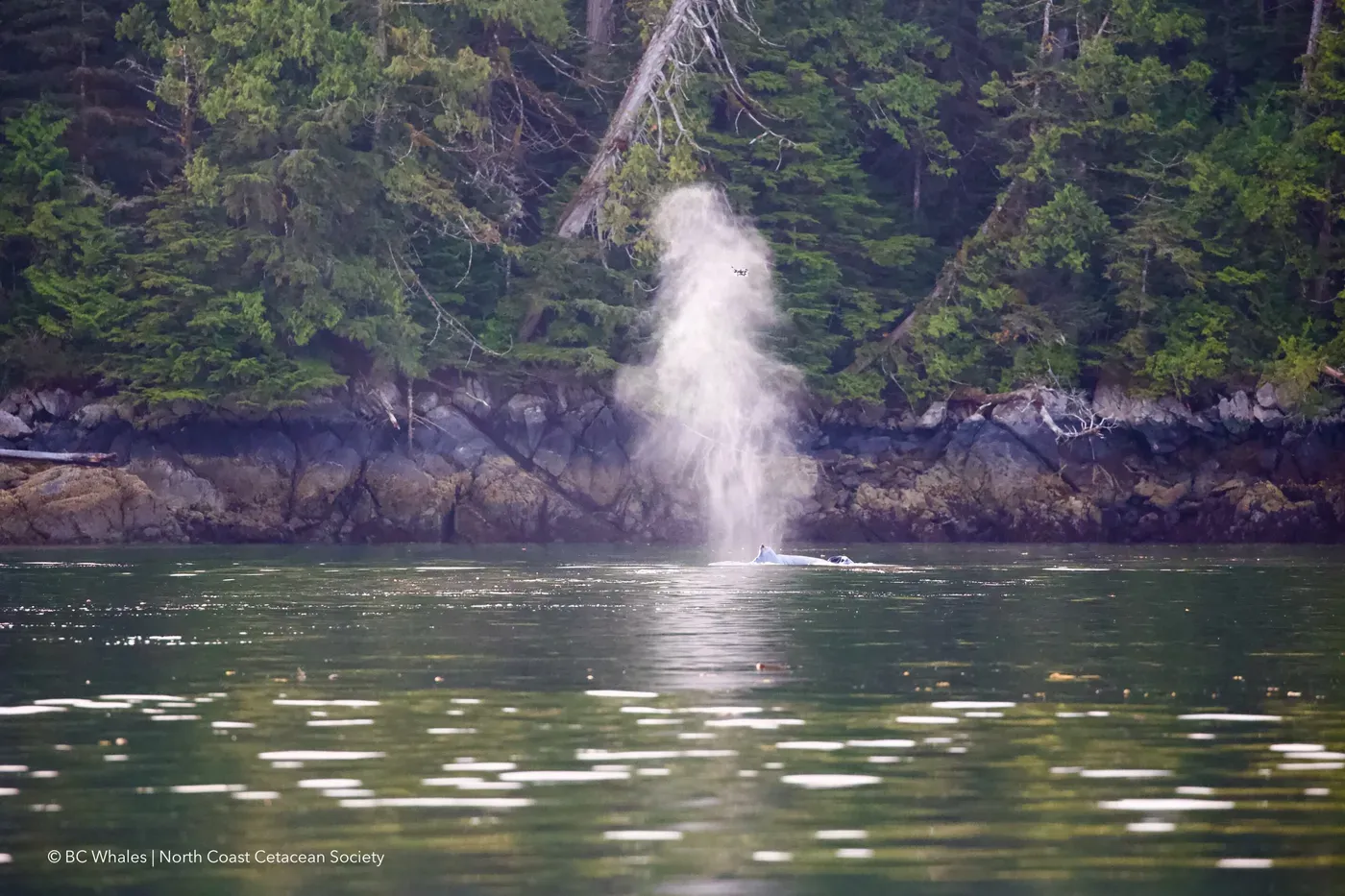
A groundbreaking research project has successfully sequenced a whole humpback whale genome using a unique method that eliminates the need for invasive sampling methods.
The study, conducted by researchers from the University of St Andrews and their collaborators at the University of Copenhagen, the North Coast Cetacean Society, and Fisheries and Oceans Canada, marks a significant breakthrough in conservation efforts.
Sequencing an entire whale genome is crucial for understanding population health, genetic diversity, and effective population size. This information can be used to inform management decisions and develop targeted conservation strategies.
Until now, obtaining genomic data from whales has been challenging due to the invasive nature of sampling methods such as biopsies or close boat approaches. These methods not only disturb the animals but are also sometimes prohibited in certain areas.
Researchers have developed a novel approach that uses small drones equipped with sterile petri dishes to collect samples from humpback whales off the coast of British Columbia.
The novel approach of collecting blow samples from humpback whales using drones has been yielding valuable insights into the genetic makeup of these marine mammals. With 58 blow samples collected from 26 individual whales, researchers have been able to estimate that about 84% of the DNA in each sample comes directly from the whale itself.
To minimize contamination and ensure accurate results, scientists took great care in their sampling methods. They targeted the most upwind whale in a group to avoid mixing DNA from different individuals, and flights were ceased if a whale showed any sign of distress during the sampling process. Moreover, more than a third of samples were collected by flying drones directly from land, eliminating the need for boats.
The genetic data obtained from these blow samples has been impressive, with researchers able to produce low-coverage nuclear genomes and high-coverage mitochondrial genomes. The latter provides information on the maternal lineage of each individual, while the former offers insights into inherited traits from both parents. This comprehensive genetic information is a significant advancement in understanding humpback whale populations.
Interestingly, researchers have found that genetic diversity estimated from blow samples closely matches estimates obtained through traditional biopsies. Furthermore, the population studied shows little evidence of recent inbreeding, suggesting a relatively healthy and diverse gene pool. The small proportion of identical DNA stretches may indicate distant shared ancestry or past population bottlenecks.
This groundbreaking research has provided a significant contribution to our understanding of North Pacific humpback whales by generating a large-scale whole-genome data set for this population. Prior to this study, only one publicly available genome was known from the region.
The study's findings have significant implications for understanding the social dynamics of humpback whales in northern British Columbia. Researchers used blow-derived genomes to assess population structure, health, kinship, and family ties among the whales.
Genetic analyses confirmed that North Pacific humpback whales are distinct from their North Atlantic counterparts, validating the use of blow-derived data as a reliable method for genomic analysis. The drone-captured genetic information correctly identified each whale's sex and revealed three previously unknown mitochondrial DNA variants.
The researchers also discovered that approximately 16% of the DNA in each blow sample originates from microorganisms living in the whale's airways, providing a unique window into both the whale's health and its respiratory microbiome. This finding suggests that analyzing a single breath could reveal valuable information about an individual whale's well-being.
The research was conducted in collaboration with the Gitga'at First Nation and under agreements between the Gitga'at First Nation and the North Coast Cetacean Society. Drone flights were carried out with a Fisheries and Oceans Canada research permit, and all work was approved by the University of St Andrews' Animal Welfare and Ethics Review Body.
The study's focus on non-invasive sampling methods has significant implications for future research into marine mammal populations, allowing scientists to gather valuable data without disrupting or harming the whales themselves.
The study highlights a significant breakthrough in non-invasive sampling methods for marine mammals. By analyzing blow samples from humpback whales, researchers were able to obtain whole-genome sequences without causing harm or disruption to the animals.
This innovative approach has far-reaching implications for future research into whale populations. It eliminates the need for invasive procedures and allows scientists to gather valuable genetic data in a more efficient and humane manner.
Facts based on reporting originally published by Phys.org.
You may republish this story, in full or in part, if you credit News Central Site and link to it (licence CC BY 4.0). Photos are not included.