Wasps Recognize Faces of Nestmates through Neural Correlates
A new study published in the journal Cell has found that wasps use a distinct group of brain cells to recognize individual faces.
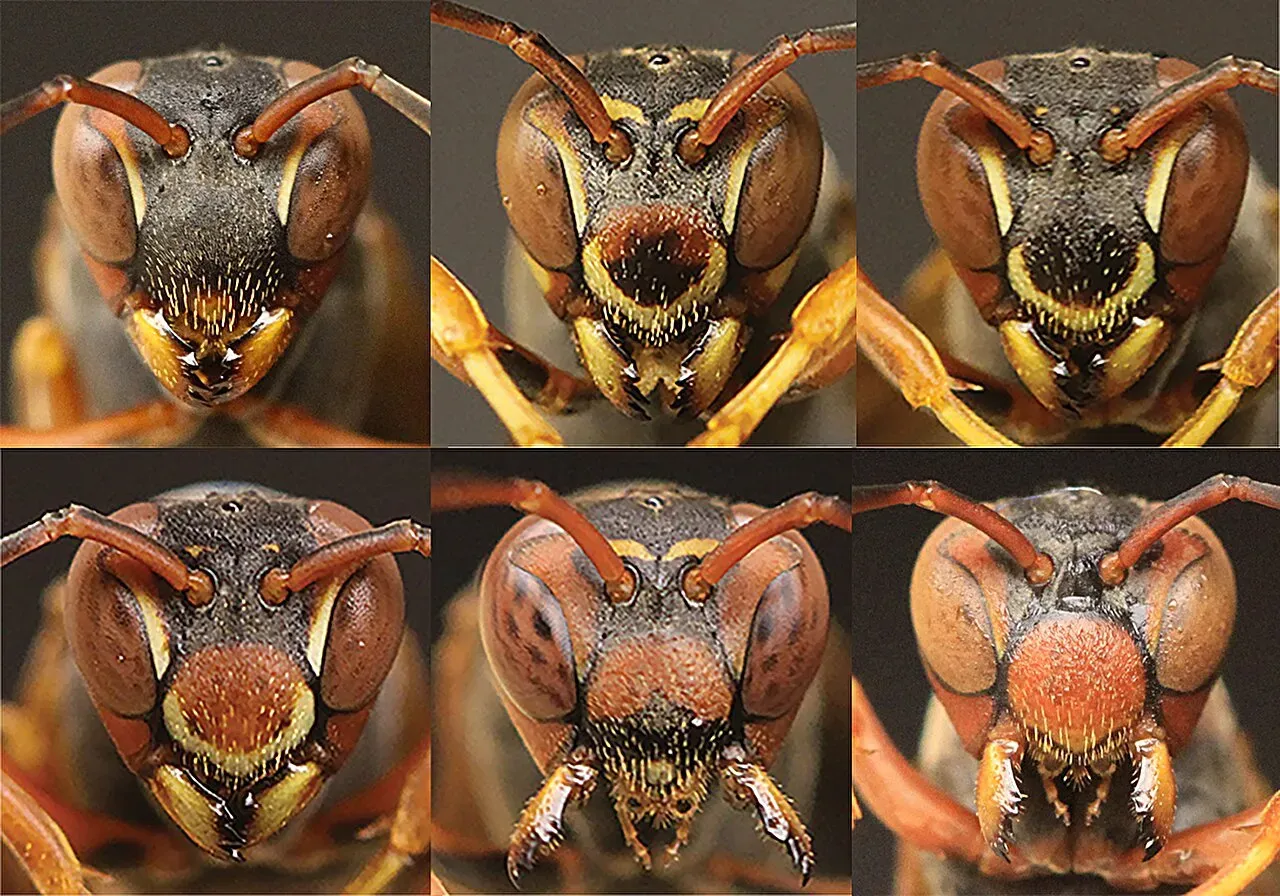
Research from Wake Forest University has shed light on how wasps recognize the faces of their nestmates, a skill shared by humans in distinguishing friends from foes and loved ones.
The study, led by Christopher Jernigan, assistant professor of biology, offers new insights into how animals process social visual information to distinguish one face from another. This research is part of a broader effort to understand the neural mechanisms behind facial recognition across species. The findings have implications for understanding human behavior as well.
Jernigan's team collaborated with researchers at Cornell University to investigate the neural correlates of facial recognition in wasps. Their work appears in the journal Cell, where they present their study titled "Neural correlates of facial recognition in a social wasp."
The study's findings reveal that a distinct group of brain cells responds to images of other wasps, enabling them to recognize individual faces.
Researchers have been studying Polistes fuscatus, also known as the northern paper wasp, which is found in colonies across eastern and central North America, from southern Canada through Florida and Texas. These small animals build complex nests under building eaves and on porch ceilings. Their papery, umbrella-shaped structures are made up of hexagonal cells.
Facial recognition plays a crucial role in maintaining social order within the wasp colony, particularly among females who establish a hierarchy. By recognizing individual faces, they can avoid constant conflicts for dominance and maintain day-to-day social harmony without needing to constantly battle each other.
The use of facial recognition by these wasps raises interesting questions about the evolution of this ability across different species, including humans.
The ability of paper wasps to distinguish between different faces is a remarkable feat considering their tiny brain size, equivalent to that of a grain of rice. This complex task of recognizing and remembering individual faces requires significant cognitive processing power, yet these wasps are capable of achieving it with ease.
Their social behavior also reveals another fascinating aspect of their ability to recognize each other. When two unknown wasps engage in combat, a third wasp can observe the outcome and adjust its behavior accordingly upon meeting one of them. This is known as social eavesdropping, where the observer wasp learns from the conflict between others to inform its own interactions.
The researchers involved in this study have provided valuable insights into the social lives of paper wasps. Despite their relatively simple vision system, these wasps exhibit complex social dynamics that are centered around their ability to recognize one another. This specialized capacity allows them to establish dominance hierarchies within their nests through a series of conflicts and interactions.
The next stage in this research will be to explore the nuances of facial recognition in paper wasps, including whether they can distinguish between different facial expressions. This will provide further understanding into the evolution of this ability across various species, including humans.
The study of wasp facial recognition has revealed a surprising similarity to human-like abilities.
Researchers have found that social wasps possess specialized brain cells capable of recognizing other wasp faces, a trait not typically associated with insects. This ability is remarkable in its own right, and the fact that it involves neural computations similar to those used by humans is almost unbelievable. The sheer number of neural connections required to achieve this task is a testament to the complexity of insect cognition.
The discovery highlights the intricate social structures found within wasp colonies, where individual recognition plays a crucial role in maintaining order and cooperation. Facial recognition may be an essential component in allowing wasps to distinguish between kin and non-kin, facilitating more effective communication and decision-making within the colony.
This research will provide further understanding into the evolution of this ability across various species, including humans.
Facts based on reporting originally published by Phys.org.
You may republish this story, in full or in part, if you credit News Central Site and link to it (licence CC BY 4.0). Photos are not included.