Monarch Butterflies' Migration Routes Mapped with Tiny Tracking Devices
A team of scientists has begun attaching tiny tracking devices to hundreds of monarch butterflies to monitor their movements in real-time. The study aims to identify key areas for conservation and help safeguard the future of these vital pollinators.
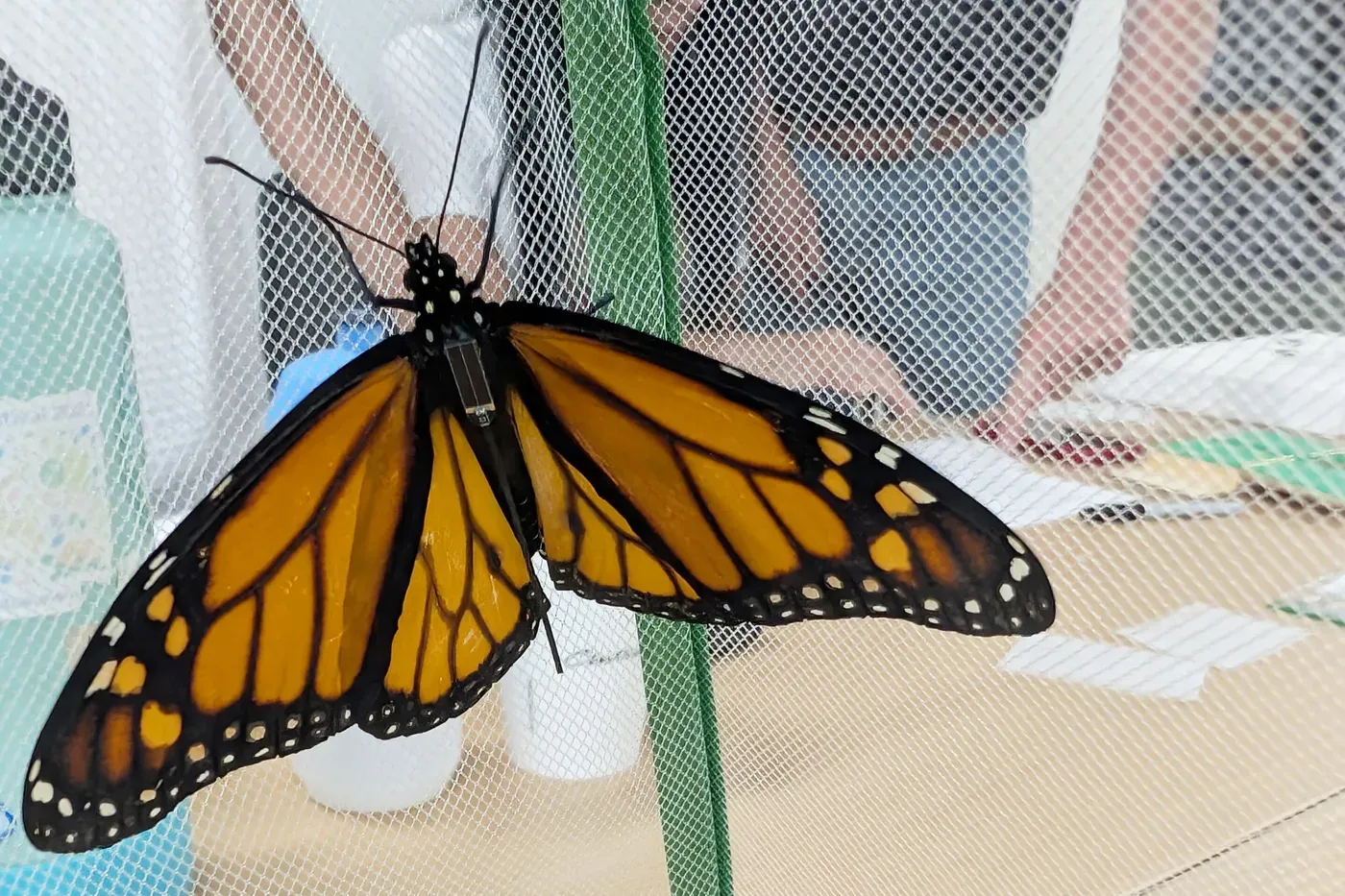
Monarch butterflies are known for their incredible annual migration from Canada to Mexico, a journey that spans over 3,000 miles and relies on complex environmental cues.
Researchers have long struggled to map out these routes, as well as identify the specific stopover locations where monarchs rest and refuel along the way. This lack of understanding has hindered efforts to protect these vital habitats from destruction.
In an effort to shed light on this phenomenon, a team of scientists has begun attaching tiny tracking devices to hundreds of monarch butterflies. The solar-powered radio tags will allow researchers to monitor the butterflies' movements in real-time and pinpoint their exact locations.
The research is particularly timely given the alarming decline of monarch populations due to habitat loss, pesticide use, and climate change. By gaining a better understanding of these magnificent creatures' migration patterns, scientists hope to identify key areas for conservation and help safeguard their future.
The importance of pollinators like monarch butterflies cannot be overstated. Not only do they play a vital role in maintaining healthy ecosystems, but they are also crucial for providing food sources that humans rely on.
To track the migration patterns of these magnificent creatures, researchers have been using tiny trackers attached to individual butterflies. The public can follow the progress of these tracked butterflies through a free app called Project Monarch Science.
The study being led by senior scientist Quiñonez-Piñón at the National Wildlife Federation is combining real-time migratory tracking with community science to gain a better understanding of where monarchs stop in Texas during their migration. This research is particularly focused on the "Texas funnel," a narrow corridor through which many eastern monarchs pass.
Interestingly, not all monarch butterflies migrate. Those that do fly through this corridor every fall and spring, heading north again to lay eggs before dying. However, depending on the year, they may favor different parts of Texas based on factors such as water availability, nectar sources, and overnight shelters like trees.
Recent tracking data has revealed some fascinating insights into monarch migration patterns. For instance, researchers have found evidence that butterflies from both east and west of the Rockies are converging in central Mexico, a phenomenon not previously seen in such numbers. Some monarchs have even migrated down the Eastern Seaboard to Florida, while others have jumped the Gulf of Mexico and are now tracking across Mexico.
The tiny trackers attached to monarch butterflies have provided a wealth of new information about their migration patterns. Researchers are thrilled with the results so far, despite initial concerns that older tracking devices were too big or heavy for the delicate creatures.
In just one year, over 175 tagged monarchs have been detected in Mexico, where many of these iconic insects migrate to spend the winter months. This is a significant milestone in the study, which aims to shed light on the mysterious movements of these beloved butterflies.
The tags themselves are incredibly small, weighing about as much as a drop of water and costing $200 each. According to Quiñonez-Piñón, the person attaching the tag must be properly trained and put it on correctly in order for the monarch to remain safe.
Not all monarchs are suitable for tagging, however. To avoid overburdening the insects, researchers typically look for individuals that weigh more than 400 milligrams, roughly equivalent to a standard pill. This ensures that the tags do not hinder the butterflies' flight or overall health.
The delicate process of tagging monarch butterflies requires great care to ensure their well-being is not compromised. To prepare them for the procedure, researchers use nets to catch the insects and then keep them in a cool environment to calm them down. Once tranquilized, the butterfly is placed on a special board with its legs and antennae protected, where a small amount of adhesive is carefully applied to its abdomen.
The tagging process itself involves attaching a tiny transmitter to the butterfly's body using a gentle pressing motion. This device allows researchers to track the monarch's movements without hindering its flight or overall health. The butterfly is then released back into the wild, free to continue its journey.
According to Louie Yang, an insect ecologist at the University of California, Davis, the technology used in these tags is quite impressive. He notes that it has enabled researchers to observe and track monarchs' paths and movements over long distances, something previously not possible with this level of detail.
However, there are limitations to what can be determined using these trackers. Yang points out that the devices do not provide exact locations for each butterfly but rather indicate where a receiver has detected its signal. This means that even if a butterfly is tracked, it does not necessarily mean it remains alive and active throughout its journey.
The lifespan of monarch butterflies varies greatly depending on their migratory habits. Those that migrate to Mexico can live up to nine months, significantly longer than the two to six weeks typically seen in other monarchs. This remarkable endurance allows them to spend years moving between their summer breeding grounds and wintering sites in Mexico before returning north again in the spring.
The eastern monarch butterfly population has experienced a staggering decline of over 80% since the mid-1990s, while their western counterparts have seen an almost identical drop of around 95%. These alarming numbers are largely attributed to the widespread use of pesticides, which pose a significant threat to milkweed - the sole food source for monarch caterpillars and the exclusive plant where eggs are laid.
Human-induced climate change is another major concern, driven by the burning of fossil fuels such as coal, oil, and gas. According to Tierra Curry, senior scientist at the Center for Biological Diversity, this persistent threat affects monarchs year-round. She notes that prolonged heatwaves in northern regions disrupt the natural migratory cues, making it difficult for the butterflies to reach their wintering grounds in Mexico.
The timing of migration is critical, and any delay can have devastating consequences. Curry warns that if temperatures remain high for too long, the chances of monarchs reaching Mexico are severely reduced. Conversely, if the temperature drops, they may not survive the harsh conditions. The prolonged drought, which dries up water and nectar sources, further exacerbates their plight.
In addition to environmental challenges, monarchs face other hazards such as collisions with cars and trucks. In California, the destruction of forests where western monarchs winter has been a major concern due to development activities. Furthermore, the Trump administration's decision to delay federal protections for monarchs last year sparked controversy, prompting several groups to file a lawsuit. A court subsequently ordered the government to make a final decision by 2030.
Conservation efforts are underway to safeguard the declining monarch butterfly population despite the challenges posed by tracking their migration. In Texas, a novel approach involves installing nets on highways to encourage butterflies to fly higher and avoid being crushed, particularly at night when they roost.
The initiative is complemented by large-scale plantings of milkweed and pollinator plants in gardens, along roadsides, and transportation corridors, according to conservationists. Several studies have shown that these efforts are indeed boosting local monarch populations, providing a glimmer of hope for the species' survival.
Facts based on reporting originally published by Phys.org.
You may republish this story, in full or in part, if you credit News Central Site and link to it (licence CC BY 4.0). Photos are not included.