Fossils from Haitian Cave Identified as Snipe Rather Than Woodcock
Researchers at the Florida Museum of Natural History have reidentified fossils from a Haitian cave as belonging to an extinct snipe species rather than a woodcock.
A surprising twist has emerged in the study of long-distance bird migration, with researchers at the Florida Museum of Natural History making a significant discovery about an extinct bird species from Hispaniola.
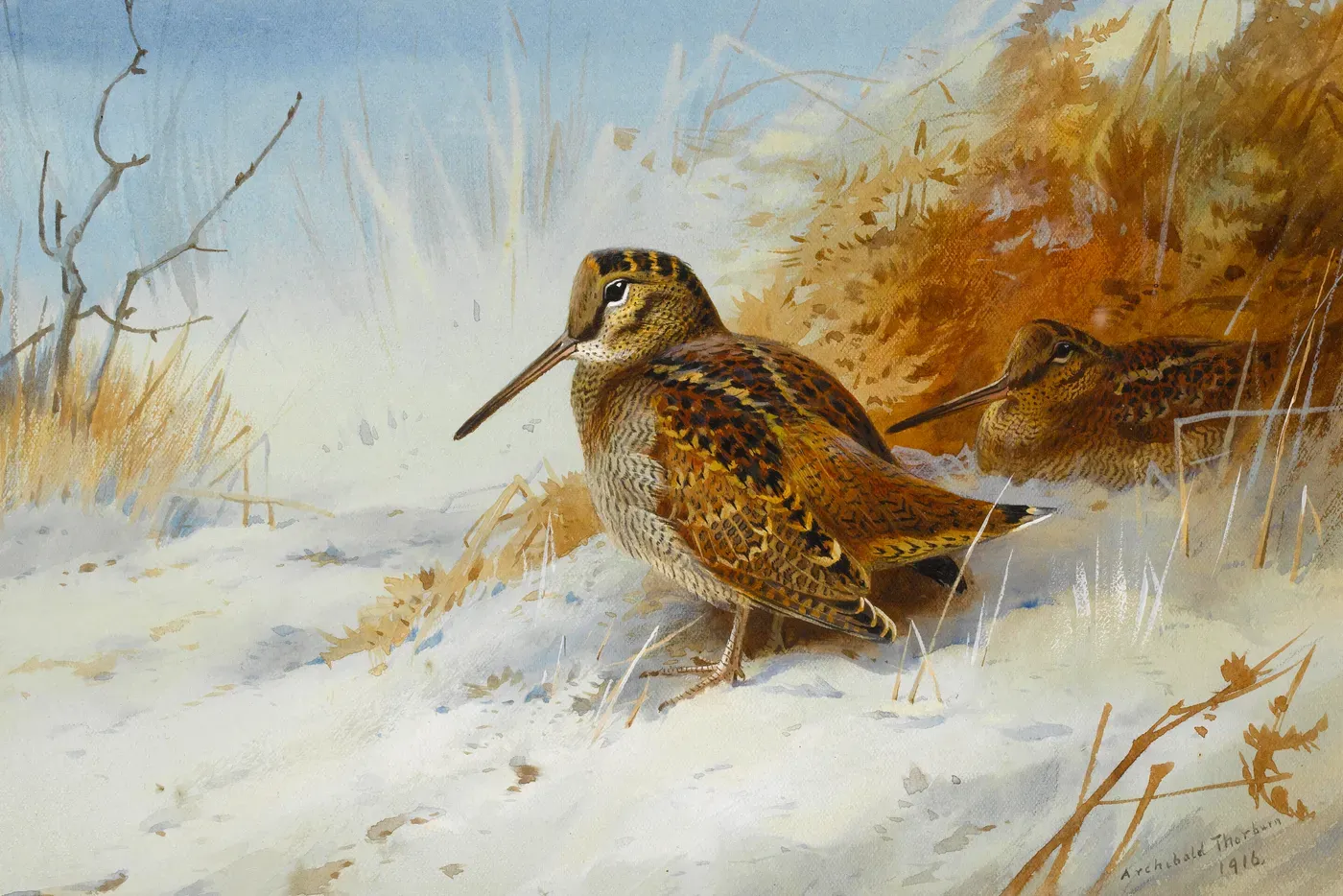
The story began with a woodcock that was identified as such in 2015 based on fossils excavated by museum researchers in 1984 from a Haitian cave. However, further analysis has revealed a surprising truth - these fossils were not actually of a woodcock but rather of a snipe.
Woodcocks and snipes are closely related birds that share a common ancestor who lived around 25 million years ago. They can often be mistaken for one another due to their similarities in appearance. The misidentified snipe had short wings and big legs, characteristics commonly found in island birds compared to its closest relatives.
A new study published in the Proceedings of the National Academy of Sciences has shed light on this discovery by sequencing ancient DNA from the fossil specimens. This analysis revealed that the fossils were indeed of a snipe rather than a woodcock.
The research team's findings are significant because they challenge previous assumptions about the identity of these fossils. The team's efforts have also raised questions about migration and evolution in birds, particularly those species known for their long-distance flights across hemispheres.
The study's lead researcher, Min Zhao, noted that the whole story began with an extinct bird from Hispaniola. However, it is not just this particular species that has sparked interest among scientists but rather the broader implications of its migration patterns and evolutionary history.
Further analysis of these findings will provide valuable insights into the complex relationships between birds, their habitats, and the environments they inhabit during long-distance migrations.
The incredible journey of shorebirds continues to fascinate scientists, as new discoveries reveal the remarkable feats of endurance achieved by these birds during their long-distance migrations.
Study coauthor David Steadman, a renowned expert in ornithology, notes that shorebirds are the ultimate champions of long-distance migration. These birds can travel thousands of kilometers without stopping, with some species undertaking journeys of over 10,000 kilometers from their Arctic breeding grounds to their South American wintering sites.
One remarkable example of this endurance is the bristle-thighed curlew, which was tracked by researchers using radio tags and found to have flown an astonishing 6,200 miles (10,000 km) without rest. This feat is all the more impressive given that these birds are capable of covering such vast distances in a relatively short period.
In addition to curlews, other shorebird species such as woodcocks and snipes also undertake long-distance migrations. However, unlike many other shorebirds, some woodcock and snipe species have opted out of migration altogether, instead choosing to establish resident populations on islands around the world.
It is estimated that there are eight living species of woodcock, with six of these being endemic to island habitats. This phenomenon has led some researchers to suggest that the migratory propensity of these birds may be linked to their ability to colonize new areas.
According to Steadman, the unique behavior of woodcocks and snipes is a fascinating area of study, with these birds having radiated across various regions including the Caribbean, Japan, Indonesia, and the western Pacific. Their ability to establish resident populations on islands has allowed them to thrive in environments that would be inhospitable to many other shorebird species.
The team behind this research collected tissue samples from museums across the country for analysis, with DNA extracted and sequenced by Jessica Oswald, a postdoctoral researcher at the time. The study's findings have significant implications for our understanding of the evolution and radiation of woodcock and snipe species over the past quarter-million years.
The researchers took a novel approach by combining fossil ages with DNA data to create a time-calibrated phylogeny of shorebird species.
This method allowed them to reconstruct the evolutionary history of these birds over millions of years with greater precision than ever before.
Some team members have experience in this type of research, having conducted similar studies in the past.
One coauthor's previous work involved extracting ancient DNA from fossil specimens while working at a major museum in Florida.
In recent years, the researchers have made several significant discoveries about the history of island species.
Their findings include evidence that humans intentionally introduced large rodents to the Bahamas over 1,000 years ago for food.
Another discovery challenged long-held assumptions about the origins of birds in certain regions.
A study found that a group of extinct Caribbean birds were more closely related to species from New Zealand and Africa than those living on the American continent.
The woodcock's journey to North America is not remarkable by itself. However, when considering the proximity of modern-day Russia and Alaska, it becomes clear that dispersal from Asia was a plausible route, with Iceland and Greenland also providing suitable stopovers for birds crossing from Europe.
In contrast, the snipe's journey from Eurasia to South America defies conventional migration patterns. The bird deviated significantly from its usual north-south route by veering west across an entire ocean, making this a truly extraordinary feat.
Seven million years after the initial event, another instance of long-distance migration occurred when South American snipes repeated their predecessors' actions on an even grander scale. This time, they flew to the southwest Pacific islands and diversified into multiple species.
The result was completely unexpected, with scientists initially classifying the South Pacific island austral snipes as a distinct genus called Coenocorypha. These birds appear remarkably different from their relatives in South America and Eurasia, earning them separate classification.
However, further study revealed that despite their distinct appearance, the austral snipes are deeply embedded within a lineage of mostly South American snipes. This finding has significant implications for our understanding of these birds' evolutionary history.
If we were to map out the genealogical relationships between these species, the austral snipes would appear as a rebellious sibling that ran away from its family and changed its name and appearance but still shares a common ancestry with them.
The study's authors now face a dilemma when it comes to taxonomic classification. They must decide whether to merge the genus Coenocorypha into Gallinago or establish two new genera for the cousins living in South America, while keeping Coenocorypha intact.
The idea of a trail of breadcrumbs left behind by ancient snipe species on Pacific islands is an intriguing one.
These hypothetical ancestors would have been closely related and now extinct, much like other bird families such as the rails.
Their presence on various islands could be seen as leaving behind a path for their descendants to follow, leading them eventually to New Zealand and its surrounding islands.
However, this trail was not meant to last, as humans would soon arrive and consume these breadcrumbs in the form of endemic snipe species.
It's a sad reality that people will eat anything they come across, including birds and other wildlife.
In fact, explorers and whalers who stopped at Pacific islands would often hunt down entire bird communities in a short span of time due to hunger.
This wasn't just an isolated incident, but rather a common practice during the 19th century, as described by naturalist Peter Matthiessen in his 1976 article for The New Yorker.
He recounted how gunners would shoot thousands of birds in a single day, with some species being so trusting that they would circle back over the guns to look for their fallen companions.
Recent studies have shed new light on the remarkable long-distance migration patterns of certain bird species. Researchers have found that these birds are capable of traveling vast distances without rest, often returning to their original habitats after years away.
Their findings suggest that transoceanic dispersals and island extinctions have played a significant role in shaping global snipe and woodcock diversity. Some bird populations were able to colonize new areas, while others became extinct due to changes in their ecosystems. This complex interplay of factors has resulted in the remarkable diversity of these bird species today.
Facts based on reporting originally published by Phys.org.
You may republish this story, in full or in part, if you credit News Central Site and link to it (licence CC BY 4.0). Photos are not included.