Nepal's Prime Minister Balendra Shah Embarks on First Official Visit to India
Nepal's new Prime Minister Balendra Shah has begun his first official visit to India, marking a shift in Nepal's diplomatic landscape. His background as a rapper-turned-politician makes him an unusual figure in Kathmandu's politics.
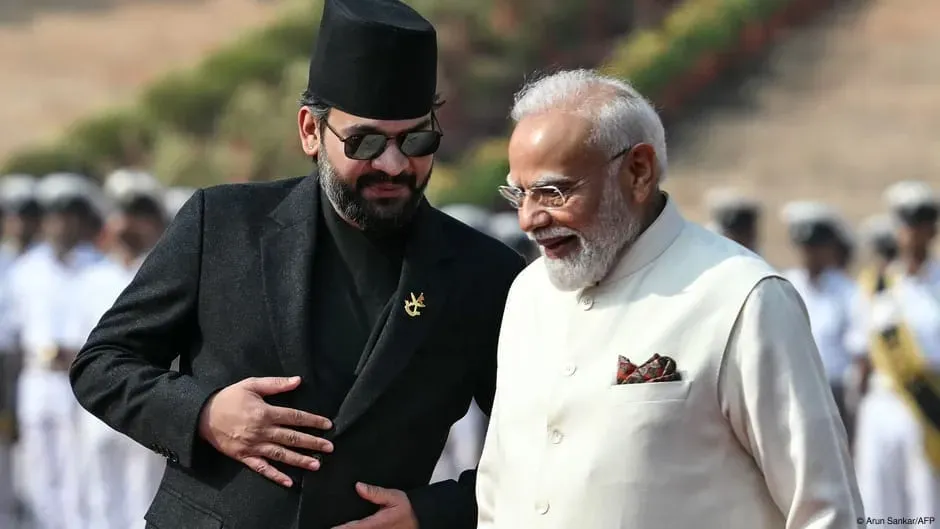
Nepal's new Prime Minister Balendra Shah has embarked on his first official visit to India, marking a significant shift in the country's diplomatic landscape. This week's trip is a departure from the norm, as Nepal's leaders have traditionally been seasoned politicians rather than fresh faces.
Shah's background as a young rapper-turned-politician makes him an unusual figure in Kathmandu's politics. His strong electoral mandate has given him a unique position to shape Nepal's relationship with its southern neighbor and largest trading partner, India. Shah's visit is expected to focus on the pressing issues facing his country.
Nepal's economic strain and recent devastating flash floods have created an urgent need for investment and support from India. The Nepalese public is eagerly awaiting tangible results from Shah's diplomatic efforts, particularly in terms of job creation, infrastructure development, and improved governance at home. To achieve this, Shah must establish a strong rapport with Indian Prime Minister Narendra Modi.
Despite the two countries' shared border, cultural heritage, and historical ties, their relationship has been complicated by territorial disputes and Nepal's desire to be recognized as an equal partner. Constantino Xavier, a senior fellow at the Center for Social and Economic Progress in New Delhi, cautions against expecting too much from this visit alone.
Shah's meeting with Modi is seen as a crucial step towards safeguarding Nepal's flood recovery efforts and fostering development. The success of his trip will depend on his ability to navigate the complexities of Nepal-India relations and strike a balance between addressing pressing issues and managing expectations.
Nepal's new prime minister has emphasized the need for sustained economic cooperation in his country's relations with India. He believes that such cooperation should be at the forefront of bilateral ties because it directly contributes to the socioeconomic development of both nations. This approach is expected to yield tangible benefits, including addressing pressing issues and meeting local expectations.
The young leader faces a significant challenge in converting his domestic electoral mandate and goodwill towards New Delhi into concrete economic gains. He must also tackle longstanding border disputes and rectify a massive trade imbalance between the two countries. The prime minister's administration has identified diplomacy as a key strategy for advancing Nepal's development aspirations, which was reflected in recent bilateral talks with Indian Prime Minister Modi.
During these talks, both sides focused on promoting economic cooperation through various channels. These include engaging in trade, investment, connectivity, and infrastructure development initiatives. Kathmandu sought financial support from New Delhi to aid in the reconstruction efforts following the devastating floods that ravaged Nepal last August. The disaster claimed over 1,450 lives and left thousands missing or unaccounted for.
The scale of destruction was staggering, with roads, bridges, hydropower projects, and settlements being swept away by the floods. The estimated cost of reconstruction is around $4.8 billion, which prompted Kathmandu to prioritize securing Indian financial assistance. In response, Modi announced a package of $1.63 billion to help rebuild flood-hit areas and upgrade other infrastructure projects. This aid includes around $380 million as a grant and the rest as a concessional loan.
The agreement reached between Nepal and India during Prime Minister Shah's visit has far-reaching implications for their economic relationship. Deepening cooperation in various sectors, including trade and investment, is expected to boost bilateral ties. A new long-term vision aims to strengthen economic integration and development between the two nations.
Key areas of focus include broadening educational and innovation partnerships, as well as enhancing energy and infrastructure cooperation. Improved market access and trade links will also be crucial for Nepal's economic growth. Furthermore, India has committed to providing additional air and port access to landlocked Nepal, increasing its connectivity with the rest of the world.
The visit marked a significant shift in the high-level exchange between the two countries, which had been periodically strained by political mistrust and territorial disputes. The strategic Himalayan territory of Kalapani, Lipulekh, and Limpiyadhura remains a contentious issue, with both nations holding competing claims.
Nepal's Prime Minister Shah has taken a pragmatic approach to his India visit, steering clear of sensitive issues like border disputes. As mayor of Kathmandu, he had previously raised these concerns, which contributed significantly to his nationalist image and broader political agenda.
Former Foreign Minister Bimala Rai Paudyal believes that the new government's focus on economic issues may be a strategic move to address long-standing bilateral problems. However, she also expressed concern that the border disputes remain unresolved, posing a significant strain on their relations.
The success of Nepal's new Prime Minister's visit to India will be measured by the establishment of a stable and mutually beneficial relationship between the two countries. This would involve addressing long-standing territorial disputes, concerns over the 1950 Treaty of Peace and Friendship, and Nepal's economic dependence on its southern neighbor.
To fully capitalize on its geographical location, Nepal should not feel pressured to choose between India and China, but rather leverage its position to secure economic and diplomatic benefits from both. The Prime Minister has a unique opportunity to transform Nepal's strategic vulnerability into an asset that brings prosperity and influence.
The implementation of agreements announced during the visit will be crucial in determining whether a tangible reset on the economic front is achieved. Ultimately, it will require a willingness from both governments to address disputes that have strained ties for years, paving the way for more predictable and beneficial cooperation.
Facts based on reporting originally published by DW English.
You may republish this story, in full or in part, if you credit News Central Site and link to it (licence CC BY 4.0). Photos are not included.