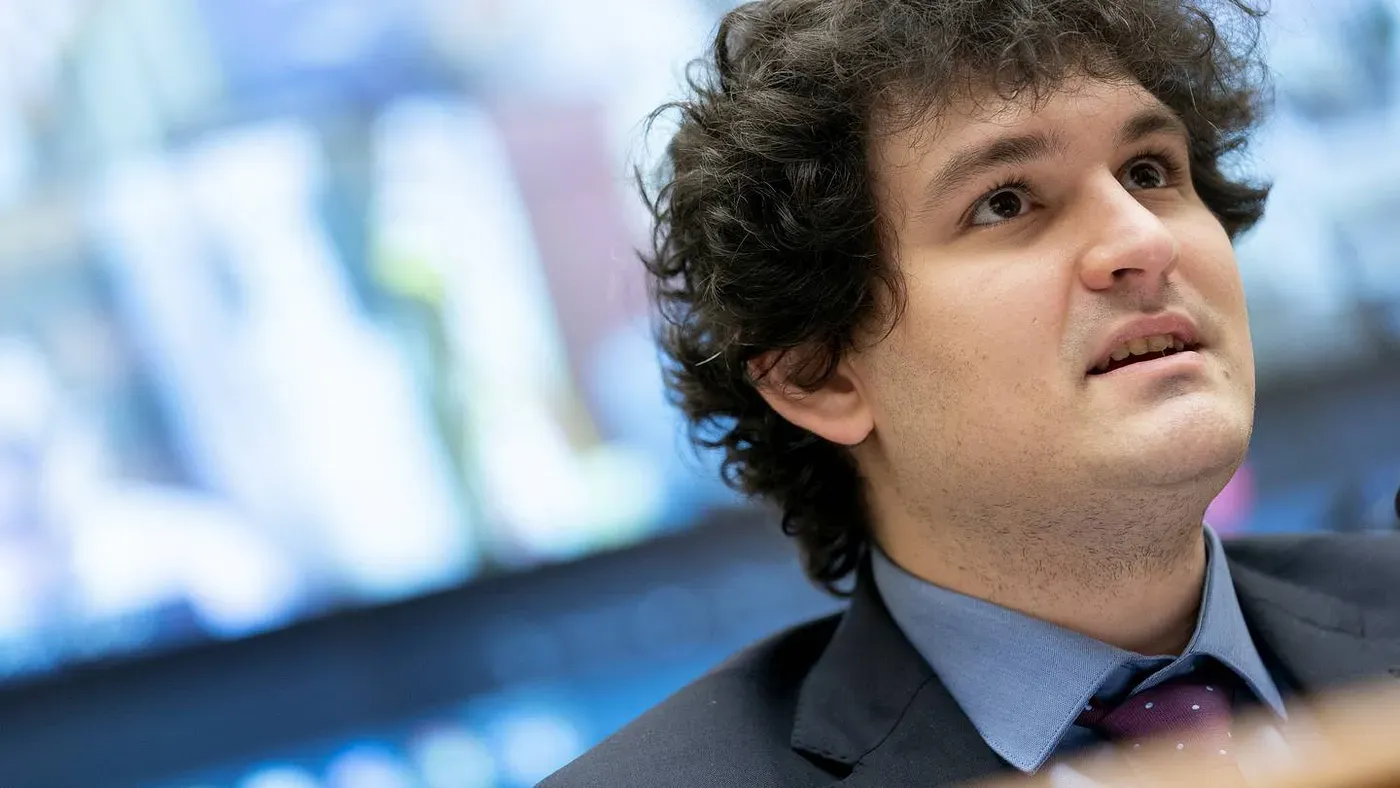
Bankers Not Prosecuted After 2008 Crisis Despite Widespread Financial Irregularities
The Altruists TV series has garnered attention for its portrayal of tech scammers like Sam Bankman-Fried, who was convicted on wire fraud and conspiracy charges.

A notable exception to the usual outcome of financial crises is that no bankers were prosecuted after the 2008 crisis.
No suits from Countrywide Financial ended up behind bars in Lompoc.
In contrast, Sam Bankman-Fried did go to prison for his conviction on wire fraud and conspiracy charges.
The Altruists TV series has garnered attention for its portrayal of tech scammers like Bankman-Fried.
A key aspect of the show's narrative is that the power couple it focuses on did not feel comfortable in luxurious settings.
Unlike the protagonists of many other shows and movies, neither SBF nor Ellison exhibit anger or aggression.
Instead, they seem content to spend time at a Margaritaville in the Bahamas, surrounded by familiar comforts.
Their decision to be extremely wealthy, young, and indulging in vegan nachos at Jimmy Buffett's theme restaurant appears to be a deliberate choice to avoid other aspects of their lives.
The supporting cast in The Altruists is a testament to the show's exceptional talent pool.
With standout performances, they bring depth and nuance to their respective characters.
Alex Lawther, in particular, shines as Sam Trabucco, a former co-CEO of Alameda Research.
His portrayal of Trabucco is marked by a sense of vulnerability and introspection, making his character feel relatable and human.
Lawther's performance is reminiscent of his role in Andor, where he played the complex and idealistic Nemik.
In The Altruists, Lawther brings a similar level of depth to his portrayal of Trabucco, making him one of the show's most compelling characters.
The chemistry between Lawther and the rest of the cast is undeniable, particularly in scenes with the character Ellison.
Their interactions are authentic and engaging, drawing viewers into their conversations and relationships.
One standout moment comes when Trabucco and Ellison share a dinner conversation, revealing the unexpected connections they have to each other's pasts.
Their discussion about childhood experiences and shared interests adds a layer of complexity to their characters' dynamics.
Newton and Natick are two towns in New England that have distinct reputations.
Growing up in these areas has a profound impact on one's perspective, especially when it comes to the tech industry.
The dinner conversation between Lawther and Garner takes an interesting turn as they share their childhood memories.
Lawther recounts a specific experience with his father, which garners an intense reaction from Caroline.
The Netflix series is riddled with technical issues, including poorly lit scenes and subpar sound mixing.
This sloppy production work detracts from the narrative's impact, making it feel like a disjointed puzzle.
However, despite these flaws, the show still manages to evoke emotions in its portrayal of the tech elite's antics.
Their escapades take them across various locations, each with its own unique cultural and economic dynamics.
The show's approach to explaining crypto is refreshingly straightforward. It doesn't delve into technical jargon, a decision that makes sense given its focus on the broader implications of this complex topic.
Major corporations like ExxonMobil and Glock sell products that work as advertised, providing a clear understanding of their value proposition. In contrast, crypto exists in a realm where its own existence is justification enough for its continued relevance.
Unlike traditional companies, which release earnings reports to gauge their financial performance, the crypto market operates with no such transparency. This lack of accountability contributes to its enigmatic nature and raises questions about its long-term viability.
The value placed on crypto assets can be attributed to a combination of factors, including speculation and hype. However, when it comes down to it, the true worth of these digital tokens is often subjective and based on emotional appeal rather than concrete financial metrics.
Whenever a new technology or innovation is touted as revolutionary, it's often just an accelerated version of something that has come before. The crypto market is no exception, with its promise of disruption and transformation being overstated by some and dismissed by others.
The industry's attempts to integrate itself into the mainstream financial system have been met with resistance, including a recent bill that aimed to establish a regulatory framework but ultimately stalled in the senate.
Crypto proponents often argue that their system is superior to traditional finance due to its decentralized nature and perceived lack of corruption. However, when faced with the prospect of joining the established financial markets, they seem to change their tune, seeking the same benefits and security offered by institutions like PNC Bank.
The notion that exceptional individuals can rise to the top through sheer talent and effort alone is a myth that many people buy into. However, research suggests that factors such as luck, timing, and social connections play a significant role in determining one's success.
While it's true that some people manage to secure high-profile jobs at prestigious institutions like banks, hospitals, and law firms, this doesn't necessarily mean they're exceptional individuals. In fact, many of these professionals have had the benefit of networking and socializing with influential people from an early age.
For those who do achieve academic success, such as securing tenure at a top university like Berkeley, it's not uncommon for them to be seen as truly special. However, this can also create unrealistic expectations for their children, who may feel pressure to live up to their parents' achievements.
The offspring of academics often face unique challenges, including the risk of becoming entitled and detached from reality. Some may struggle with self-worth issues if they don't meet their parents' lofty expectations, leading them down a path of self-sabotage or aimlessness.
In the case of high-profile figures like Sam Bankman-Fried and Caroline Ellison, it's clear that they were expected to perform at an exceptional level from a young age. However, when faced with setbacks or failures, their parents often stepped in to smooth over the issues and protect their reputations.
The portrayal of these dynamics in The Altruists is starkly realistic, capturing the complexities of enmeshment and infantilization that can occur within affluent families. Each performance adds its own nuance to the story, highlighting the ways in which parents can both enable and hinder their children's development.
While it's tempting to view the parents in these stories as villainous figures, the truth is more nuanced. They are often caught between their desire to support their children and their own expectations of what constitutes success.
It's hard to admit when you feel like an outsider in a group where everyone else seems to have their lives together.
This person I knew from my past was suddenly everywhere, making headlines for his involvement in the crypto space.
I had assumed he would be working in a related field, perhaps something artistic or entrepreneurial, given our shared background and interests.
However, it turned out that he had taken a different path, one that led him to become a prominent figure in the world of cryptocurrency.
As I scrolled through my LinkedIn feed, his name kept popping up alongside discussions about blockchain technology and digital assets.
Facts based on reporting originally published by GQ.
You may republish this story, in full or in part, if you credit News Central Site and link to it (licence CC BY 4.0). Photos are not included.