Sylvia Plath's Use of Homemade Ouija Board Revealed
The couple's use of the homemade Ouija board was a regular occurrence in their daily lives.
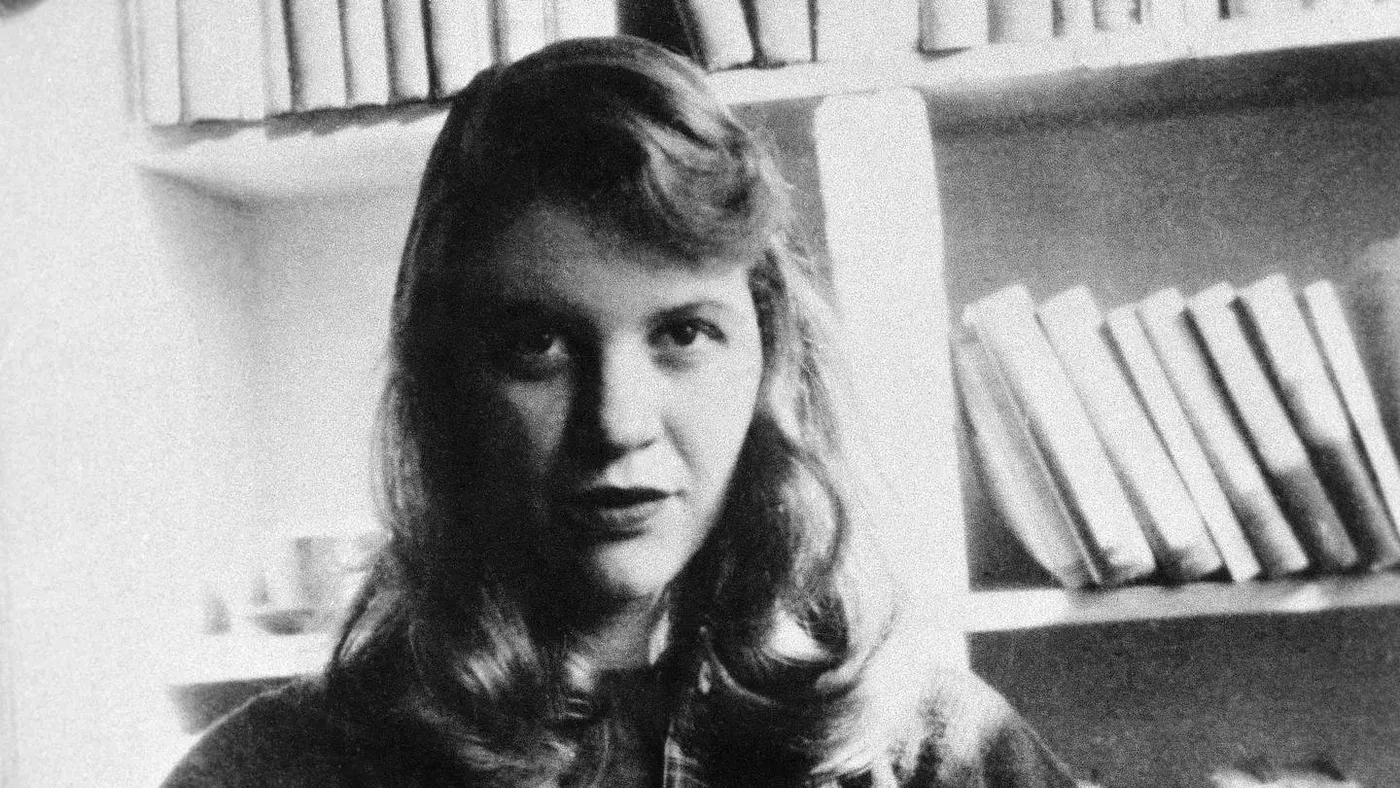
Sylvia Plath's fascination with the occult is well-documented, but a lesser-known aspect of her interest in the paranormal involves a homemade Ouija board used by both she and her husband, poet Ted Hughes.
The couple's use of the Ouija board was a regular occurrence, as described by Hughes in his notes to Plath's Collected Poems. He recalled that Plath would place her finger on an upturned glass, surrounded by letters laid out on a smooth table, and engage with "spirits through this unusual method.
Ted Hughes brought the occult into their marriage, incorporating practices such as hypnotism into their lives. Together, they used their homemade Ouija board, which was likely created to save costs compared to commercial alternatives.
The Plath scholar Kathleen Connors notes that Hughes frequently employed hypnotism and their hand-made Ouija board in his interactions with the spirit world. This reliance on these practices indicates a deep commitment to exploring the unknown by both partners.
Plath's journals reveal an extensive exchange of information with the spirits, suggesting that the couple's use of the Ouija board was not merely a passing fascination but rather an integral part of their daily lives.
The sessions with Pan, a spirit who claimed to be communicating through Plath's homemade Ouija board, were becoming increasingly regular. On July 4, 1958, Plath recorded in her journal that she and Ted had used the planchette for the first time in America, suggesting they had already been experimenting with it in England.
The planchette, a makeshift spirit guide fashioned from an overturned brandy glass, was said to have responded with admirable, odd, often charming humor. It's clear that Plath and Ted were fascinated by Pan's predictions and insights. He offered advice on various aspects of their lives, including Plath's writing.
Pan predicted the publication of Plath's book of poems by Knopf, rather than World, and specified that it should contain fifty poems. He also foresaw a future with two sons followed by a daughter, naming potential boy names as Owen or Gawen and suggesting Rosalie for the girl. Furthermore, he expressed preferences for certain poems, including Pike" by Hughes and "Mussel-Hunter by Plath.
In addition to these predictions, Pan introduced a higher power known as Kolossus, describing him as his family god. He also instructed Plath to write a poem about the Lorelei, sirens from German legend who were said to be her own kin. The next day, Plath obliged, penning a poem that reflected on this connection.
Pan's predictions were numerous and diverse, covering various aspects of Sylvia Plath's life. He forecast that her book of poems would be published by Knopf instead of World Publishing, and suggested it should contain fifty poems. Pan even provided names for potential children, including Owen or Gawen for sons and Rosalie for a daughter.
In keeping with his prophecies, Heinemann did indeed publish Plath's first collection, The Colossus, in London in 1960. Additionally, Knopf published The Colossus & Other Poems in the United States two years later, in 1962.
Plath's own reservations about Pan's influence were evident as she recorded her interactions with him. She questioned whether their Ouija board sessions were truly a result of his supposed psychic abilities or simply her own subconscious at work. This skepticism was reflected in her writings, where she acknowledged the possibility that our own hot subconscious might be moving the glass.
The experience seemed to have an entertaining quality for Plath, who described it as more enjoyable than watching a film. Despite her reservations about Pan's claims, she appeared to appreciate the novelty and thrill of their sessions together.
Pan also introduced Plath to his concept of Kolossus, which he referred to as family god. He further recommended that she write a poem inspired by the Lorelei, mythical sirens from German legend who were said to be her own kin.
The couple's fascination with the occult continued to grow, with Ted Hughes taking a more active role in practicing astrology.
Hughes was meticulous about recording his astrological charts for various individuals, including some of the most prominent figures of their time.
A notebook containing these charts is now housed at the British Library, providing valuable insight into Hughes' interest in the subject. The notebook includes charts for notable figures such as Sigmund Freud and W.B. Yeats, among others.
Hughes even went so far as to compare his own astrological chart with that of Plath's, finding it very appropriate that their planetary alignments were harmonious.
This interest in astrology was not limited to Hughes; Plath also expressed a desire to learn more about the subject and practice its principles.
However, her enthusiasm often waned, and by November 1959, she admitted to Ted that he had become tired of hearing her talk about astrology and the tarot. Despite this, she still made resolutions to study the planets and master the art of reading tarot cards.
Hughes' dedication to astrology stood in stark contrast to Plath's inconsistent approach, highlighting the differences in their approaches to exploring the mysteries of the occult.
Plath's exploration of the occult continued to influence her writing. In August 1957, she was drafting a long poem called Dialogue Over a Ouija Board, which she considered more ambitious than any other work she had done at that time.
This poem remained unpublished during Plath's lifetime and only saw the light in 1981 when it appeared both as a limited edition and in her Collected Poems. A shorter poem, also titled Ouija, was published two years earlier in The Hudson Review in 1960.
The subject of Ouija boards seemed to hold significant interest for Plath's partner as well. Decades after her death, Hughes revisited the theme with a poem called Ouija" in his collection Birthday Letters, which was published almost 35 years after Plath passed away.
The publication of these poems highlights how deeply the experience of using Ouija boards had impacted both writers, albeit in different ways. While Plath's work on the subject showed her fascination with its potential for self-discovery and exploration, Hughes' writing approached it from a more introspective angle.
Ultimately, the intersection of art and mysticism that these poems represent remains a fascinating aspect of the complex relationship between Plath and Hughes.
Facts based on reporting originally published by Mental Floss.
You may republish this story, in full or in part, if you credit News Central Site and link to it (licence CC BY 4.0). Photos are not included.