Chinese Scientists Engage with Soviet Colleagues on Traditional Medicine
A new study reveals that the scientific exchange between China and the Soviet Union during the communist era was mutual rather than one-sided.
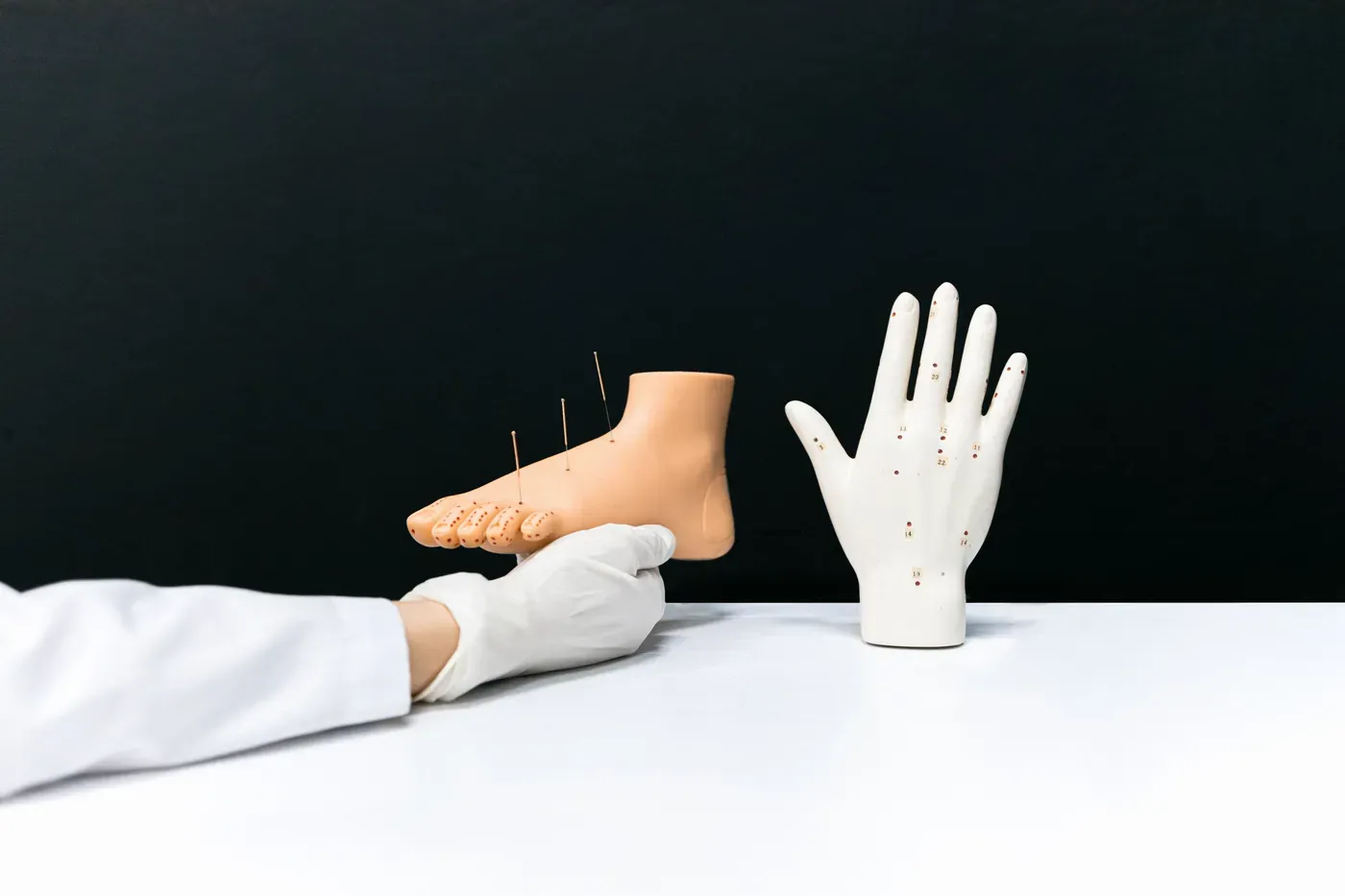
A new study has shed light on the previously misunderstood relationship between Chinese and Soviet scientists during the communist era. According to researchers Liang Wan, Simon Huxtable, and Sarah Marks, the scientific exchange between China and the Soviet Union was not one of subordination but rather a mutual exchange.
The study, published in Isis, explores how acupuncture played a crucial role in uniting the Pavlovian science of the Soviets with traditional Chinese medicine. Ivan Pavlov's groundbreaking work in physiology was highly regarded by both the Soviet government and Chinese health officials for its potential to modernize and "scientify traditional Chinese medicine.
Chinese health officials saw Pavlovianism as a way to update their understanding of zhongyi, or traditional Chinese medicine, while the Soviets were eager to learn from the Chinese tradition of acupuncture. This period of scientific dialogue primarily took place in the 1950s and was driven by a desire to engage with international ideas and forge a modern trans-communist scientific approach that could surpass Western science.
The study highlights the complex and multifaceted nature of Sino-Soviet scientific collaboration during this period, challenging previous accounts of a one-way exchange. Instead, it reveals a dynamic and reciprocal relationship between Chinese and Soviet scientists who were seeking to learn from each other's traditions and theories.
Researchers emphasize that this era of scientific dialogue was not limited to the sharing of knowledge but also involved the development of new ideas and approaches that drew on both Pavlovian thought and traditional Chinese medicine.
The Chinese government sought to integrate Pavlovianism into various health and science initiatives throughout the People's Republic, driven by the affinity between Pavlov's theories and Marxist dialectics. This integration led acupuncture practitioners in China to reinterpret traditional concepts of yin-yang and qi through a Pavlovian physiology lens.
As a result, Chinese medicine developed a more holistic understanding of the body, an emphasis that continues to shape its theory and practice today. The incorporation of Pavlov's findings into acupuncture practice reinforced this holistic approach, bridging the gap between Eastern and Western medical philosophies.
In 1954, the Soviet-Chinese Technical Commission facilitated collaborative efforts between Soviet doctors and Chinese healthcare professionals. This exchange allowed Soviet scientists to study acupuncture and other aspects of Chinese medicine firsthand, sparking a surge in interest among Soviet researchers.
The impact of this collaboration was evident in the partial translation of Zhu Lian's foundational text The New Acupuncture into Russian. One visiting Soviet scientist described traditional Chinese medicine as the richest spring of medical knowledge," highlighting its potential for scientific exploration and development.
By the late 1950s, Soviet acupuncture research had evolved into a distinct school of thought, with approximately 1.5%–2% of all Soviet physicians practicing acupuncture at the time of the Soviet Union's collapse.
The exchange of ideas between Chinese and Soviet scientists had a profound impact on the development of medicine in both countries. As research on acupuncture progressed in the Soviet Union, it became an integral part of the country's medical landscape. By the 1960s, Soviet physicians were using acupuncture as a treatment for various conditions, including pain management and respiratory issues.
The influence of Soviet acupuncture on Chinese medicine was also significant, with some researchers incorporating elements of Pavlovian conditioning into their work. This integration of theories from different disciplines led to new approaches in the treatment of certain diseases. The mutual exchange of ideas between Chinese and Soviet scientists ultimately enriched the understanding of acupuncture and its applications.
The case study highlights the complex dynamics of scientific collaboration and knowledge transfer, challenging traditional notions of imperialism and cultural dominance.
Facts based on reporting originally published by Phys.org.
You may republish this story, in full or in part, if you credit News Central Site and link to it (licence CC BY 4.0). Photos are not included.