Custom-Made Chanel Tuxedo Jacket Revealed at Film Benefit
Steven Spielberg wore a custom-made Chanel tuxedo jacket with an intricately designed lining that was crafted by Matthieu Blazy.
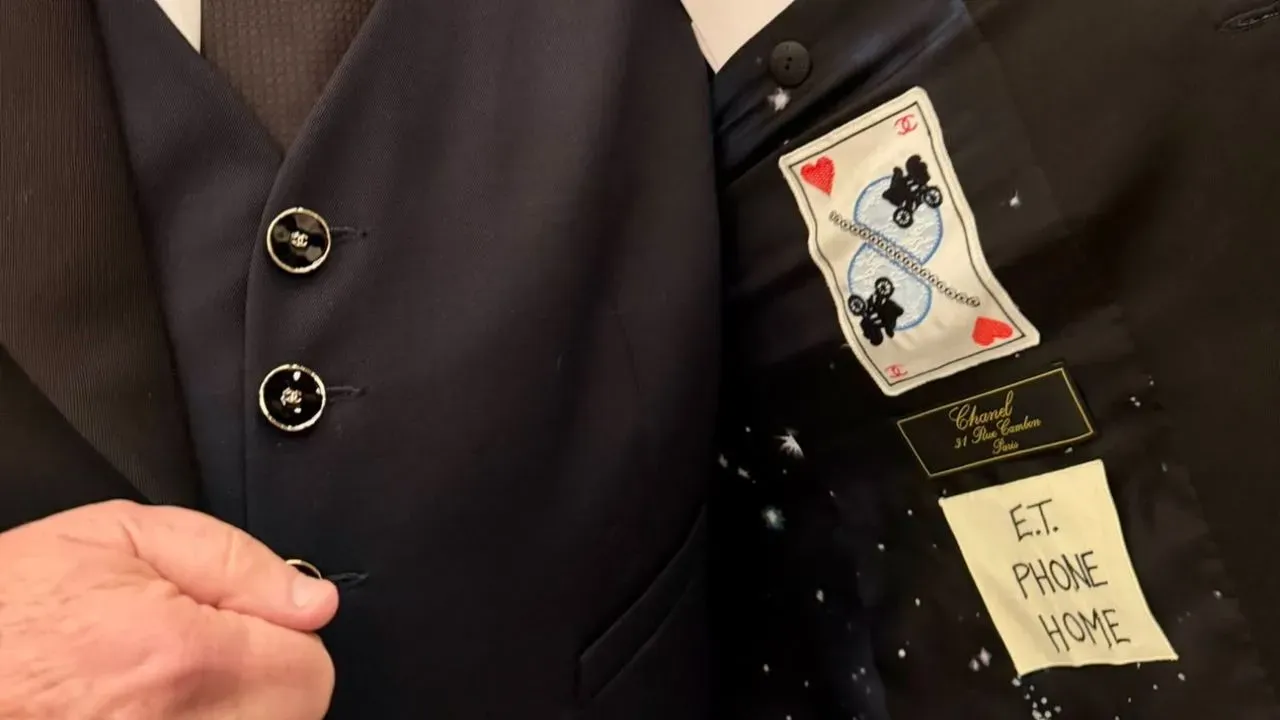
Steven Spielberg made a bold fashion statement at the Museum of Modern Art's annual Film Benefit on Thursday night, revealing the intricately designed lining of his bespoke Chanel tuxedo jacket to a packed audience.
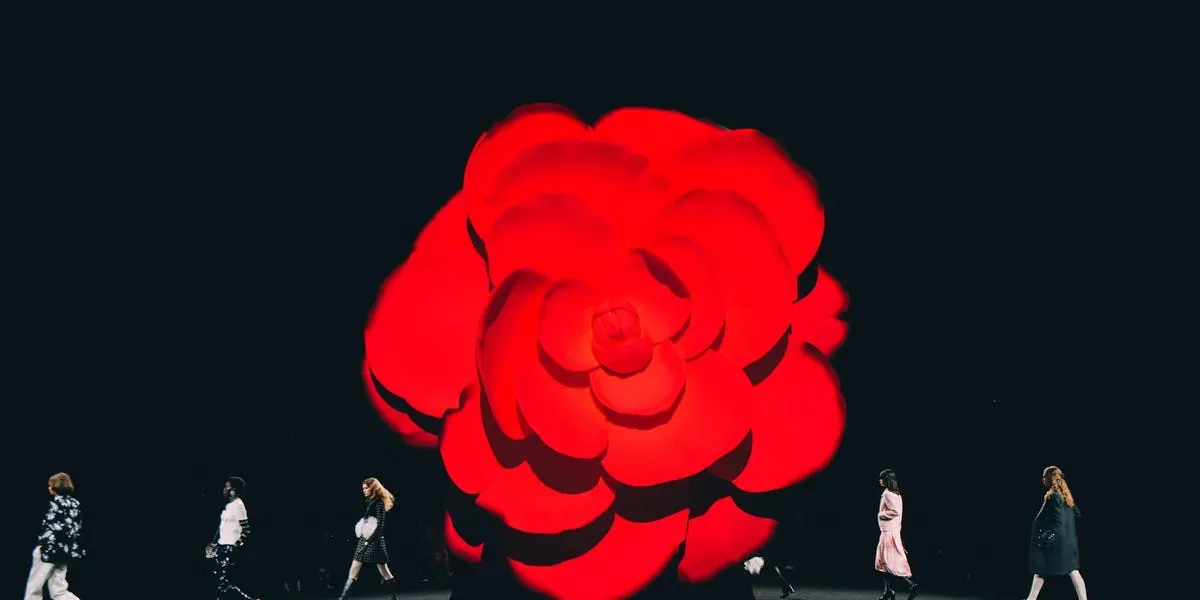
The custom-made jacket was crafted by Matthieu Blazy, who has been experimenting with personal flourishes in his designs. For his recent spring 2026 haute couture debut, Blazy asked models to contribute meaningful elements to their looks, which were then embroidered onto the garments or into little notes tucked inside Chanel handbags.
The result was a series of exquisite and deeply personal creations that showcased the emotional connection between the models and their outfits. Stephanie Cavalli reportedly chose a love letter from her husband, which was beautifully translated into embroidery by the Lesage atelier.
Blazy's focus on storytelling through garments has been a recurring theme in his designs. In the lead-up to the spring 2027 Chanel show, models discovered embroidered playing cards tucked inside jacket linings, featuring Gabrielle Chanel wearing looks that they had previously modeled on the runway.
Personalization has become a hallmark of high-end fashion, with clients often requesting bespoke details that reflect their individuality.
This trend is evident in the custom designs created for special occasions, such as Hailey Bieber's bubblegum-pink Chanel gown worn to the Academy Museum Gala last October, which featured a handwritten note with her son Jack's name and an arrow-pierced heart.
While leaving personal messages inside garments may seem like a recent phenomenon, it has actually been practiced by designers for decades, often in subtle yet meaningful ways.
Alexander McQueen, for instance, made a rebellious art of incorporating personal details into his designs, such as the locks of his own hair that he stitched into the linings of his 1992 graduate collection, Jack the Ripper Stalks His Victims.
The clothing label itself has also long been a canvas for designers to express their personality and tell their brand's story, from elaborate cursive fonts to wacky illustrations and earnest mottos.
A label can be more than just a straightforward declaration of ownership. It's an opportunity for designers to inject personality and whimsy into their creations. Sofia Testino is one such designer who has made this aspect of branding her specialty.
Testino's eponymous label is a treasure trove of eccentricity, with each item bearing the mark of its maker in a unique and imaginative way. Her designs often evoke a sense of nostalgia, as if plucked from another era entirely.
In one instance, shoeboxes adorned with cartoonish depictions of an ape transforming into a woman in high heels add a touch of playfulness to her brand's aesthetic. This approach is a far cry from the minimalist label design that has come to dominate the industry.
Oscar Ouyang, a London-based knitwear designer, has found his own niche by incorporating a recurring motif, a sweet little lamb, into his designs and labels. The result is a whimsical collection of knits and clothing that are instantly recognizable as part of his brand.
The emphasis on distinctive branding extends to collaborations between designers, such as the one between Devon Lee Carlson and Francesca Aiello for Frankies Bikinis. Vintage pieces from their own wardrobes were reimagined with sweet pink co-branded labels featuring a little dog and flowers, adding an extra layer of personality to the designs.
Sinéad O'Dwyer has also been reassessing her brand identity as her customer base grows up alongside her. Her new logo is now integrated into the stitching on the back of her jeans, marking a deliberate shift towards a more mature aesthetic while retaining the essence of her original brand.
A personal touch has become an integral part of London-based designer Ellie Misner's bespoke pieces. To commemorate special moments for her clients, Misner incorporates hand-embroidered names above her own handwritten logo on each garment.
Misner's approach is evident in the details she adds to her custom designs. For instance, Raye's name was stitched in burgundy thread onto a crimson corseted gown, while Tems' signature was sewn in cobalt-blue onto the inside of a midnight-blue ensemble after their respective Glastonbury performances.
Misner views her labels as an extension of her handwriting, often matching the embroidery thread to the garment's color. This thoughtful gesture makes each piece feel more than just a custom commission, especially for clients who've achieved milestones in their careers.
As the fashion industry continues to evolve, it's refreshing to see labels emphasizing the human touch behind their designs. This shift towards personalization is a welcome respite from the prevailing trend of AI-generated images and algorithmically dictated taste.
At Chanel's recent fall 2026 couture show, artist Joël Blanc brought an extra layer of authenticity to the event by painting the runway live in watercolors, capturing every detail in real-time. Similarly, Prada, Dior, and Bottega Veneta have all released new holiday campaigns that celebrate illustration and animation, injecting a sense of nostalgia into their marketing efforts.
Prada's campaign stands out for its focus on hand-drawn artistry, with veteran animator John Pomeroy creating a whimsical winter wonderland populated by snow lynxes and mischievous mice. By embracing these traditional techniques, fashion labels are reminding us that there is inherent value in the unique qualities of human craftsmanship.
Facts based on reporting originally published by Vogue.
You may republish this story, in full or in part, if you credit News Central Site and link to it (licence CC BY 4.0). Photos are not included.