Nvidia CEO Involved in Romantic Affair with Megaspeed Executive Raises Espionage Concerns
A romantic affair between Jensen Huang and an executive at Megaspeed has raised concerns about potential industrial espionage.

A romantic affair between Jensen Huang, CEO of Nvidia, and an executive at Megaspeed has raised concerns about potential industrial espionage. The relationship with Alice Huang has sparked alarm within the U.S. intelligence community, who suspect she may be a Chinese spy.
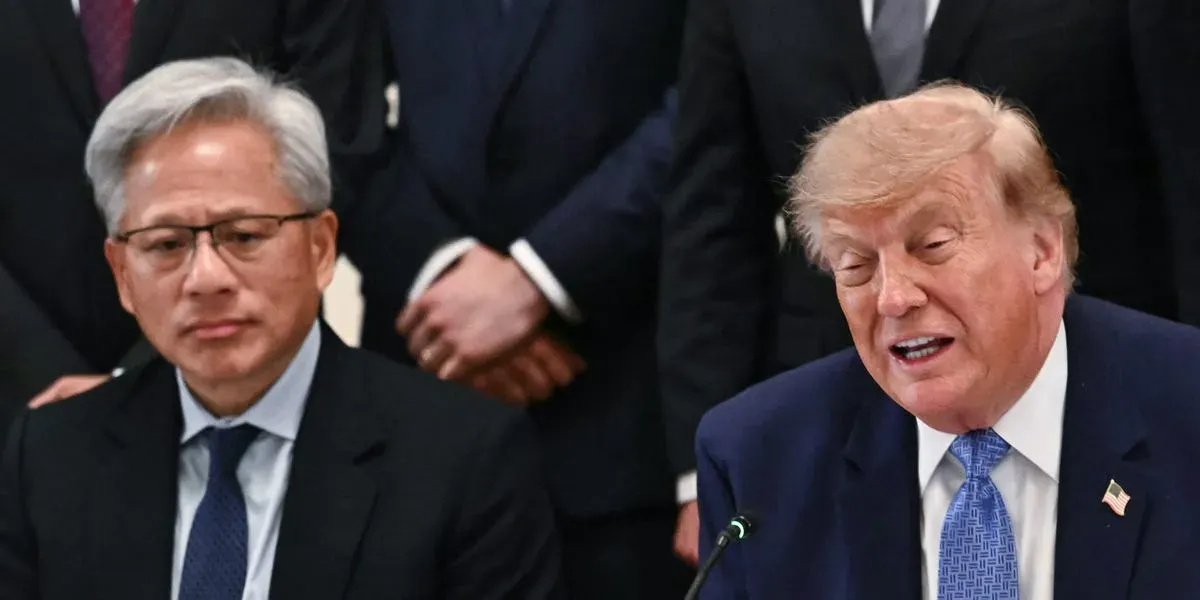
The situation is particularly sensitive given Huang's close ties to President Donald Trump and his administration officials. Despite these connections, Nvidia's board of directors has launched an investigation into the matter, but so far, there's no evidence that national security or company secrets were compromised.
U.S. officials believe Megaspeed executive Alice Huang was recruited by China's Ministry of State Security, with reports suggesting she was feeding information to Beijing. However, China has denied any involvement in espionage. The case highlights the growing concern about protecting trade secrets in the high-stakes world of AI development.
The incident follows a recent arrest of an OpenAI engineer who allegedly planted a listening device in his company's conference room. According to reports, he was communicating with a member of the Saudi royal family, sparking further concerns about industrial espionage and national security threats.
Several AI companies have significantly increased their hiring of counterintelligence professionals in recent years, with most salaries falling within a range of $200,000 to $500,000.
According to Revelio Labs' workforce data, Anthropic has been particularly aggressive in this area, having hired 33 employees for counterintelligence functions so far this year, up from 14 last year and nine in 2024. The company's counterintelligence hiring is on a steep upward trajectory, with no signs of slowing down.
OpenAI has also stepped up its recruitment efforts in the field, with 22 new hires for counterintelligence roles this year, more than double the number it hired in 2025. Furthermore, OpenAI appointed former National Security Agency director Paul Nakasone to its board in 2024.
The Nvidia scandal seems not to have had a deterrent effect on the company's hiring practices, as it has still managed to bring in 16 new counterintelligence professionals this year. Meanwhile, other top tech firms are also actively seeking talent with relevant experience.
OpenAI is currently looking for a senior global security investigator with counterintelligence listed as a key skill, while Anthropic is advertising for a threat-intelligence security engineer, and ASML is searching for a Taiwan-based intelligence officer.
The tactics of industrial espionage can be subtle and insidious, often masquerading as innocent relationships or business opportunities. According to Eric O'Neill, a former FBI counterintelligence operative, warning signs may include an unusually rapid development of a relationship with someone in a position of power.
These individuals may ask persistent questions about sensitive business matters, request meetings with influential colleagues, or even encourage executives to keep secrets from their employers. It's not always easy to recognize these tactics when the person under scrutiny is someone you trust, making it harder for executives to spot manipulation and potential threats.
The private sector is not alone in recognizing the need to guard against industrial espionage; the US defense and intelligence communities are also taking a more aggressive stance. The Pentagon is reportedly planning a spying program that involves deploying "nonofficial cover officers" who pose as executives as part of a larger economic warfare campaign.
This covert effort highlights the growing threat of industrial espionage, where companies and governments must be vigilant to protect their trade secrets and intellectual property from those seeking to exploit them.
The U.S. government is intensifying its efforts to counter foreign threats by covertly sabotaging enemy technology programs that could compromise national security.
In a significant move, the Defense Department has reorganized two classified intelligence programs into an elite agency, dubbed the Technology Support Office, which was established in April and tasked with disrupting foreign tech initiatives that may undermine U.S. military superiority.
Facts based on reporting originally published by Fortune.
You may republish this story, in full or in part, if you credit News Central Site and link to it (licence CC BY 4.0). Photos are not included.