A.A. Milne Publishes Winnie-the-Pooh Short Story
Winnie-the-Pooh's origins date back to 1925 when A.A. Milne published "The Wrong Sort of Bees" in the London Evening News.
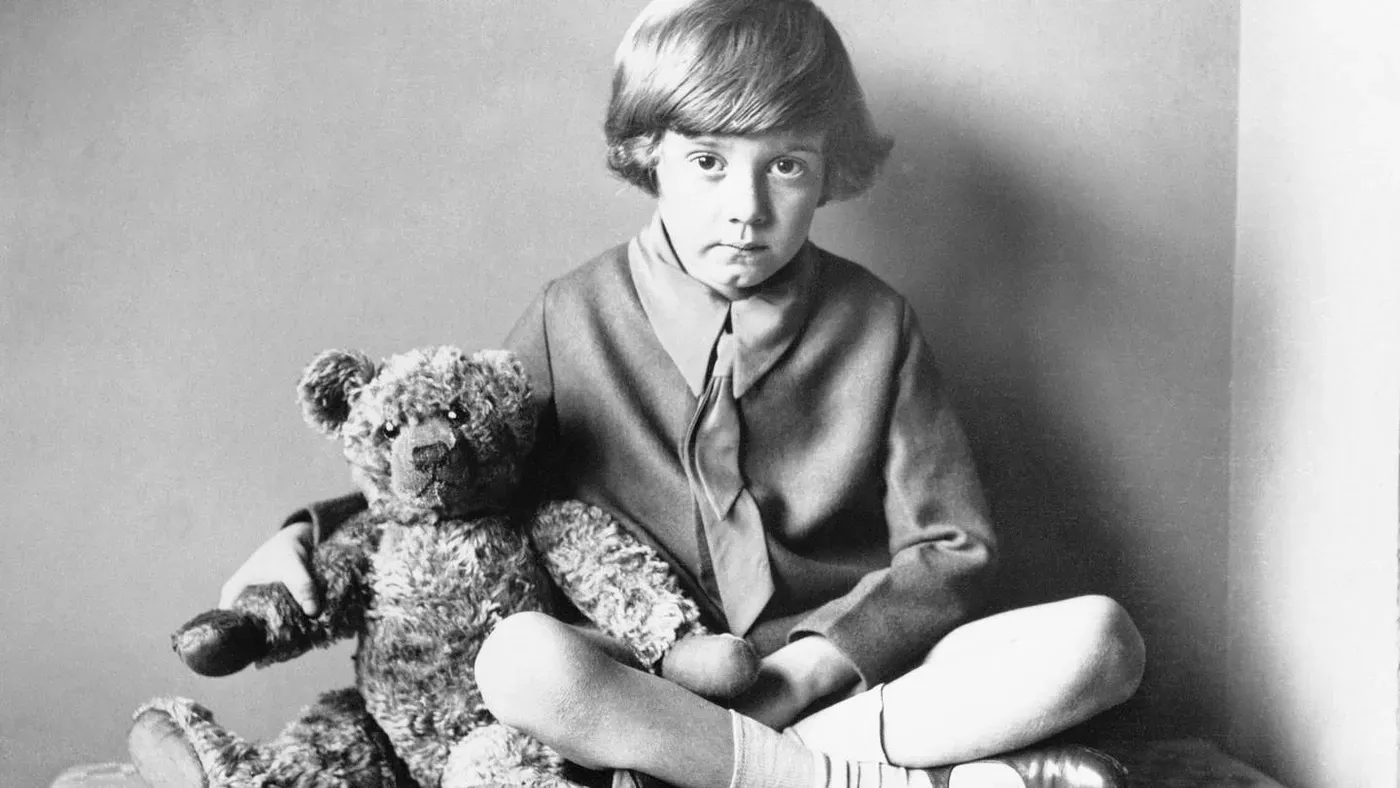
Winnie-the-Pooh has become a beloved character around the world, known for his kind heart but also his mischievous ways. This lovable bear's origins date back to 1925 when he first appeared in a short story published in the London Evening News.
The story was written by English author A.A. Milne and titled "The Wrong Sort of Bees." It marked the beginning of Winnie-the-Pooh's adventures, which would soon be expanded into a full-length book. In 1926, Milne published Winnie-the-Pooh, featuring beautiful illustrations by E.H. Shepard.
This classic children's book introduced readers to the Hundred Acre Wood and its charming residents, including Christopher Robin, Piglet, Eeyore, Owl, Rabbit, Kanga, and Roo. The stories that followed were an instant success and have since become a timeless favorite among children and adults alike.
Winnie-the-Pooh's popularity can be attributed in part to the beautiful illustrations by E.H. Shepard, which brought the characters to life. The book's immediate success paved the way for future adaptations and interpretations of the beloved character.
The stories of Winnie-the-Pooh have captured the hearts of many, but what about his real-life counterpart? What was the relationship like between Christopher Robin Milne and Winnie-the-Pooh, the bear that bore his name?
The relationship between Christopher Robin Milne and Winnie-the-Pooh was complex and multifaceted. While the stories portrayed his son as a carefree boy who loved the bear, real-life Christopher Robin felt suffocated by the attention that came with being associated with the beloved character.
As the popularity of the Pooh tales grew, so did the pressure on Christopher to maintain a public image. He was expected to respond personally to fan mail, which poured in from all over the world, and was even asked to participate in pageants and recordings related to Winnie-the-Pooh.
The constant spotlight took a toll on Christopher's childhood, forcing him to grow up too quickly. His father, A.A. Milne, capitalized on his son's fame, using it to boost sales of the books and other merchandise.
Christopher was often treated like a celebrity, with strangers approaching him in public and asking for his autograph or a photo. He felt like he had lost control over his own life, and that Winnie-the-Pooh had become more important than he was.
The strain on their relationship was evident as Christopher grew older. He eventually came to resent the fact that he was defined by his association with Winnie-the-Pooh, rather than being seen as an individual in his own right.
Television personality Gyles Brandreth has shared some revealing memories of Christopher Robin Milne, who was known for being associated with A.A. Milne's Winnie-the-Pooh stories.
According to Brandreth, Christopher Robin initially enjoyed his fame as the son of a famous author and the inspiration behind the beloved children's book series. He would correspond with fans, make public appearances, and even record music, which gave him a sense of importance and excitement.
However, this changed when he attended boarding school, where he was subjected to teasing and bullying by his peers. The experience left an indelible mark on Christopher Robin, who struggled to find his place in the world after leaving school.
After completing his education, Christopher Robin went on to serve in the army and later attended university. Despite these efforts, he continued to grapple with feelings of inadequacy and resentment towards his father, A.A. Milne.
Christopher Robin's complicated relationship with his famous family name was further complicated by a sense of betrayal and loss of identity. He felt that his father had unfairly profited from their association, leaving him with nothing but the empty fame of being the son of a renowned author.
Christopher Robin Milne's complex relationship with his father's famous books is well-documented. His feelings towards A.A. Milne's stories about Winnie-the-Pooh were deeply personal and often conflicted.
As Christopher grew older, he began to resent the way his father profited from their association without providing him with a stable or supportive family life. He felt that his father had unfairly capitalized on his own experiences as a child.
However, this perception of his father was not consistent across all periods of his life. Later in life, Christopher expressed more nuanced feelings about his relationship with his father and the Pooh books. He acknowledged that his father's struggles to connect with him were genuine and not entirely his fault.
Christopher's acceptance of his complicated childhood was also reflected in his own personal growth and development. He eventually found happiness through marriage and settling down in Devon, where he opened a bookshop and pursued writing as a career.
In the end, Christopher came to understand that his father's love for him was genuine, even if it was not always expressed in conventional ways. His feelings towards Winnie-the-Pooh also evolved over time, and he learned to appreciate the joy and comfort that the stories brought to others.
After struggling to cope with his difficult childhood, Christopher eventually found happiness in adulthood, marrying and settling down in Devon.
He opened a bookshop and pursued writing, a remarkable transformation from his earlier struggles. According to Brandreth, Christopher came to terms with the complexities of his childhood, stating that his father's reserved nature was a coping mechanism rather than a reflection of his love for him.
Facts based on reporting originally published by Mental Floss.
You may republish this story, in full or in part, if you credit News Central Site and link to it (licence CC BY 4.0). Photos are not included.