Researchers use noisy cat toys to lure eastern black rails into traps in wetlands at night
The researchers' unusual method involves dragging contraptions made up of plastic bottles and noisy cat toys through wetlands to attract the elusive birds.
Researchers from the University of Illinois at Urbana-Champaign are on a mission to uncover the migration patterns of the eastern black rail, a small and elusive bird that has left many wondering about its whereabouts.
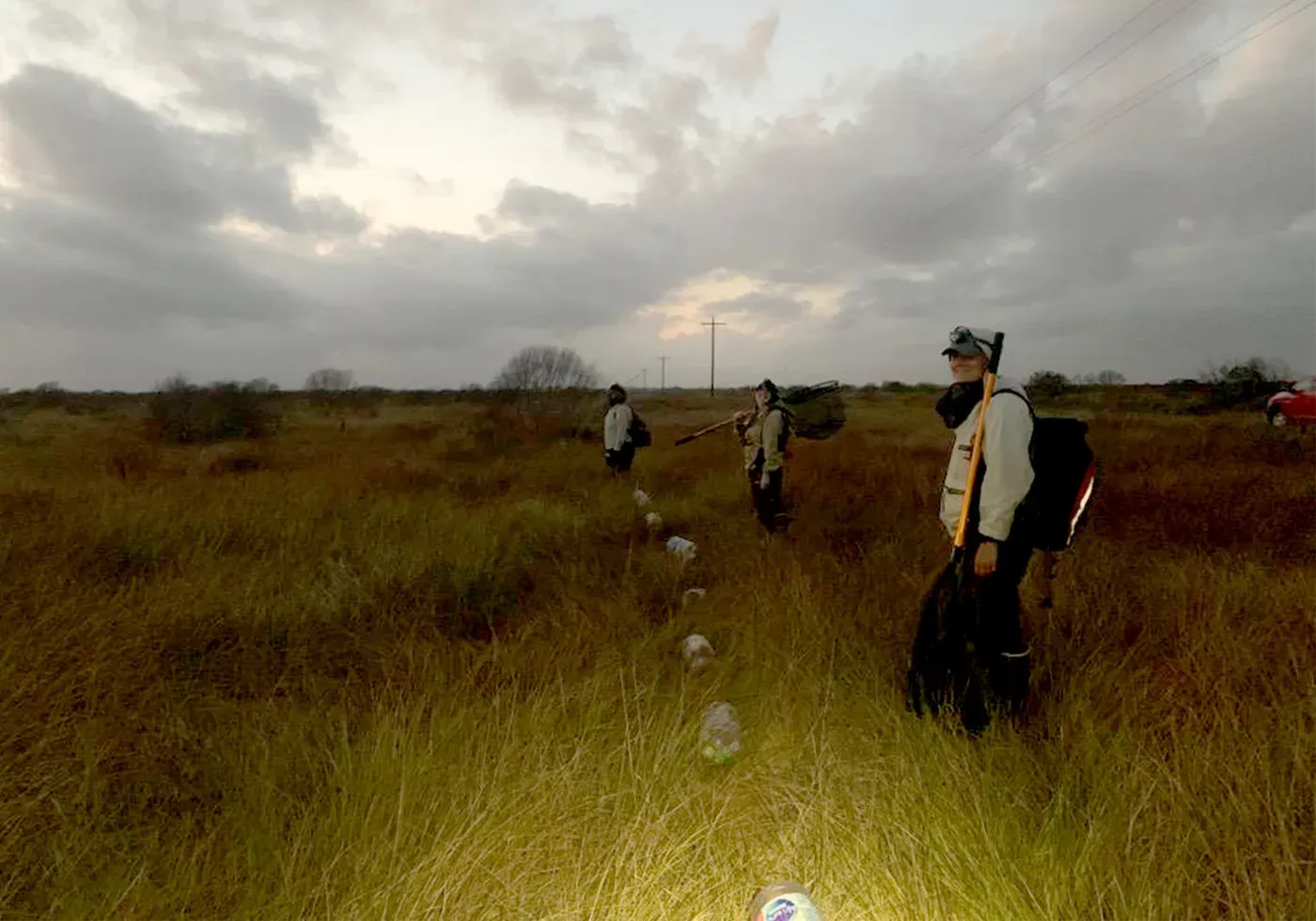
In an unusual method of bird-watching, the team is using a contraption made up of plastic bottles filled with noisy cat toys attached to a rope, which they drag through wetlands at night. The jingling of the toys and the rustling of the grasses in the wind are the only sounds that can be heard amidst the darkness.
The eastern black rail is notoriously shy and rarely seen flying, making it a challenging species to study. However, when one of the researchers' graduate students spotted a bird landing on the ground after taking flight, they quickly approached the area with caution.
A shout of "Rail! Rail!" from one of the team members alerted them to the presence of their quarry, and they carefully lowered a dip net over it. The bird was successfully caught in the net, providing the researchers with an opportunity to study its behavior up close.
The eastern black rail is a small bird that resembles a mouse running along the ground, making it difficult to spot.
We're in the midst of a crucial research project aimed at understanding the migratory patterns of eastern black rails, a federally threatened species found along the Gulf and Atlantic coasts.
To gather this information, we're collecting data on their preferred wetlands habitats, which will be used to inform conservation efforts. This involves identifying areas where these birds tend to congregate and feeding habits that are essential for their survival. Eastern black rails are known to inhabit coastal wetlands as well as smaller inland populations in Colorado and Kansas.
In the field, we're carefully observing and documenting the behavior of these elusive birds. They spend most of their time on the ground, hunting for invertebrates and seeds, and using vegetation to shield themselves from predators and the intense summer sun. Their small size makes them challenging to spot, but our team is well-equipped to handle this task.
As part of our research methodology, we're attaching a unique metal band to each bird's leg, which allows us to identify individual birds if they are recaptured in the future. This data will be crucial in determining their migratory patterns and whether they stay in Texas year-round or migrate north during the winter months.
The process of collecting data on these birds is both delicate and meticulous. We take precise measurements and standardized photographs, which provide valuable insights into their physical characteristics and behavior. One key aspect of our research involves carefully removing a single feather from each bird to analyze its genetic makeup and determine whether it's a year-round resident or a migrant.
Our team is acutely aware of the importance of handling these birds with care, ensuring that they are not harmed in the process. Each bird is treated as a unique individual, and we're committed to releasing them unharmed back into their natural habitat once our research is complete.
The researchers carefully set down the captured bird on the ground, its dim headlamp casting a faint glow over the surrounding grass. The rail, seemingly unaware of its brief captivity, quickly took off, vanishing into the dense undergrowth in an instant.
As they pack up their gear, the team is mindful of leaving nothing behind, ensuring all equipment is accounted for before moving on to the next location. Their search will continue throughout the night and over the course of two weeks as part of a broader project examining the effects of fires on wetland ecosystems and the endangered eastern black rail.
The researchers' mission is a meticulous one, requiring patience and attention to detail in order to gather valuable insights into the behavior and habits of these elusive birds. The data they collect will contribute significantly to their understanding of how fire impacts the delicate balance of wetland systems.
Once their research is complete, each bird will be released unharmed back into its natural habitat, a commitment that underscores the team's dedication to responsible and humane scientific inquiry.
Facts based on reporting originally published by Phys.org.
You may republish this story, in full or in part, if you credit News Central Site and link to it (licence CC BY 4.0). Photos are not included.