Chinese Tech Sector Plummets 44% from Summer Peak
China's tech-heavy market has declined by 44% since its summer peak, outpacing a similar drop in the US Nasdaq index.
The Chinese tech sector is experiencing a severe downturn, with the STAR 50 index plummeting by 44% from its summer peak. This decline is more pronounced than the 18% drop seen in the US Nasdaq index, which has been struggling despite a relatively better performance compared to China's tech-heavy market.
The AI bubble, which has been a driving force behind China's economic growth, appears to have burst. The country's reliance on this sector has made it particularly vulnerable to market fluctuations. Analysts warn that the current situation poses significant risks for President Xi Jinping's plans to reinvigorate the economy through AI investments.
China's property market, which accounts for a staggering 70% of household wealth, is facing a major crisis. The housing crash has resulted in deflationary pressures and weakened consumer demand. Business investment is also suffering, with property investment plummeting by nearly 22% in October.
Beijing's strategy to mitigate the economic downturn involves leveraging cheap exports to boost growth. Additionally, state-backed banks have been pumping money into the stock market through a "national team of investors. This move aims to stabilize the market and prevent further instability.
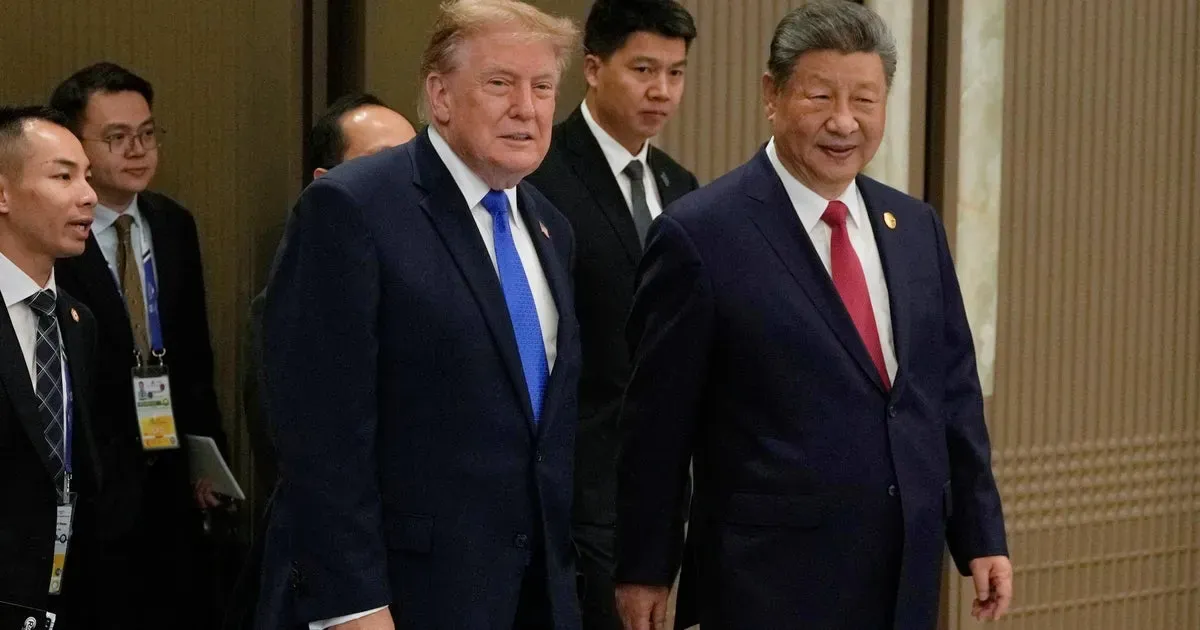
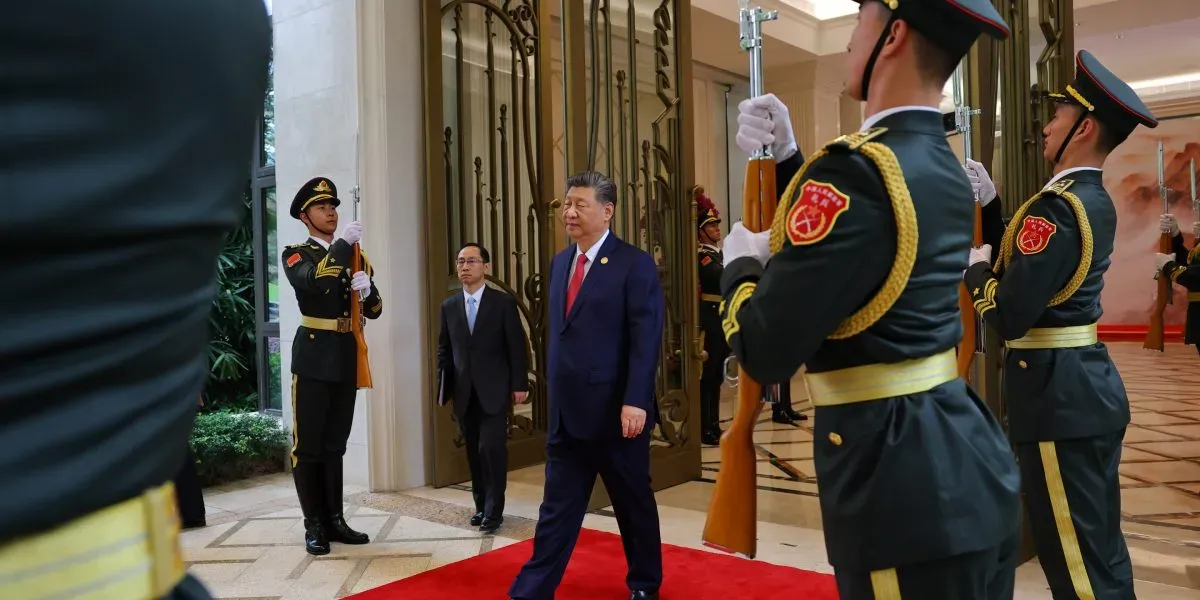
As President Xi Jinping hosts global leaders this week, his administration is grappling with the implications of the market's decline on its economic plans. The AI buildout, which was supposed to be financed by Chinese savers turned stock investors, now seems uncertain due to the downturn in the property market and declining business investment.
Chinese stocks have been in free fall this year, weighed down by intense competition, increased tax burdens, higher energy costs, and tariffs that are making it harder for exports to compete on the global market. The risk of trading partners blocking Chinese goods sold at artificially low prices is also a major concern.
The stability of China's stock market is crucial for maintaining funding for artificial intelligence initiatives. If the market remains in turmoil, AI projects may be forced into the state-owned enterprise sector, further limiting opportunities for private sector growth. This outcome would run counter to Xi Jinping's pledge to shrink the SOE universe since 2013.
The government's crackdown on the tech sector in 2020 has left retail investors wary of putting their money into Chinese stocks. The perception that the market is rigged and favors well-connected insiders doesn't help, either. As a result, many households view investing as a high-stakes gamble rather than a way to build long-term wealth.
The Shanghai Composite remains below its peak set in October 2007, despite China's GDP growing nearly sixfold since then. This has left many investors with financial PTSD" after repeated stock market crashes, including the severe downturn in 2015 that required significant government intervention.
Despite being a global leader in AI, China still relies heavily on mom-and-pop investors to drive trade on its markets. However, even these small-scale investors are increasingly treating the market as a high-risk place to invest rather than a means of growing retirement savings.
The Chinese government's efforts to stabilize its capital markets are a top priority for Premier Li Qiang, who has identified this goal as the most pressing issue for the remainder of the year.
To achieve this aim, securities regulators have relaxed requirements for company buybacks and discouraged initial public offerings (IPOs) and large share sales. This move aims to prevent stock dilution and subsequent selloffs that can destabilize the market.
However, a new threat has emerged in the form of technology curbs imposed by the Trump administration following a high-profile espionage scandal involving Nvidia. These restrictions target China's access to advanced U.S. chips and computing capacity.
As analysts at Capital Economics have pointed out, these controls threaten to impede China's progress in developing its leading AI models and slow down the country's AI rollout, potentially undermining President Xi Jinping's ambitions for a Chinese version of Wall Street.
Facts based on reporting originally published by Fortune.
You may republish this story, in full or in part, if you credit News Central Site and link to it (licence CC BY 4.0). Photos are not included.