Bison Jump Site Discovered in Texas Panhandle
Archaeologists have uncovered a rare example of a "bison jump" site used by Indigenous people for 3,000 years in the southern Plains region.
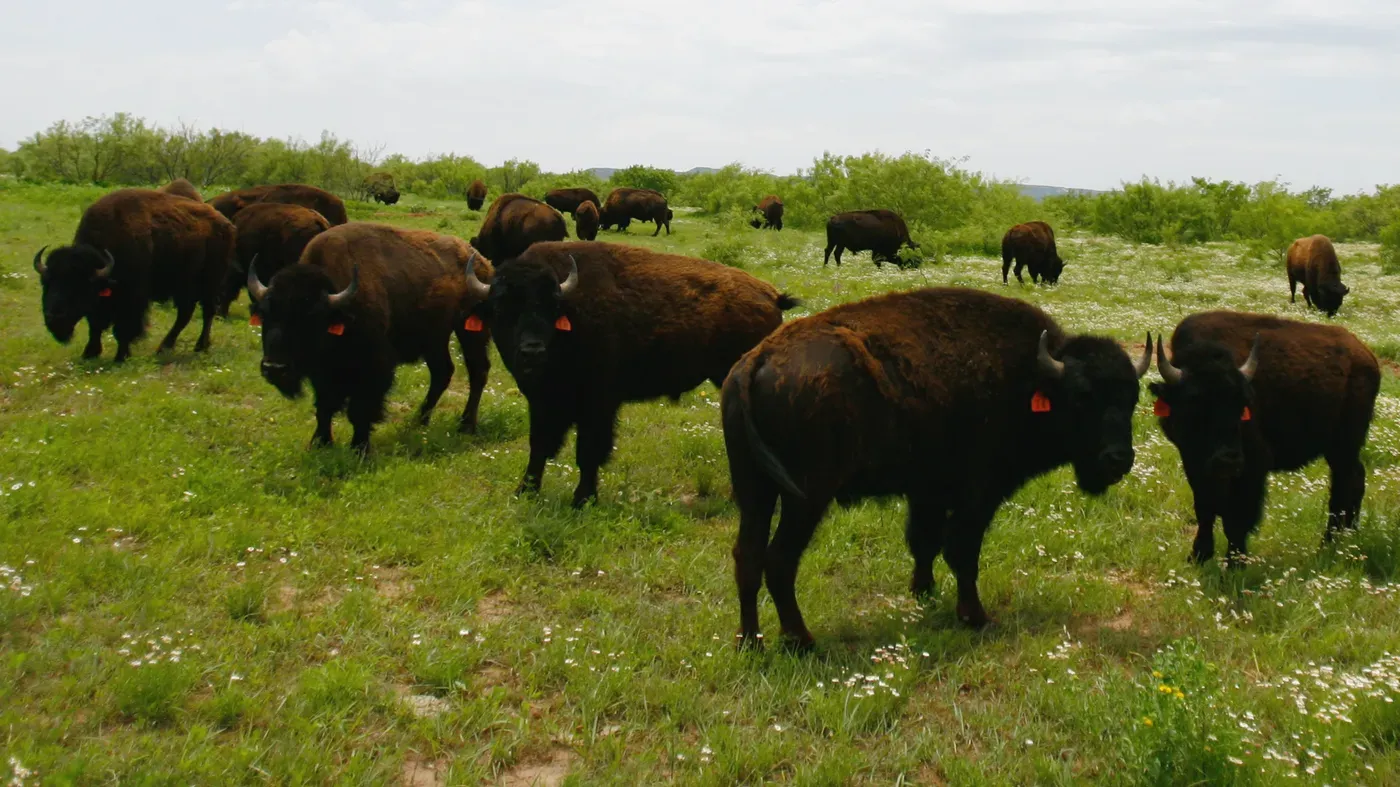
Archaeologists have made a groundbreaking discovery in the Texas Panhandle, uncovering a rare example of a "bison jump that was used by Indigenous people for 3,000 years.
This prehistoric hunting technique involved driving bison herds into a stampede off a cliff, much like being pushed onto a precarious platform. The technique has been long associated with the northern Plains, but this new find suggests it was also practiced in the southern Plains. In fact, only one such site had previously been identified in the region.
Researchers have published their findings online, highlighting the significance of bison jumping" as a uniquely North American hunting method that produced some of the most productive food-gathering events in human history. The technique allowed hunters to channel bison herds into a controlled environment where they could be easily hunted and processed for meat.
The newly discovered site, Nighthawk, is located within Caprock Canyons State Park and has been found to have been used by Indigenous people for an astonishing 3,000 years. This prolonged use of the site suggests that hunters had a deep connection with this hunting facility.
The Nighthawk bison jump site in Texas is a unique archaeological find that has been discovered beneath a 65-foot-tall cliff spur.
Archaeologists investigating the area found chipped stone tools and arrowheads near the bones of hundreds of bison that had accumulated at the site.
Cut marks on some of the bison bones indicate that they were butchered using stone tools, suggesting that this was a prehistoric hunting practice rather than simply a natural death zone.
The presence of these tools and butchery marks adds weight to the theory that Nighthawk is indeed a bison jump site, where hunters would herd animals off the cliff for food.
Excavations at Nighthawk, a bison jump site in Texas' Caprock Canyons State Park, have uncovered evidence that challenges long-held assumptions about when and how Indigenous people harvested bison for food.
Recent research suggests that these events were not limited to the fall season as previously thought. Instead, they may have taken place throughout the year, with each event involving a substantial number of participants - estimates range from 300 to 400 individuals.
The sheer scale of such an operation would have required meticulous planning and coordination among the hunters. This is evident in the presence of butchery marks on the bison remains, which indicate that the animals were processed at the site itself rather than elsewhere.
The Texan bison herding site's unique geography would have made it impractical to store large quantities of pemmican, a high-calorie food made from animal fat, which was likely too warm for such stores to last more than a few weeks.
Instead, the southern Plains bison hunts may have served as a means to showcase power and build alliances among Indigenous groups. The rarity of kill events at Nighthawk, with an average of 500 years passing between each bison jump, suggests that the practice was not a regular occurrence.
The fact that this technique was passed down over long periods rather than repeatedly revived is evident in the researchers' observation that the simplest explanation for the long-lived bison jumps is the consistent transmission of knowledge and skills across generations.
Facts based on reporting originally published by Live Science.
You may republish this story, in full or in part, if you credit News Central Site and link to it (licence CC BY 4.0). Photos are not included.