Mysterious creature Mudder threatens Newfoundland community in Netflix series Below
A new Netflix series combines marine science, horror, and environmental themes to captivate global audiences.
A new Netflix series has captured the attention of audiences worldwide with its unique blend of marine science, horror, and environmental themes. The show "Below is set in a small coastal community in Newfoundland, Canada, where a mysterious creature known as Mudder threatens to disrupt the lives of residents.
This ancient, squid-like being is inspired by real-life encounters between humans and giant squids (Architeuthis dux) that date back to the 1870s. Newfoundland's rich history with these creatures has been well-documented, making it an ideal setting for a story that delves into the mysteries of the deep.
Dr. Annie Mercier, a marine biologist based at the Ocean Sciences Center in Newfoundland, was approached by the show's director Jesse Mckeown to serve as a scientific adviser on the project. With her extensive knowledge of deep-sea organisms and their behavior, Dr. Mercier was an ideal candidate for the role.
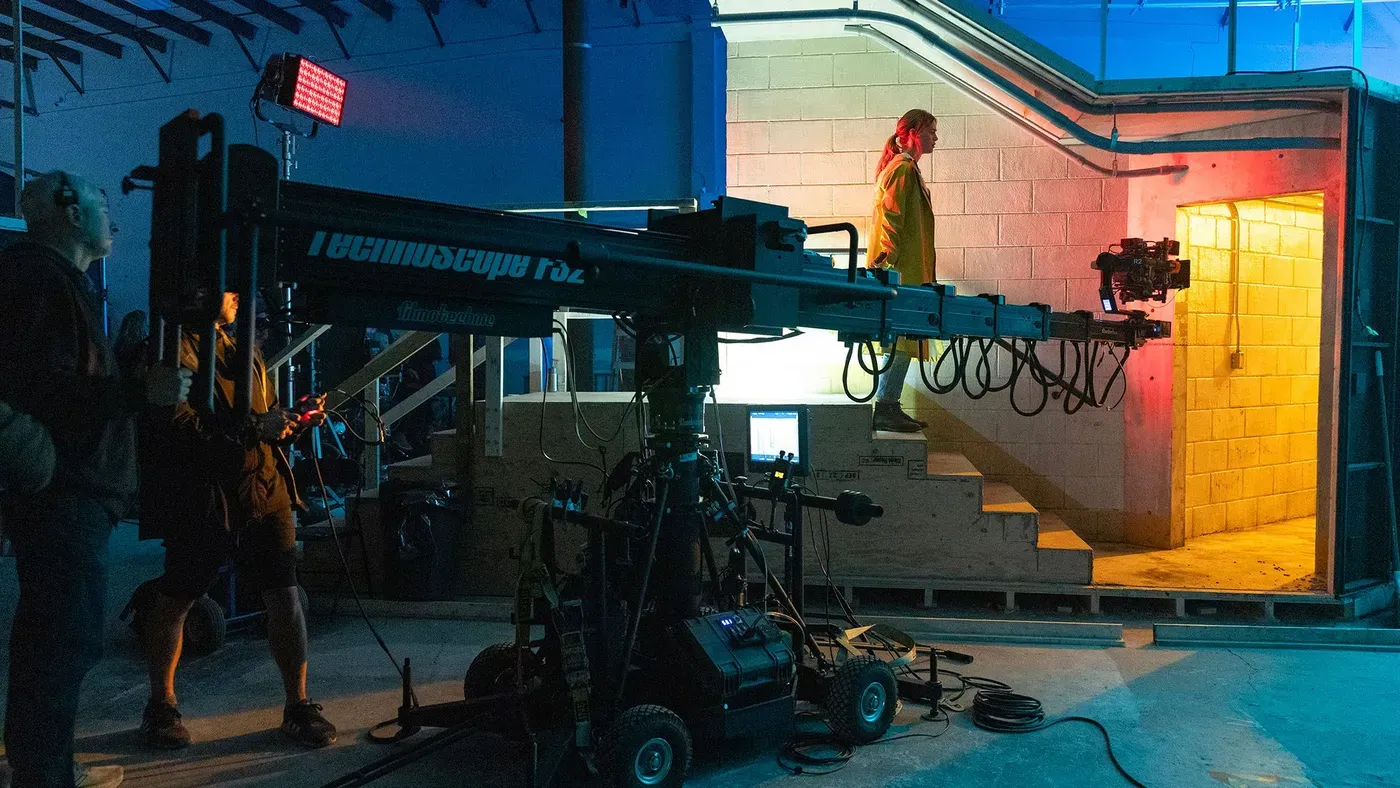
The filming location for Below included Dr. Mercier's lab at the Ocean Sciences Center, where she worked closely with the production team to ensure accuracy in their depiction of marine life. One of the actors on set, Mackenzie Davis, who plays the research scientist Dr. Fonda Howander, met with Dr. Mercier to gain a deeper understanding of her character and the world they were creating.
As a result of her involvement in the project, Dr. Mercier spoke with Live Science about how she helped bring Mudder and its story to life on screen. The interview provides a unique glimpse into the collaboration between scientists and filmmakers that brought this captivating series to audiences around the globe.
Dr. Mercier's own research focuses on deep-sea organisms and their responses to environmental stressors such as climate change. Her work has taken her to various locations, including Newfoundland, where she has studied the behavior of strange creatures in their natural habitats.
The story of Below" is one that combines science, suspense, and drama, keeping viewers on the edge of their seats until the very end. With its unique blend of marine biology and horror elements, it's no wonder this series has captured the imagination of audiences worldwide.
The advising process for Netflix's hit series 'Below' involved a collaborative effort between the science adviser and the showrunners.
To ensure that the scientific aspects of the story were accurate, the advisers would receive scripts at regular intervals, starting with the first episode and progressing in sequence.
This allowed them to provide feedback on various elements, including the portrayal of marine life and the scientific work depicted in the series.
The science adviser's role was not limited to pointing out factual errors; they also offered suggestions for improvement, which were then incorporated into the script.
In some cases, the feedback was as simple as adjusting the timing of an event or correcting minor details related to marine animal migrations.
Additionally, the advisers provided written feedback and sometimes shared links to further information on specific topics, allowing the showrunners to make informed decisions about the direction of the series.
The production team of Netflix's hit series 'Below' was filming on multiple sets around Newfoundland, which made it challenging for science adviser Annie Mercier to provide feedback in real-time.
She eventually managed to visit the Ocean Sciences Centre when they were filming there on a Saturday.
During her visit, Mercier spent time in the control room and met actress Mackenzie Davis, getting an idea of what the team was doing on-site.
When discussing giant squids, Mercier acknowledged that she knew it was a fictional show, but still had concerns about how they would be portrayed.
In particular, she was asked by the producers to provide feedback on Mudder, the giant squid-like creature in the series.
Mercier noted that some of the drawings from the 1800s showed similar depictions of giant squids, which raised her initial fears about the show's accuracy.
The depiction of giant squids in Netflix's hit series 'Below' has sparked concerns about accuracy among marine biologists. However, some aspects of the show's portrayal are actually quite accurate. For instance, cephalopods like giant squids lack the skeletal structure necessary to support complex movements on land.
Their bodies are designed for fluid movement through water, and they don't have the same muscular attachments that allow humans to move around on dry land. This is a fundamental aspect of their biology that is often overlooked in popular culture.
To address these concerns, I provided images of an octopus species found on certain reefs, which demonstrates how cephalopods can move efficiently outside of water. The show's creators took note of this and incorporated elements of fluid movement into the depiction of giant squids.
Another area where the show excelled was in keeping the creature mysterious rather than attempting to show too much detail. This decision paid off, as it allowed viewers to fill in the gaps with their own imaginations and made the show more engaging overall.
However, some aspects of the show's portrayal are indeed fictional. For instance, cephalopods have no way of detecting prey on land, relying solely on their senses to navigate the ocean. This limitation was a key factor in my advising process, as I emphasized the importance of maintaining scientific accuracy.
In addition to these concerns, there is also a rich history surrounding giant squids in Newfoundland, where sightings and encounters are well-documented. This folklore likely influenced the show's creators when choosing their topic, adding an extra layer of authenticity to the narrative.
When it comes to the hallucinogenic properties of the creature's mucus, I can confirm that this was not a specific area of discussion during my advising process. While many marine animals do have toxins, the idea of these substances becoming airborne or being ingested through melting icebergs is indeed fictional.
As an adviser for Netflix's hit series 'Below', one of the concerns was that the show would not accurately portray science, particularly in the field of marine biology.
The portrayal of toxic substances and their effects on humans is a sensitive topic, but it seems that the show's creators took the right approach by consulting with experts like the adviser.
A key aspect of the show's production was filming on location at the Ocean Sciences Centre, which added to the authenticity of the scenes depicted in 'Below'. The centre's real laboratories were used for filming, giving the audience a more realistic view of what marine science is all about.
The adviser notes that their profession is often misrepresented in media, with scientists being portrayed as all-knowing and infallible. In reality, marine scientists are experts in their field but may not have knowledge on other areas of science.
One of the common clichés avoided by the show was depicting laboratories as sterile environments filled with colorful equipment. The adviser appreciates that 'Below' showed the real-life labs to be more eclectic and cluttered with various tools and equipment.
The show's portrayal of scientists is also noteworthy, as it shows them in a more nuanced light. Unlike some other media depictions, the characters in 'Below' are not all-knowing or infallible, but rather experts in their field who may have limitations and uncertainties.
When it comes to the effects of toxic substances on health, the adviser emphasizes that while marine scientists can make diagnoses, they may not be qualified to provide medical assessments. This nuance is an important aspect of the show's portrayal of science.
The adviser was pleased with how 'Below' portrayed their profession, avoiding common clichés and stereotypes. The show's creators clearly took the time to understand the intricacies of marine biology and consulted with experts to ensure accuracy.
The portrayal of scientific uncertainty in the series 'Below' is also noteworthy. The show's creators conveyed that scientists often follow lines of inquiry without being entirely sure of the outcome, requiring further investigation to confirm findings.
This approach adds a layer of realism to the narrative, making it more relatable and engaging for audiences. By depicting the process of scientific discovery in this way, the series provides an accurate representation of how science is conducted in real life.
The show's depiction of Newfoundland as a character in itself is also impressive. The landscapes, environments, and spirit of the people were all captured accurately, creating a vivid portrayal of the province.
The Ocean Sciences Centre and its labs were also portrayed nicely, with some students having even had their workplaces featured on screen during filming. This added an extra layer of authenticity to the series, as it showed the real-world locations where scientists work.
Josh Harnett's character Calvin Penney relies heavily on Dr. Fonda Howander for scientific guidance, which is a realistic portrayal of how scientists often rely on each other for expertise and collaboration.
The show's creators took a thoughtful approach to incorporating scientific details into the narrative, ensuring that they got things right even when taking creative liberties. The end result is a series that not only entertains but also educates its audience about marine biology and related fields.
Facts based on reporting originally published by Live Science.
You may republish this story, in full or in part, if you credit News Central Site and link to it (licence CC BY 4.0). Photos are not included.