Savanna Faith Stone's Comments on Women Voting Spark Controversy at Conservative Christian Event
A 21-year-old social media influencer has sparked controversy after declaring that women should not vote, claiming it is a "con perpetuated by elites who do not have women's interests at heart.
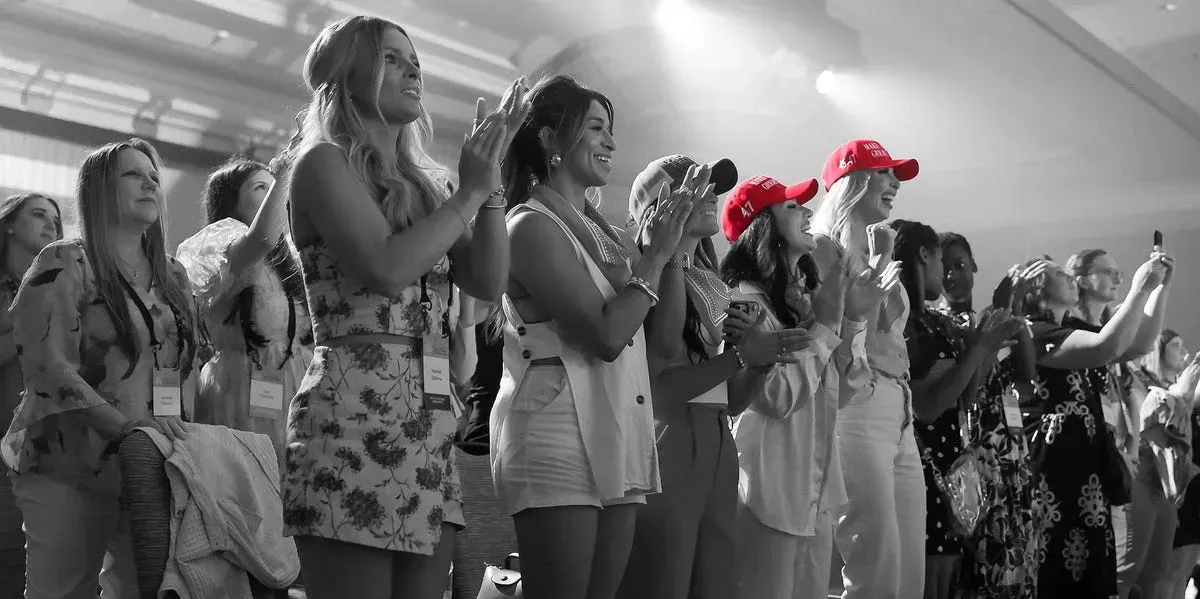
A young social media influencer has sparked controversy after declaring that women should not vote at a recent gathering of conservative Christian women in Texas.
Savanna Faith Stone, a 21-year-old from Florida, made the statement during her appearance on stage at the three-day event in San Antonio last spring. According to reports, she claimed that voting is a "con perpetuated by elites who do not have women's interests at heart.
Stone's comments were widely criticized and mocked by many, with some labeling them as a fringe extremist viewpoint. However, others defended her right to express her opinions, even if they are unpopular or contentious.
Experts suggest that Stone's statements may be more representative of a larger trend in online discourse, where inflammatory and emotionally provocative content can spread quickly and gain traction on social media platforms.
The online sphere has given rise to a variety of perspectives on women's roles in society, some of which advocate for a more submissive approach in relationships.
The podcast Culture Apothecary has sparked controversy with its series Wife School, which explores the idea that wives should prioritize their husbands' needs, particularly when it comes to intimacy.
This concept is not an isolated incident, but rather part of a larger movement within the womanosphere" - a term coined to describe the online ecosystem of antifeminist media and content creators.
The types of statements made by this group often grab attention due to their provocative nature, yet rarely lead to sustained analysis or critique.
The notion that women were coerced into voting is being peddled by some anti-feminist groups, who claim that suffrage was imposed upon them without their consent.
Savanna Stone has made this argument, suggesting that many working-class women did not want the vote and were forced to accept it as part of the suffrage movement. However, historical records reveal a more complex picture.
Middle-class and upper-class women also participated in the suffrage movement, demonstrating that the idea of resistance to voting was not unique to working-class women.
The reasons behind this argument are multifaceted and reflect broader societal trends. According to Katie Gaddini, author of Esther's Army: The Christian Women Who Power the American Right, there is often a backlash against social change.
At times of significant upheaval, certain groups may seek to reclaim traditional power structures by promoting divisive ideologies that pit different segments of society against each other.
The nostalgia presented in reactionary social media accounts often romanticizes a past that is unattainable for many people.
Young women in America and Britain are facing significant economic challenges, with the dual-income household becoming a necessity rather than a choice due to rising living costs.
This shift has been accompanied by the proliferation of apps that commodify intimacy, adding new demands on women's time and energy. The pressure to maintain a perfect online persona, including physical appearance and intellectual pursuits, is also having a profound impact.
In this context, some young women are beginning to question the idea of equality as freedom, instead finding it means an equal share of responsibilities and burdens without any respite or relief from the pressures of modern life.
In recent years, some young women have begun to question the idea of equality as freedom, instead finding it means an equal share of responsibilities and burdens without any respite or relief from the pressures of modern life. Influencers like Wilson and Stone have capitalized on this sentiment by offering a vision of settled domesticity where someone else handles the civic and economic burden. This message resonates with women who are feeling overwhelmed and exhausted, but it's a misguided solution to their problems.
The appeal of this idea lies in its promise of relief from the demands of modern life, rather than any genuine attempt to empower women. By suggesting that women should focus on domestic duties and leave civic and economic responsibilities to others, these influencers are essentially advocating for a return to traditional roles. This message is particularly appealing to those who feel worn down by the pressures of modern society.
However, experts argue that this approach is not only misguided but also irresponsible. If women were to be paid fairly for their labor and have access to affordable childcare and healthcare, they would indeed have more choices and autonomy in their lives. But instead of pushing for these solutions, some influencers are promoting a simplistic and outdated vision of womanhood.
The irony is that this messaging often comes from people who claim to care about women's empowerment, but ultimately perpetuate the same patriarchal ideals that they claim to reject. By offering a false promise of relief from modern life's pressures, these influencers are doing more harm than good to their audience and to society as a whole.
It's concerning to see ideologies spreading that undermine the importance of voting, affecting not just one particular group but the broader population as well.
Younger voters often have lower turnout rates, and the gap between young men and women is widening, with polls suggesting a persistent divide along gender lines. This disparity is particularly evident in mid-term elections where every vote counts.
By engaging with politics and community, we can counteract anti-suffrage messaging and work towards creating societies and economies that benefit everyone, rather than succumbing to nationalism or surrendering the right to vote.
Facts based on reporting originally published by Harper's Bazaar.
You may republish this story, in full or in part, if you credit News Central Site and link to it (licence CC BY 4.0). Photos are not included.