Fires in the US Are Increasingly Destructive Due to Climate Change and Human Development
A new study warns that if left unchecked, the risk of fire damage to buildings will nearly triple by 2060, particularly in areas with high poverty and housing burdens.
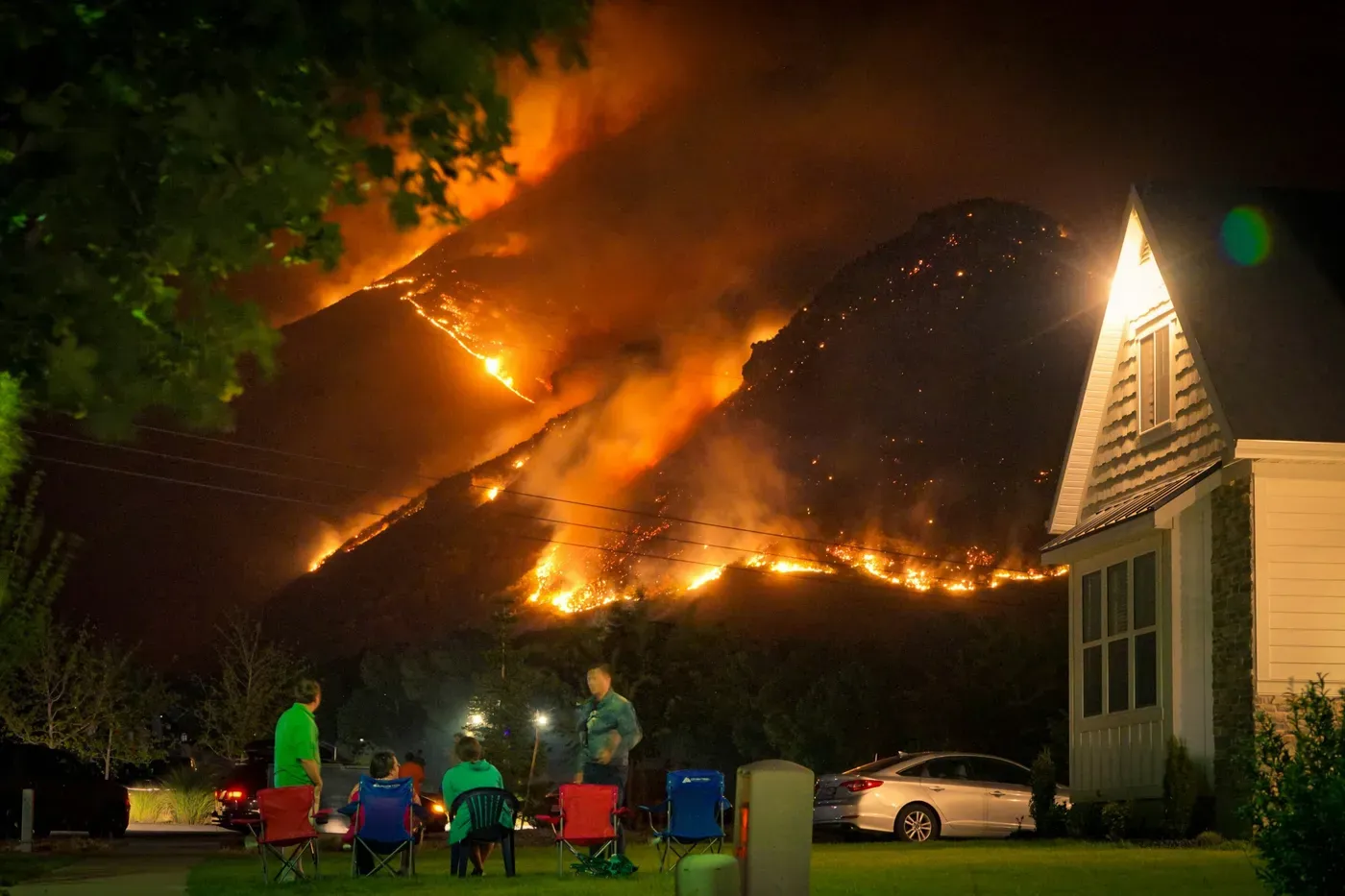
Fires in the United States are becoming increasingly destructive, fueled by climate change and exacerbated by human development and settlement patterns.
The trend is alarming: fires are growing faster, larger, and more intense, while people continue to build homes and communities in areas prone to wildfires. New research from the University of Colorado Boulder's Cooperative Institute for Research in Environmental Sciences (CIRES) warns that if left unchecked, the risk of fire damage to buildings will nearly triple by 2060.
The study highlights a pressing concern: many of the regions most vulnerable to wildfires are also home to significant poverty and housing burdens. In the western United States, areas with high projected fire risk overlap with existing socioeconomic disparities, creating a perfect storm of vulnerability.
"This is a call for action," said Virginia Iglesias, CIRES Earth Lab director and lead author of the paper, emphasizing the urgent need for proactive measures to mitigate and prepare for wildfires.
Historical data on burned areas and development patterns has been used to reconstruct fire risk to structures in the United States from 1945 to 2023. This information was combined with weather, climate, and housing-density data to create a model that forecasts the risk to buildings through 2060.
Under current projections, moderate climate change mitigation and no new fire adaptations will lead to a significant increase in structural losses from fires. The team's estimates suggest that up to 449,100 buildings could be destroyed or damaged by 2060, representing nearly triple the number of losses seen previously.
The researchers emphasize the importance of considering both current development patterns and past decisions when planning for future fire risks. This includes thinking about where new developments should take place, as well as addressing existing vulnerabilities in communities that are at high risk from fires.
Regional differences in fire risk have also emerged from the study, with the western United States set to bear the brunt of structural losses due to wildfires. However, the central U.S. is expected to experience the largest increase in fire risk, driven by rising fire activity in grasslands and prairies, while the eastern U.S. will see smaller but still significant increases in risk despite its lower overall exposure.
Fires can occur anywhere in the country, regardless of location, as they don't discriminate based on geography. However, some regions have been relatively spared from destructive fires, which has left them less prepared for such events.
The team's projections indicate that by 2051-2060, communities with socio-economic vulnerabilities will bear the brunt of increased fire risks across the US. In particular, census tracts in the western states are expected to experience significant rises in risk, with a notable proportion experiencing poverty and housing burdens.
In an effort to mitigate this growing threat, Colorado introduced a new wildfire resiliency code in July 2025, aimed at reducing the risk of fires affecting life and property. While code changes are a step in the right direction, they alone may not be enough to address the issue.
The researchers emphasize that addressing fire risks must take into account social vulnerability factors, including community resources and capacity for recovery. By considering these aspects alongside geographical location, policymakers can develop more effective strategies for mitigating the impact of fires on vulnerable communities.
A crucial aspect of addressing fire losses to U.S. buildings is investing in targeted mitigation strategies. Iglesias emphasizes that effective action requires investment, and the results of this research can help policymakers prioritize their efforts by identifying areas where policies and building codes will have the greatest impact.
By considering geographical location alongside these factors, policymakers can develop more tailored approaches to reducing fire risks in vulnerable communities. This is essential for minimizing the devastating consequences of fires on buildings and the people who live or work in them. Ultimately, proactive measures are necessary to mitigate the predicted near-tripling of fire losses by 2060 without new protections being put in place.
Facts based on reporting originally published by Phys.org.
You may republish this story, in full or in part, if you credit News Central Site and link to it (licence CC BY 4.0). Photos are not included.