Isolated Indigenous People Sighted near Government Access Post in Brazil's Amazon
A rare sighting of 20 members of the Awa people approaching a neighboring community in Brazil's Amazon has sparked concerns about their safety.
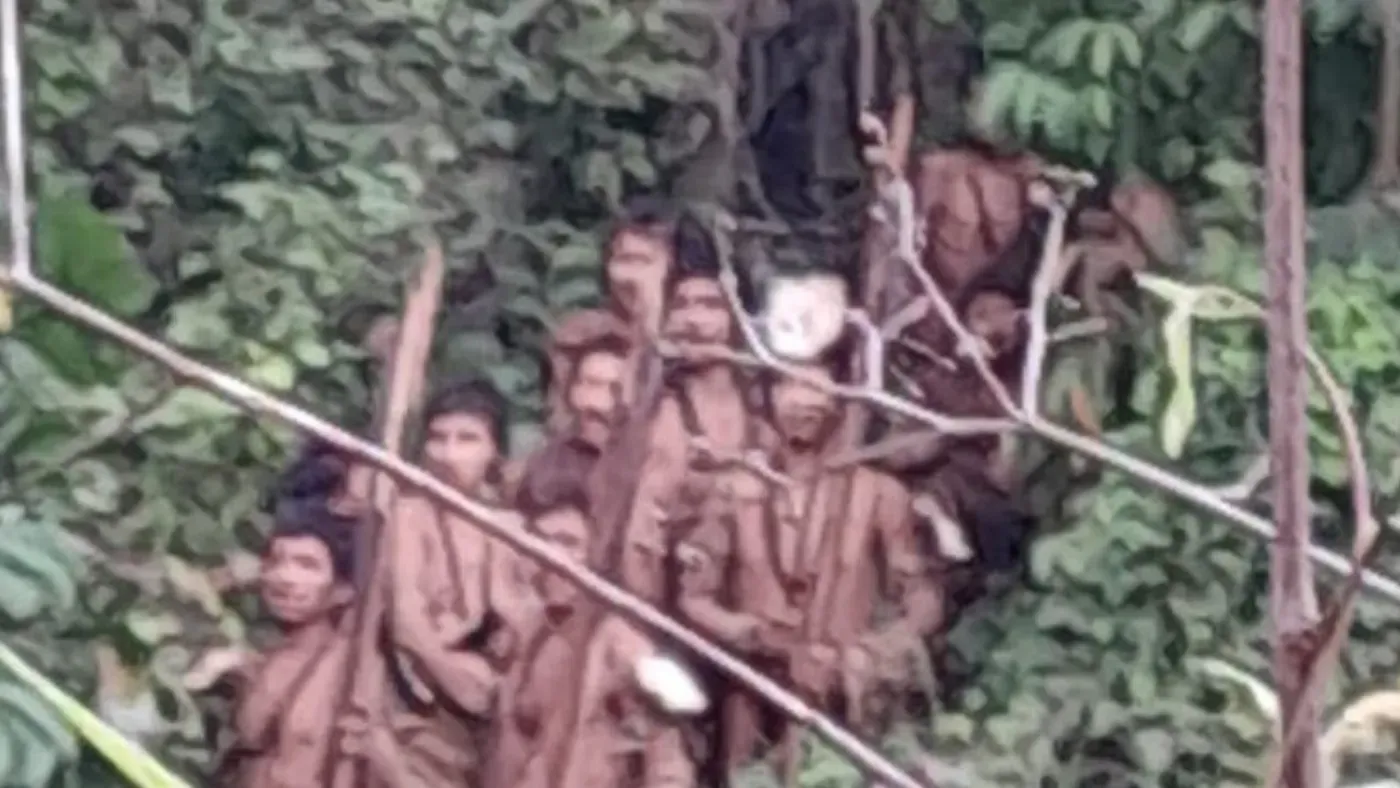
A rare sighting of isolated Indigenous people in Brazil's Amazon has sparked concerns about their safety and the threats facing their forest home.
The incident occurred near a government access control post and the Guajajara village of Tawari in the northeastern state of Maranhao, where around 20 members of the Awa people were spotted approaching the Arariboia Indigenous Territory. The Ministry of Indigenous Peoples has released a statement detailing the encounter, which is still being assessed by authorities.
Images of the rare encounter have drawn widespread attention and raised questions about why the isolated group would suddenly approach a neighboring community. This comes at a time when their forest territory is under threat from illegal logging, hunting, and other intrusions.
The Ministry has cautioned that information on the situation remains preliminary as they continue to assess the encounter's implications for the Awa people's health and safety.
Sarah Shenker, head of Survival Brasil, an organization advocating for Indigenous peoples' rights, has called the incident a "crisis moment and urged Brazilian authorities to take action against illegal intrusions into Awa territory.
The images of Awa adults and children gathered amidst dense vegetation are a rare glimpse into the lives of isolated Indigenous groups in Brazil. However, experts warn that these encounters can be fraught with danger for both sides, particularly when outsiders venture into their territories.
According to Survival International, members of the neighboring Guajajara community recorded footage of the Awa group carrying bows and arrows, as well as wearing feathered headdresses and necklaces. The images have sparked debate about the presence of isolated Indigenous groups in Brazil, with some disputing their existence in order to access their lands.
The circumstances surrounding this encounter are shrouded in uncertainty, but it appears that the Awa group approached a government team and requested food, specifically yams. They then took these offerings back into the forest, leaving questions about their motivations and intentions unanswered.
Brazil's Arariboia territory has faced decades of pressure from illegal intruders, threatening the safety and security of isolated communities like the Awa. As surrounding forests are cleared, these groups become increasingly vulnerable to encroachment and exploitation.
The isolated Awa people in Brazil's Arariboia territory face a daunting reality: as their forests shrink due to deforestation, they become increasingly vulnerable to encroachment by outsiders. Survival International estimates that around 100 Awa remain uncontacted, although this figure may not reflect the current population count.
Infectious diseases pose an immediate threat to these isolated communities. Indigenous peoples have limited immunity to common pathogens found in the wider population, making them more susceptible to illnesses. This vulnerability is a major concern for those working to protect the Awa's right to remain isolated.
The Brazilian government has made it clear that its policy does not aim to encourage contact with outsiders, but rather to safeguard the Awa's choice to maintain their isolation. A brief encounter does not necessarily mean a group has abandoned its isolation or decided to establish permanent ties with the outside world.
The Guajajara people, who live in the same territory as the Awa, have been working tirelessly to monitor their lands and prevent illegal intrusions. However, these efforts have led to violence against the community, including the killing of some members, highlighting the need for the Brazilian government to take responsibility for protecting the territory.
The rare encounter between outsiders and the isolated Awa Indigenous people in Brazil has sparked concerns over safety, despite the attention generated by the images.
Shenker emphasized that it would have been better for the Awa to remain out of sight, living undisturbed in their forest, where they can continue their traditional way of life. We would rather not have images and video footage of them," she said, highlighting the importance of respecting their choice to live isolated. This approach would allow them to pursue activities like hunting, fishing, and gathering without interference.
The incident underscores the need for the Brazilian government to take responsibility for protecting the Awa's territory and ensuring their safety.
Facts based on reporting originally published by ABC News International.
You may republish this story, in full or in part, if you credit News Central Site and link to it (licence CC BY 4.0). Photos are not included.