Measles-free status lost by US after decades of effort
The United States has lost its measles-free status after decades of concerted efforts to eradicate the highly contagious virus.

The United States has lost its measles-free status after decades of concerted efforts to eradicate the highly contagious virus.
This reversal is part of a disturbing trend in which vaccination rates are declining globally and locally, allowing once-controlled diseases to resurface and spread rapidly.
Measles cases have been on the rise across the Americas since 2024, with multiple countries struggling to contain outbreaks. The US has now joined Mexico and Bolivia as nations where measles elimination efforts have faltered.
Mexico's loss of measles-elimination status is a direct result of a significant resurgence of the virus in the country, which culminated in a massive outbreak in Chihuahua state.
Bolivia also lost its measles-elimination status after struggling to contain outbreaks across the nation.
The Pan American Health Organization (PAHO) has announced that it expects the US, Bolivia, and Mexico to submit plans within weeks on how they will work towards stopping measles transmission for at least a year and regaining their measles elimination status.
Measles outbreaks have been spreading across the Americas since 2024, initially affecting close-knit Mennonite communities in North America before expanding to areas with low vaccination rates. Last year, Canada lost its measles-free designation for the first time since 1998, highlighting the growing concern over vaccine-preventable diseases.
The measles elimination status is based on whether a single chain of transmission has not occurred within a country's resident population for at least 12 consecutive months. This designation is crucial in assessing a region's public health preparedness and ability to control infectious disease outbreaks.
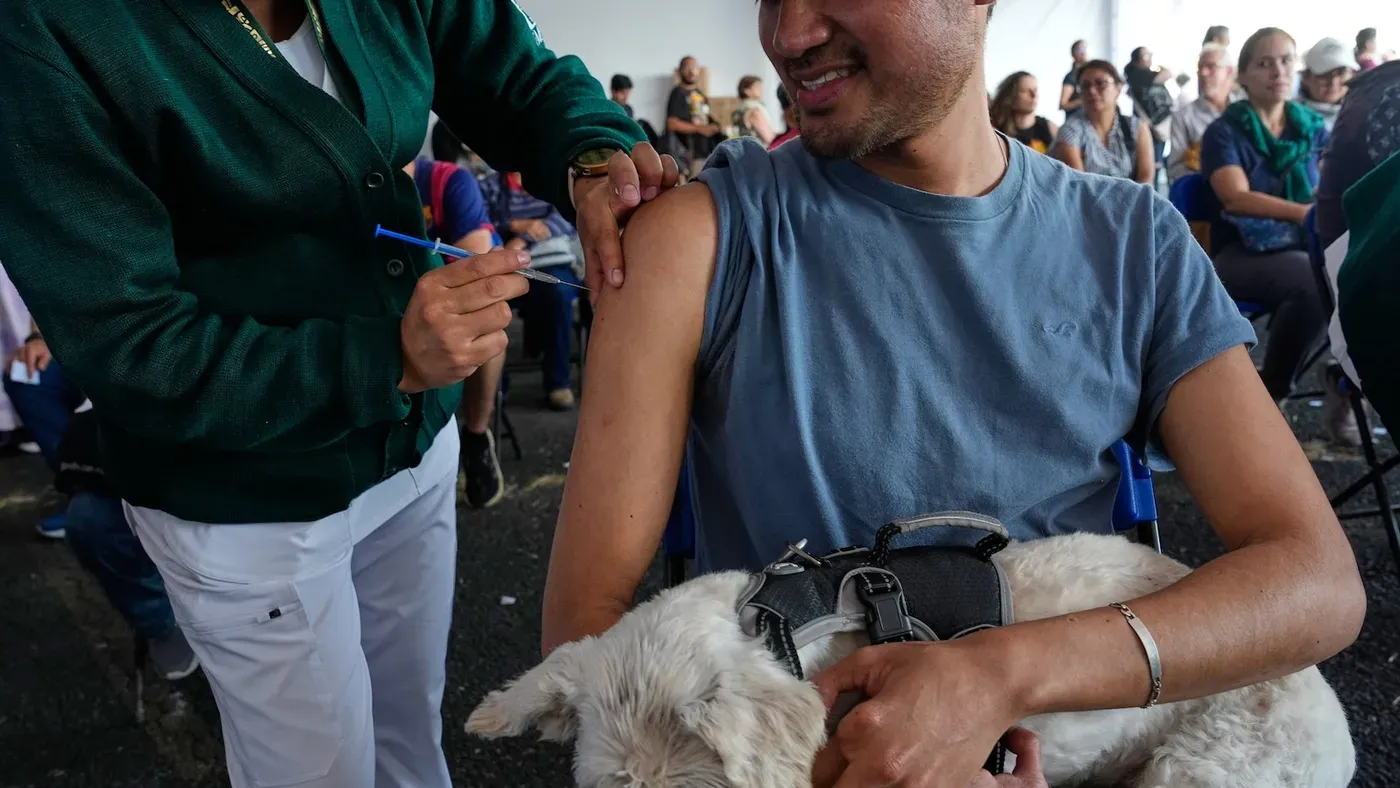
Vaccination rates have been declining globally, including in the US, raising concerns about the resurgence of vaccine-preventable diseases like measles. As one of the most contagious diseases known to medicine, measles was seen as a likely candidate to reemerge when vaccination efforts falter.
According to Dr. Susan Kansagra, chief medical officer of the Association of State and Territorial Health Officials, measles outbreaks can serve as an early warning sign for other vaccine-preventable diseases.
The spread of measles in communities across the United States has become a growing concern due to declining vaccination rates and federal leaders' mixed messages about the importance of getting vaccinated.
A significant drop in community vaccination rates below 95% has created an environment where outbreaks can occur, according to experts. The virus is now present in all but three states, with confirmed cases reported throughout the country this year.
The past two years have seen a surge in measles cases, with over 7,000 reported and 13 related deaths. The majority of those affected were either not vaccinated or their vaccination status was unknown. Furthermore, nearly 10% of infected individuals required hospitalization for treatment.
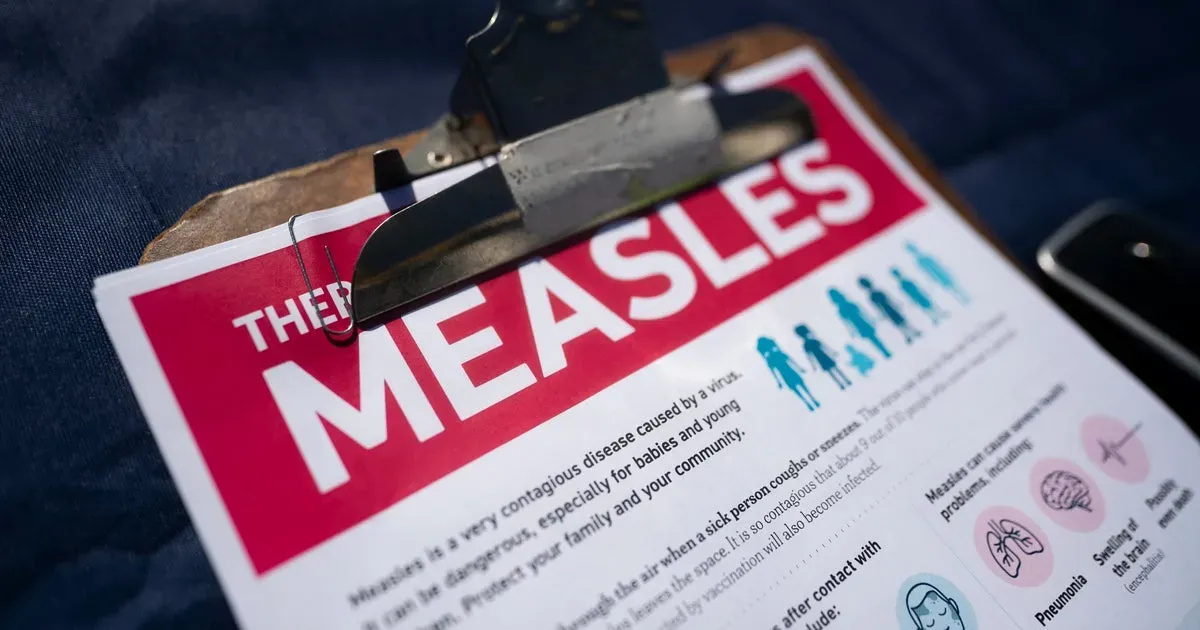
Measles typically begins with a high fever followed by a distinctive rash that starts on the face before spreading to other areas of the body. Most people recover from the illness, but it remains one of the leading causes of death among young children worldwide according to the World Health Organization.
The sudden surge in measles cases across the United States has led to a significant increase in reported illnesses and fatalities. In Texas alone, over 760 people have fallen ill and two children have lost their lives due to the highly contagious disease.
Measles outbreaks have also been reported in neighboring states such as New Mexico, Arizona, Utah, and South Carolina. The situation is dire, particularly in rural border towns where access to healthcare services may be limited. In New Mexico, approximately 100 people contracted measles, resulting in one adult fatality.
The current outbreak has surpassed all previous ones since 1991, with over 5,400 confirmed cases reported so far this year. This staggering number is already double the total for last year and is largely attributed to a massive outbreak in Pennsylvania. The sheer scale of the epidemic has left public health experts warning that the actual numbers may be significantly higher.
The US government's handling of the measles crisis has been criticized by some, particularly given the leadership roles held by individuals with a history of anti-vaccination advocacy. Robert F. Kennedy Jr., the US Health Secretary, was once a vocal proponent of vaccine skepticism before taking on his current role.
The struggles with measles in various countries are well-documented, but experts argue that the situation in the US wasn't predetermined.
Senator Ron Wyden from Oregon has expressed his disappointment and frustration over the loss of measles-free status, labeling it a "tragic yet predictable outcome.
A significant step taken by the government to combat the spread of measles is the allocation of $100 million to support state and local health departments in their response efforts.
CDC Director Dr. Erica Schwartz reaffirmed the importance of vaccination in preventing measles transmission, stating that vaccination does" protect Americans from the disease.
However, state and local health officials have pointed out that the cost of addressing this issue far exceeds the allocated funds, emphasizing the need for a stronger federal commitment to vaccinations.
The lack of vocal support for vaccination efforts from high-ranking officials has been criticized by experts, who warn that inaction will only lead to more suffering.
The lack of urgency from top officials has raised concerns among health experts as the US, Mexico, and Bolivia struggle to contain the measles outbreak. An inquiry about Kennedy's reaction to the US losing its measles-free status was met with a reference to Schwartz's statement by an HHS spokesperson.
Health officials have previously credited successful vaccination campaigns for eradicating measles in the Americas, where over 6.2 million deaths were prevented between 2000 and 2023. The region's achievement in becoming the world's first measles-free area is now at risk as North America grapples with a renewed outbreak.
Facts based on reporting originally published by France 24 English.
You may republish this story, in full or in part, if you credit News Central Site and link to it (licence CC BY 4.0). Photos are not included.