Shift from Old English to Middle English Documented through Study
A recent study has shed new light on the transformation of language in the twelfth century.
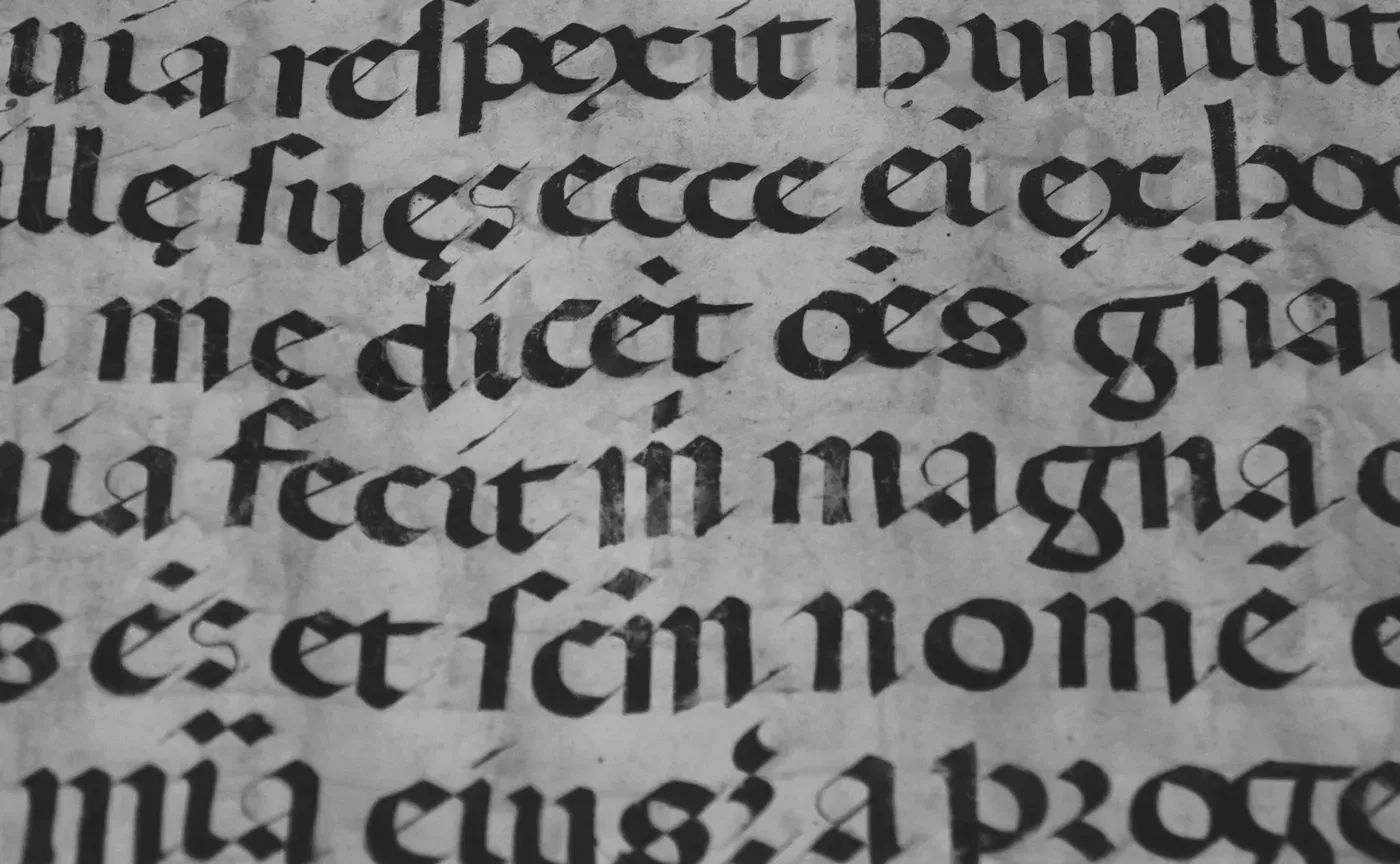
A major shift occurred in the English-speaking world in the twelfth century as Old English gave way to Middle English.
The change was so significant that it has puzzled historians for centuries, but a recent study by Ph.D. candidate Amos van Baalen sheds new light on how this transformation took place.
Van Baalen's research focuses on sermons written by the 11th-century abbot Ælfric, who was a highly influential figure in his time and whose texts were still being copied and circulated centuries after his death.
Ælfric's writings are particularly valuable for studying the transition from Old English to Middle English because they represent a unique blend of both languages. "Old English resembles Dutch and German, and even Swedish to some extent," van Baalen explains, highlighting its distinct characteristics.
Van Baalen chose Ælfric's sermons specifically because they demonstrate how written language continued to evolve long after spoken language had begun to change.
The evolution of Old English was a gradual process that spanned centuries. As language continued to change over time, written records began to reflect these shifts. One key development in this period was the decline of final nasals in unstressed syllables.
This phenomenon is particularly evident in the use of the dative case in the plural, which remained consistent across all types of nouns in Old English. The -um ending, for example, was a distinctive feature that allowed researchers to track changes in spoken language over time.
Van Baalen's analysis focused on the transcription of this case ending by later copyists. By examining whether they used an -m or -n, he could determine if the loss of final nasals in unstressed syllables had also affected the written language. This approach enabled him to reconstruct the extent to which spoken and written English diverged.
The study also looked at vocabulary used in sermons from this period. One finding was that English words were not frequently replaced by French or Old Norse variants, suggesting a remarkable degree of linguistic continuity. Instead, regional dialects and variants began to emerge in written records.
As people started writing what they heard, their texts reflected the changing sounds and rhythms of spoken language. This is evident in the presence of many words still used in English today, which were likely borrowed from other languages during this period.
The gradual shift towards a more modern English pronunciation is a complex process that involved numerous linguistic developments over several centuries. By examining written records from this time, researchers can gain insight into how spoken language continued to evolve and change.
The decline of Old English as a written language is an intriguing phenomenon that has puzzled linguists for centuries. As Latin's influence waned in England around the 12th century, it may have allowed people to write in English more freely, reflecting how they actually spoke rather than adhering strictly to traditional norms.
This shift could have been facilitated by the growing presence of Anglo-Norman French in England, which may have reduced the dominance of Latin and given writers greater flexibility. As a result, written records from this period offer a unique window into the evolution of spoken language, providing valuable insights into how English continued to change over time.
Facts based on reporting originally published by Phys.org.
You may republish this story, in full or in part, if you credit News Central Site and link to it (licence CC BY 4.0). Photos are not included.