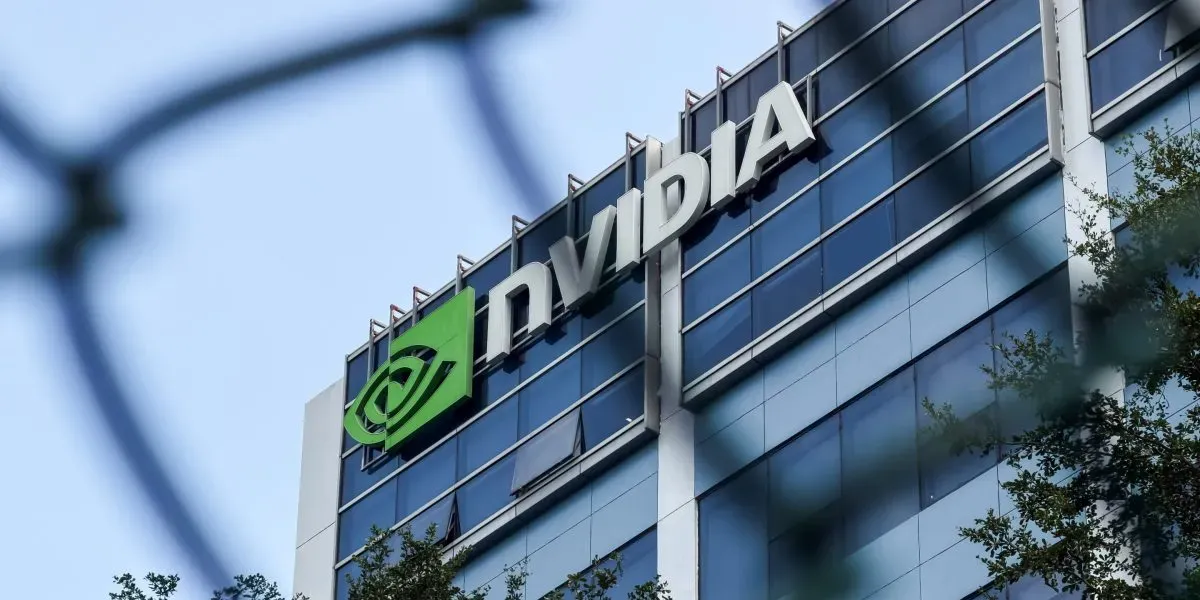
Nvidia Reports Strong Earnings Despite Former CEO Jensen Huang's Departure
The company's financial results demonstrate its underlying strength and resilience under new leadership.
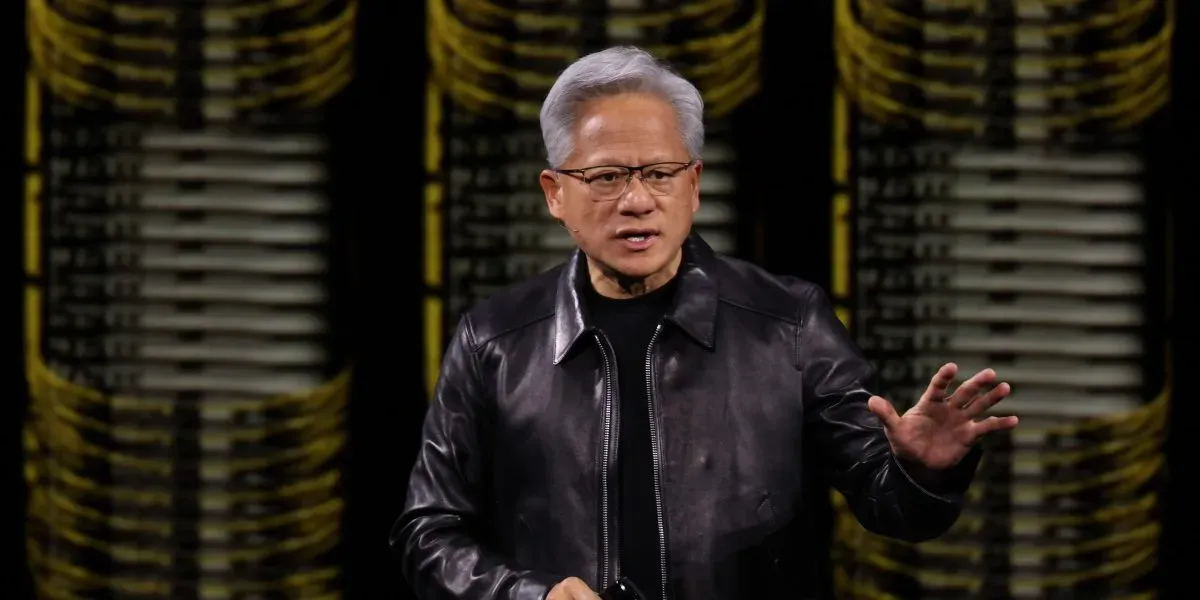
Nvidia's recent earnings release has sent a clear message that the company can thrive without its former CEO, Jensen Huang, at the helm.
The strong financial results announced today demonstrate Nvidia's underlying strength and resilience, which is not dependent on any single individual's leadership.
Interim CEO Colette Kress deserves credit for confidently raising forecasts for the future, showcasing her ability to lead the company forward with a clear vision.
Kress also impressed during the earnings call, displaying command, presence, and candor that earned her plaudits from investors and analysts alike.
Meanwhile, new board chair Harvey Jones has effectively closed the door on Huang's potential return as CEO, amid ongoing investigations into his actions and Nvidia's corporate governance practices.
The SEC is now probing Huang, adding to the scrutiny surrounding his tenure at the company, which has raised questions about his character and judgment.
A small but vocal group of tech enthusiasts has been advocating for Huang's reinstatement, citing perceived "woke management policies as a reason for his departure.
Some critics have accused Huang of prioritizing his own interests over those of Nvidia's shareholders. This perception has sparked a heated debate about corporate governance and accountability. Huang's departure has left many wondering if he was truly responsible for Nvidia's woes.
A vocal minority of tech enthusiasts is advocating for Huang's reinstatement, citing what they see as woke" management policies as the reason for his departure. However, this argument overlooks the fact that Huang's actions may have had a significant impact on Nvidia's performance.
Meanwhile, governance advocates are proposing solutions to address Nvidia's governance issues. Unfortunately, many of these proposals are misguided and fail to address the root problems. For instance, some experts have suggested that dual-class shares are to blame for Nvidia's woes.
However, this criticism is misplaced since Nvidia has a single-class stock structure. Instead of pointing fingers at capital structures, experts should focus on developing meaningful solutions to improve corporate governance. The fact that Huang's departure was not solely due to his own self-enrichment is often overlooked in these discussions.
Governance professor Richard LeBlanc of York University has proposed the implementation of an independent chair as a solution to Nvidia's governance woes. However, this suggestion is problematic since Nvidia already had an independent lead director, Stephen Neal, who was the former CEO of Cooley Law Firm.
The lack of understanding about corporate governance is evident in the proposals put forth by experts like Charlie Elson at the University of Delaware. Elson has baselessly blamed dual-class shares for Nvidia's woes, despite the company having a single-class stock structure.
Elson's argument that dual-class shares may spark a reconsideration of their use in publicly traded companies is unfounded and misses the mark. The New York Times has also repeated this misguided argument, highlighting the need for better understanding of corporate governance.
In addition to these proposals, social media campaigns and op-eds have added to the noise surrounding Nvidia's governance issues. These efforts often prioritize ideological positions over meaningful solutions, exacerbating the problem rather than addressing it.
The real lessons from the Nvidia crisis are being overlooked in favor of simplistic solutions. Boards should focus on building sustainable businesses that don't rely on other people's money and avoid falling prey to mindless metrics that obscure the true nature of governance.
Boards should focus on building sustainable businesses rather than relying on external funds, and avoid being swayed by metrics that distort their true role in governance.
The reliance on accountants and attorneys to safeguard companies is misplaced, as ultimately the responsibility lies with the board itself.
ISS and Glass Lewis have long advocated for a checklist approach to good governance, but this strategy has proven misguided and ineffective.
Their playbook, often echoed by governistas, recommends separating the chair and CEO roles, introducing independent board members, establishing committees, and promoting diversity, measures that fail to distinguish between effective and ineffective boards.
Nvidia's case serves as a stark reminder of the flaws in this approach. Despite meeting all the technical requirements set out by ISS and Glass Lewis, the company still suffered from poor governance.
The board at Nvidia was comprised entirely of independent directors, with an independent lead director who had previously served as CEO of a respected law firm.
Annual elections were held for each position, with no staggered terms, and the 'one vote per share' principle was in place, a measure often championed by governistas.
The reliance on governance metrics can be misleading when evaluating a company's performance.
Independent directors were present in some of the companies that later faced financial difficulties, such as Enron and Silicon Valley Bank. Despite having independent chairs and boards, these companies still experienced major issues.
Research by Stanford found no correlation between ISS's governance ratings and actual company performance. The study tested ISS's ratings against various measures, including restatements and shareholder lawsuits.
The first author of the study argued in a 2002 Harvard Business Review article that a closer look at the boards of companies like Enron and Adelphia revealed no broad pattern of incompetence or corruption.
However, critics argue that the focus on governance metrics has led to a reliance on platitudes rather than addressing the underlying issues. This mirrors Goodhart's Law in economics, which warns against confusing metrics with the actual phenomenon being measured.
The issue is similar to intelligence testing, where the test itself can only measure certain aspects of intelligence and misses other important dimensions. Harvard psychologist Howard Gardner has highlighted this limitation in his work on Frames of Mind.
Governance commentators often single out dual-class shares as a major problem, but this criticism may be misplaced. Dual-class shares are not unique to companies facing financial difficulties, and Nvidia itself does not have multiple classes of stock.
In fact, Nvidia has never had dual-class shares, despite being criticized for its governance structure. This raises questions about the effectiveness of relying on certain metrics as indicators of good governance.
The International Shareholder Services (ISS) has taken a firm stance against companies with unequal voting rights, recommending against directors of such organizations without exception. This stance reflects a widely held misconception in some governance circles about the merits of dual-class share structures.
A recent misidentification of our publication as an advocate for dual-class shares by Vice Chancellor Travis Laster of the Delaware Chancery Court highlights the complexity of this issue. However, we do not hold such a blanket view and instead take a more nuanced approach to evaluating corporate governance structures.
Our position is that there is no one-size-fits-all solution when it comes to share classes, and what works for one company may not work for another. This is reflected in our conclusion that the evidence suggests companies should consider their unique circumstances, leadership caliber, and operating environment before making a decision on share structure.
Critics of dual-class shares often overlook the fact that some high-profile corporate collapses and scandals have occurred at companies with single-share, one-vote structures. Enron, Worldcom, Tyco, Arthur Andersen, Bear Stearns, Lehman Brothers, Wirecard, FTX, Silicon Valley Bank, and First Republic Bank are just a few examples of such cases.
These instances demonstrate that the absence of dual-class shares does not necessarily guarantee good governance or prevent corporate malfeasance. It is therefore misguided to blame dual-class shares for companies' woes without considering other factors at play.
In fact, some experts argue that the focus on share structure distracts from more pressing issues related to corporate governance and leadership accountability. By failing to consider these broader concerns, critics of dual-class shares commit a form of intellectual laziness that undermines constructive debate about governance best practices.
The example of Nvidia's struggles highlights the need for a more nuanced understanding of corporate governance structures and their interactions with other factors. Rather than relying on simplistic metrics or assumptions, policymakers and stakeholders should engage in a more thoughtful and evidence-based discussion about what constitutes good governance.
A one-size-fits-all approach to evaluating corporate governance is misguided and simplistic. It fails to take into account the nuances of each company's unique situation and context.
The problems at Nvidia were not rooted in its share structure or executive compensation packages, but rather in the quality of its board members and the overall culture within the organization. This insight highlights a blind spot among some policymakers and stakeholders who focus excessively on surface-level metrics without considering the deeper issues that can impact a company's success.
Facts based on reporting originally published by Fortune.
You may republish this story, in full or in part, if you credit News Central Site and link to it (licence CC BY 4.0). Photos are not included.