Hokkaido University and Kyoto University Researchers Study Electron Behavior in Alpha-Gallium Oxide
Researchers at Hokkaido University and Kyoto University have discovered that the effective mass of electrons in alpha-gallium oxide films is approximately 40% of a free electron's mass.
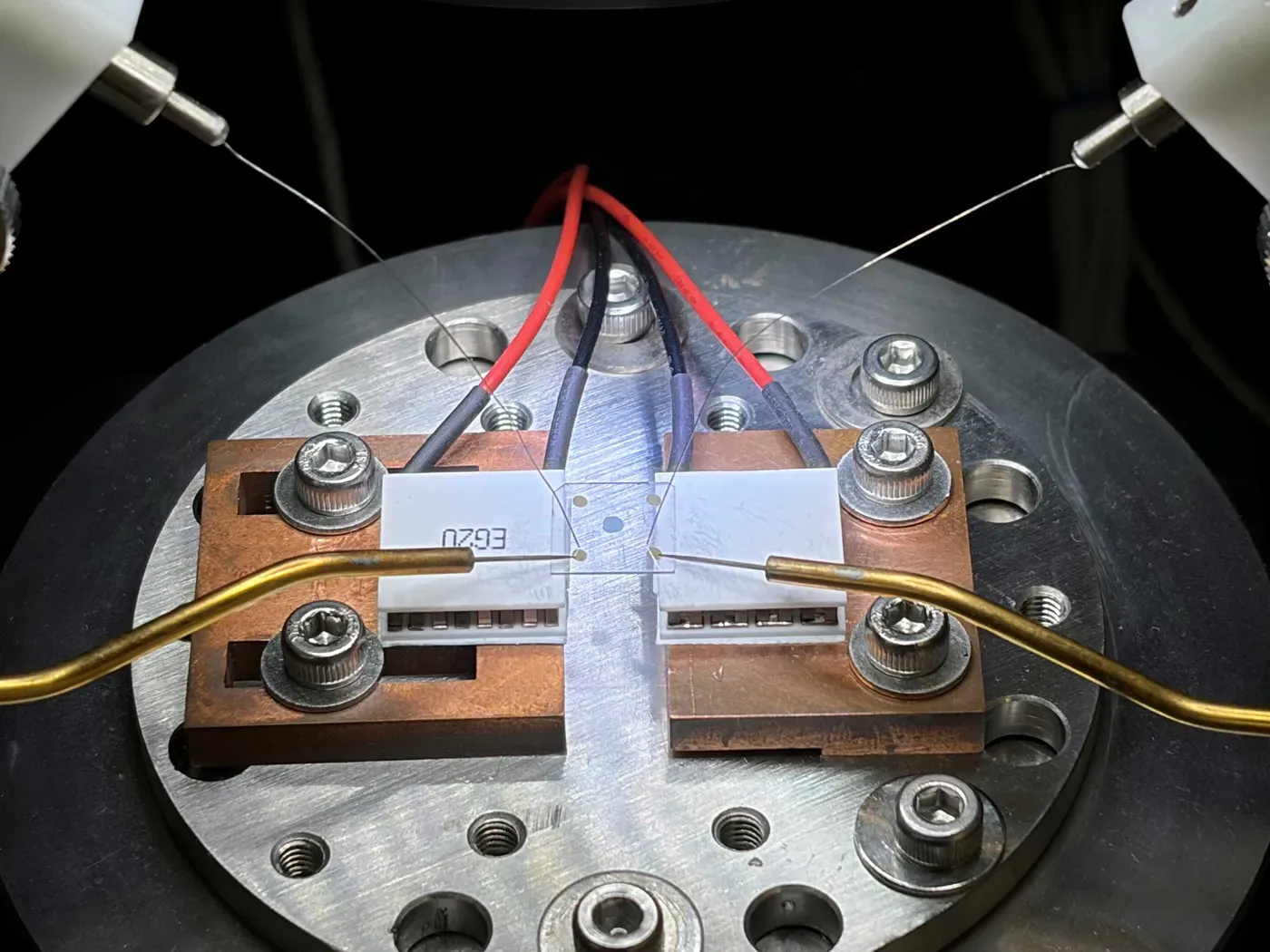
Researchers have made a significant discovery about the behavior of electrons in alpha-gallium oxide, a material crucial for power electronic devices that convert electrical energy into various forms.
These devices are essential for electric vehicles, renewable energy systems, and industrial equipment, but they often suffer from inefficiency due to heat loss during the process. The ability to withstand high voltages and efficiently transfer electricity while releasing heat effectively is key to making these devices more reliable.
Alpha-gallium oxide has shown promise in this regard, as it can handle strong electric fields. However, scientists have yet to fully comprehend how easily electrons move through it or how effectively it dissipates heat, both critical factors for creating dependable electronic devices.
To gain a deeper understanding of these properties, researchers at Hokkaido University and Kyoto University created thin films of alpha-gallium oxide using mist chemical vapor deposition. They introduced small amounts of germanium into the material to facilitate electron movement.
The addition of germanium allowed the team to manipulate the concentration of electrons in the material by varying the amount added. This enabled them to study how changes in electron density affected the flow of electricity and heat through the films, providing valuable insights for improving device performance.
The researchers took a closer look at the electrical properties of alpha-gallium oxide films by measuring electron concentration and thermopower, which is a measure of the voltage generated per unit temperature difference across a material.
These measurements revealed an unexpected trend - the effective mass of electrons in these films was approximately 40% of a free electron's mass. This value is higher than the theoretically predicted value of 25%, suggesting that electrons behave differently than expected within alpha-gallium oxide.
The study also examined how efficiently heat travels through these films, determining their thermal conductivity to be around 19 watts per meter-kelvin. Notably, this thermal conductivity remained relatively stable even when germanium concentration was increased.
Further analysis of the results indicates that incorporating germanium can facilitate electron movement without significantly impacting heat transfer through the material. This finding offers a valuable insight for future device development.
The study's findings suggest that alpha-gallium oxide's electrical properties are influenced by the behavior of its electrons, which deviate from theoretical expectations.
This unexpected electron behavior may be responsible for the slower-than-predicted flow of electrical current in alpha-gallium oxide devices, a crucial consideration for their development. The research team's experimental approach and thorough analysis provide valuable insights into the material's properties and potential applications. As a result, this study offers a significant contribution to the field of materials science.
Facts based on reporting originally published by Phys.org.
You may republish this story, in full or in part, if you credit News Central Site and link to it (licence CC BY 4.0). Photos are not included.