Groundbreaking Coral Diversity Discovery on Australia's East Coast
An international team of scientists has made a groundbreaking discovery on Australia's east coast, uncovering previously hidden coral diversity that sheds new light on the Great Barrier Reef.
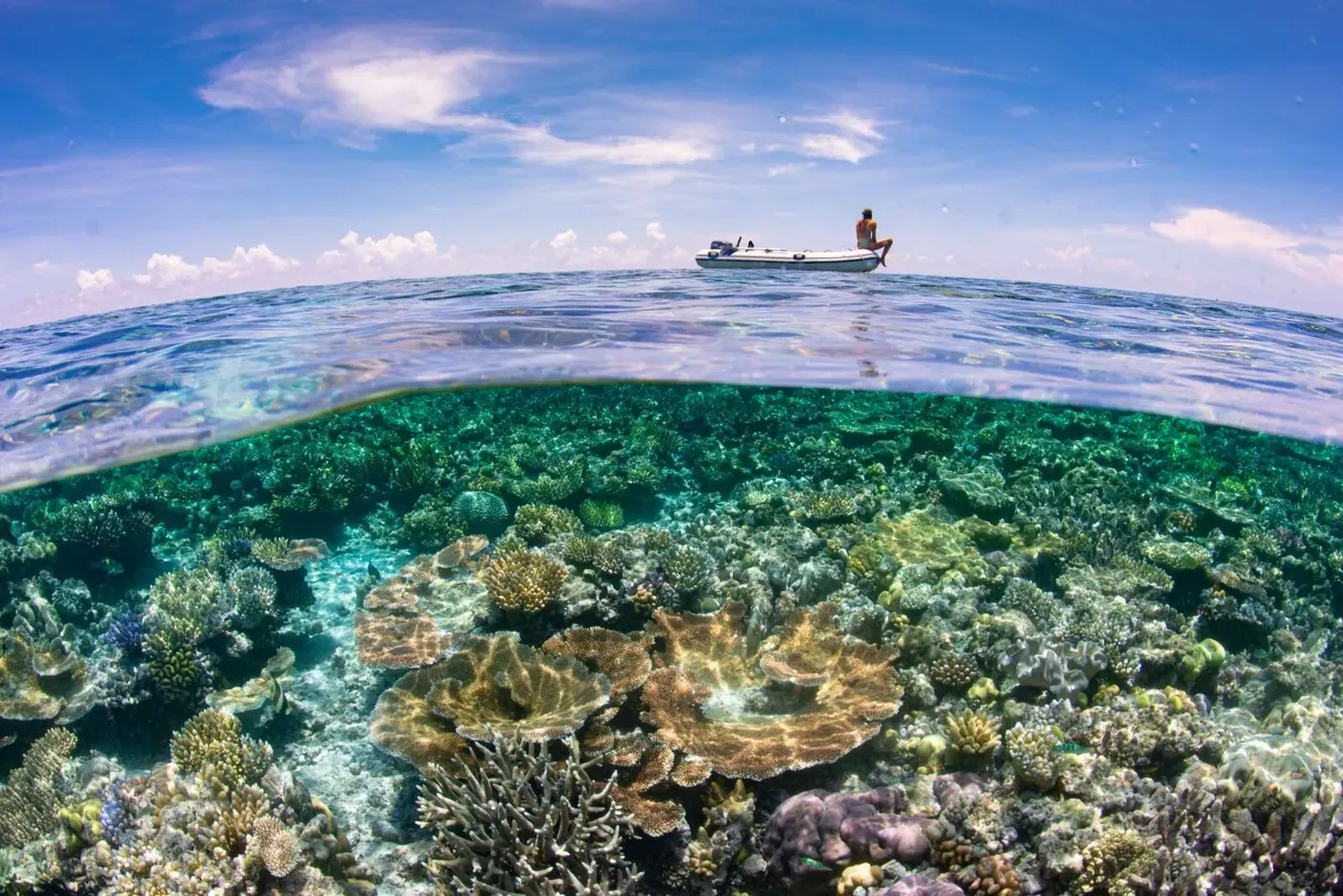
An international team of scientists has made a groundbreaking discovery on Australia's east coast, uncovering previously hidden coral diversity that sheds new light on the Great Barrier Reef.
The research, led by Dr. Augustine Crosbie from James Cook University and Queensland Museum, focused on Acropora, one of the most diverse groups of reef-building corals, which includes branching staghorns and table-forming corals.
A total of 53 named Acropora species were reassessed using cutting-edge genomic sequencing in combination with historical museum specimens. This comprehensive approach allowed researchers to reevaluate the distinctiveness of these coral species.
The study found that 47 out of 53 Acropora species are supported as distinct, while four previously unresolved species have been recognized as valid. Furthermore, 12 species that were once considered variations of other species have been resurrected and given their own unique status.
By connecting historical museum specimens with modern corals and genomic data, the researchers have gained a clearer understanding of coral diversity on the Great Barrier Reef. According to Dr. Crosbie, many of these corals had been known to science for over a century but were misinterpreted as variants of other coral species.
For years, coral scientists have grappled with the issue of distinguishing between unique species and variations of existing ones based on physical characteristics.
To address this challenge, researchers delved into museum collections worldwide, scrutinizing historical type specimens to gather valuable data.
In many cases, these specimens consisted only of preserved skeletons, which couldn't be directly sequenced. To overcome this limitation, the team collected modern corals from locations where the species were first identified and linked them with genomic information.
Recognizing distinct species is crucial for understanding and preserving coral biodiversity, according to Peter Cowman, principal scientist of marine biodiversity at Queensland Museum.
Cowman emphasized that a seemingly common coral could actually comprise several species, each occupying a smaller geographic area. This insight has significant implications for assessing extinction risk and allocating conservation resources.
The study of the Great Barrier Reef has been ongoing for decades, but researchers have now revealed that there is still much to be learned about this ecosystem.
Despite being one of the most well-studied ecosystems on the planet, scientists have discovered that they have significantly underestimated the number of coral species living in the reef. This realization highlights the complexity and richness of the reef's biodiversity, emphasizing the importance of continued research and monitoring efforts.
The findings underscore the need for a more nuanced understanding of the reef's ecosystem, with accurate knowledge of its constituent species being essential for effective conservation and protection strategies.
Facts based on reporting originally published by Phys.org.
You may republish this story, in full or in part, if you credit News Central Site and link to it (licence CC BY 4.0). Photos are not included.