Winter Damage Leaves Kyiv Residents Struggling with Replacement Windows
Kyiv residents are facing challenges finding replacement windows due to skilled installer shortages and government assistance delays, exacerbating the situation.
As winter tightens its grip on Ukraine, Kyiv's residents are bracing for the cold, but many face an added challenge: finding replacement windows to seal out the chill. Russian missile and drone attacks have left a trail of destruction, with buildings damaged and families exposed to the elements.
For Oleksandra Horban, the struggle is all too personal. Her apartment block was hit by a missile in October, leaving her small home shattered and vulnerable to the cold. Despite repeated cleaning efforts, tiny shards of glass still linger, posing a constant threat to her 2-year-old son's safety.
The problem isn't unique to Horban's building, many Kyiv residents are struggling to find replacement windows as skilled installers become increasingly scarce. The shortage is exacerbated by government assistance that can take months to arrive, leaving families in limbo.
As temperatures plummeted to minus 20 degrees Celsius last winter, the need for secure and warm homes became starkly apparent. But with costs soaring and skilled labor hard to come by, many low-income districts are feeling the pinch, particularly those near industrial zones where environmental degradation is a pressing concern.
Horban's home, a Soviet-era "groundscraper, was hit particularly hard by the missile blast, which shattered hundreds of facade windows in a vertical section of apartments. The destruction has left residents like Horban facing an uphill battle to keep winter at bay.
Fiberboard and tarps are being used to temporarily cover shattered windows in Horban's apartment complex. Some makeshift covers have small openings that allow daylight to filter in through Plexiglas panels.
Replacing the broken windows would be a costly endeavor for many residents. The cost of new windows can exceed $1,700, an amount that far surpasses Ukraine's average salary. This leaves homeowners with limited financial resources struggling to afford repairs.
The destruction caused by the war has resulted in significant housing damage. According to estimates, approximately 3 million housing units were destroyed or badly damaged by the end of last year. This extensive damage has contributed to a staggering $90 billion in reconstruction needs, as reported by the World Bank.
Ukraine's window manufacturers are currently able to meet demand for replacement windows. However, the shortage of skilled installers remains a major bottleneck. Businesses have been unable to exempt their employees from military service, including many experienced installers who could be completing installations.
The installation process itself can also be delayed due to high demand and shortages of materials. Factories are capable of manufacturing windows within 10 working days, but installation crews may take significantly longer to become available. Installation costs have at least doubled over the past year due to the intense competition for skilled laborers.
The harsh winter conditions in Ukraine have been exacerbated by a shortage of skilled window installers, forcing workers to carry heavy materials up and down stairs without the aid of functioning elevators.
As one installer recounted, he and his team made 18 trips up and down the stairs on a recent job, hauling heavy loads to replace balcony doors and windows in a fourth-floor apartment. They worked through power outages, refusing to wait for electricity to be restored before getting started.
To address the shortage of skilled laborers, the window installation industry is investing heavily in training programs. A vocational college in Kyiv has recently opened a state-of-the-art facility funded by the European Union, where 26 10th graders are enrolled in a three-year program to become window, door and facade installers.
The students practice their skills on mock window openings built from various materials, including brick, cinder block, wood, and synthetic materials. However, their classes are frequently disrupted due to missile and drone alerts, which have become a regular occurrence in the country.
Instructor Volodymyr Tserbii hopes that his apprentices will play a crucial role in rebuilding Ukraine after the war, providing them with a much-needed skillset for reconstruction efforts.
The daunting task of rebuilding Ukraine's shattered infrastructure will take a decade or more to complete, according to government estimates.
For Horban, waiting for new windows is just one of many challenges her family faces. Her apartment lacks gas, forcing them to rely on portable cooking equipment and only heat their son's room when electricity permits. The kitchen roof has also been compromised by water damage.
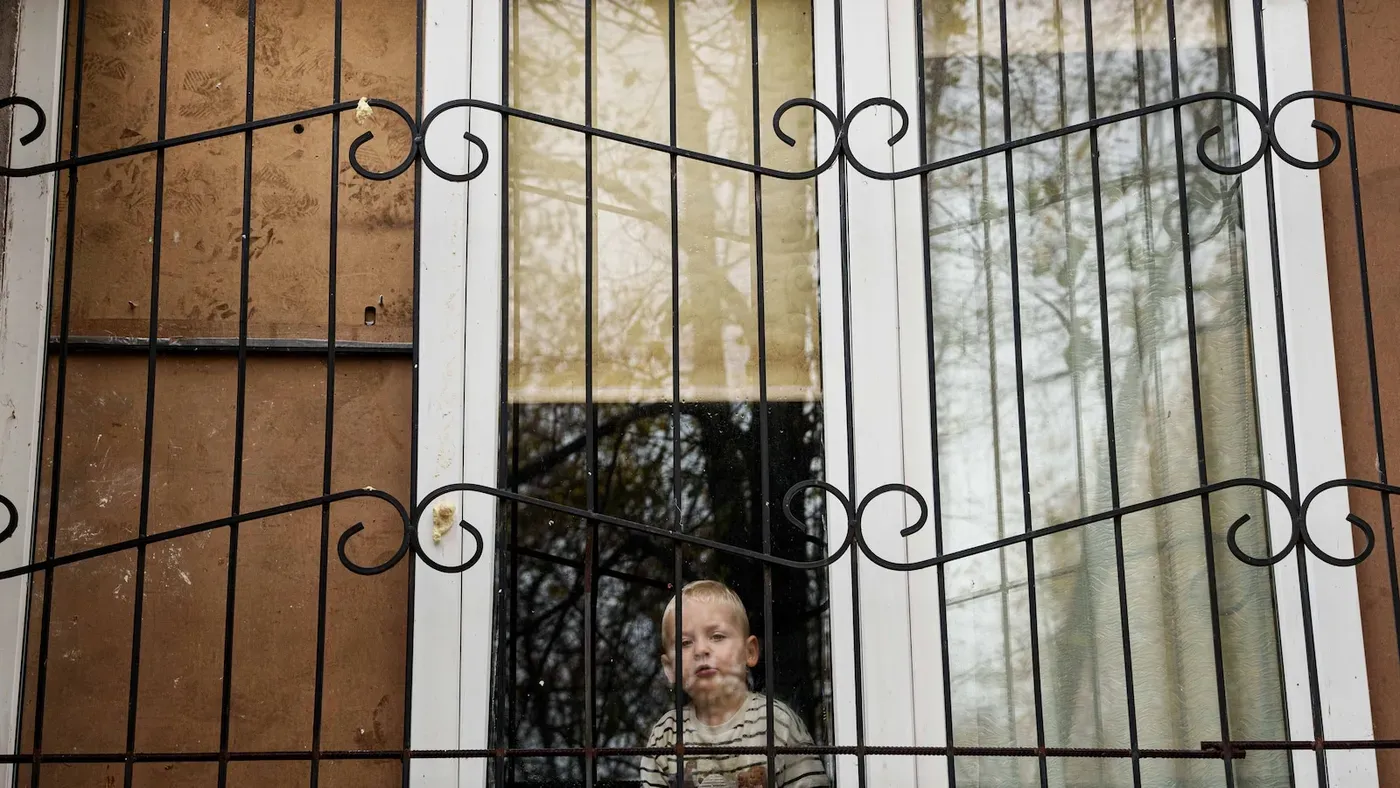
The trauma caused by the blast is evident in Horban's toddler son Viacheslav, who is increasingly familiar with the sounds of war. He frequently presses his nose against a surviving windowpane to wave at passersby and ask his mother about potential future bombings, using bam bam to describe explosions.
Horban's words capture the bleak reality facing many Ukrainians: This is not life, this is surviving."
Facts based on reporting originally published by ABC News International.
You may republish this story, in full or in part, if you credit News Central Site and link to it (licence CC BY 4.0). Photos are not included.