Voyager 1 Sets Record for Distant Communication
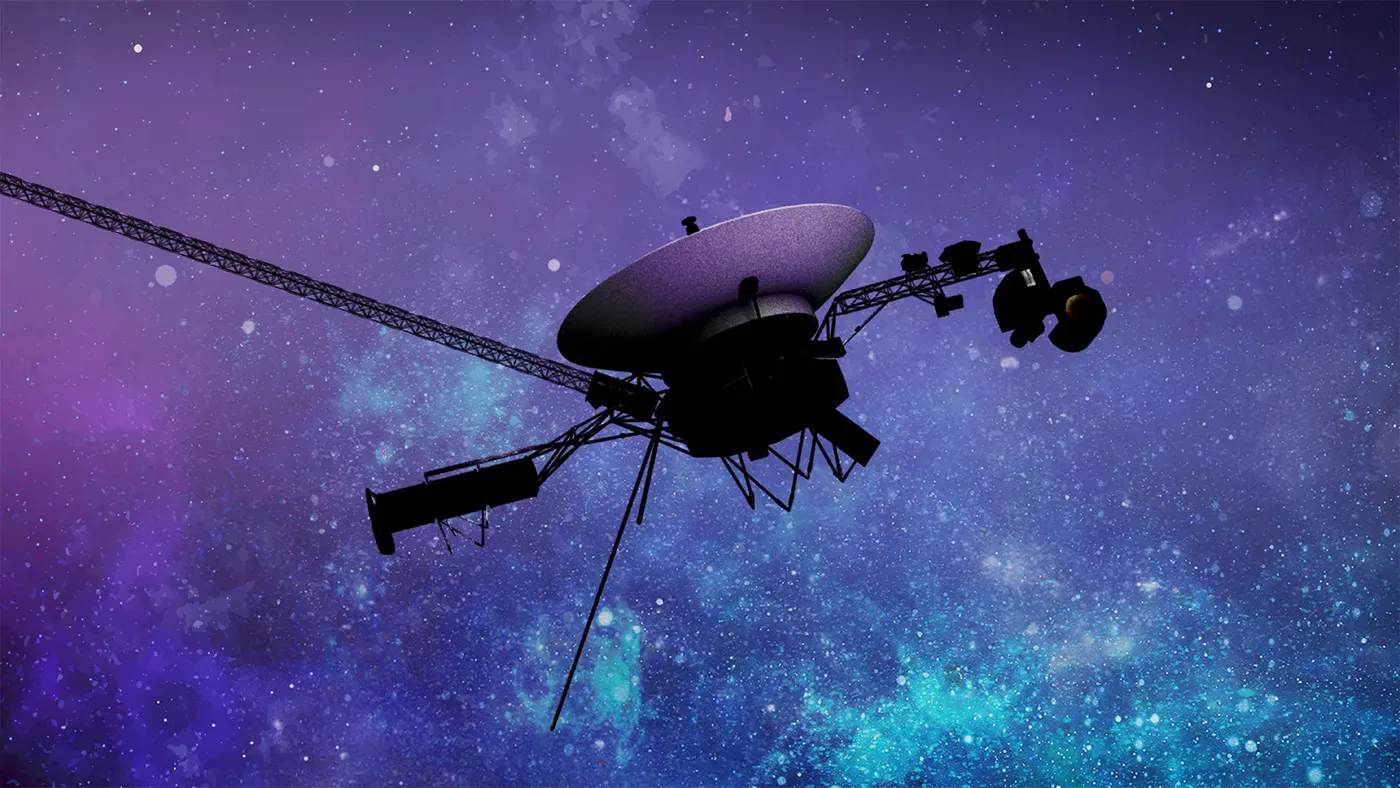
The Voyager 1 spacecraft will soon mark a significant milestone in its half-century history as it becomes so distant from Earth that signals take a full day to be received.
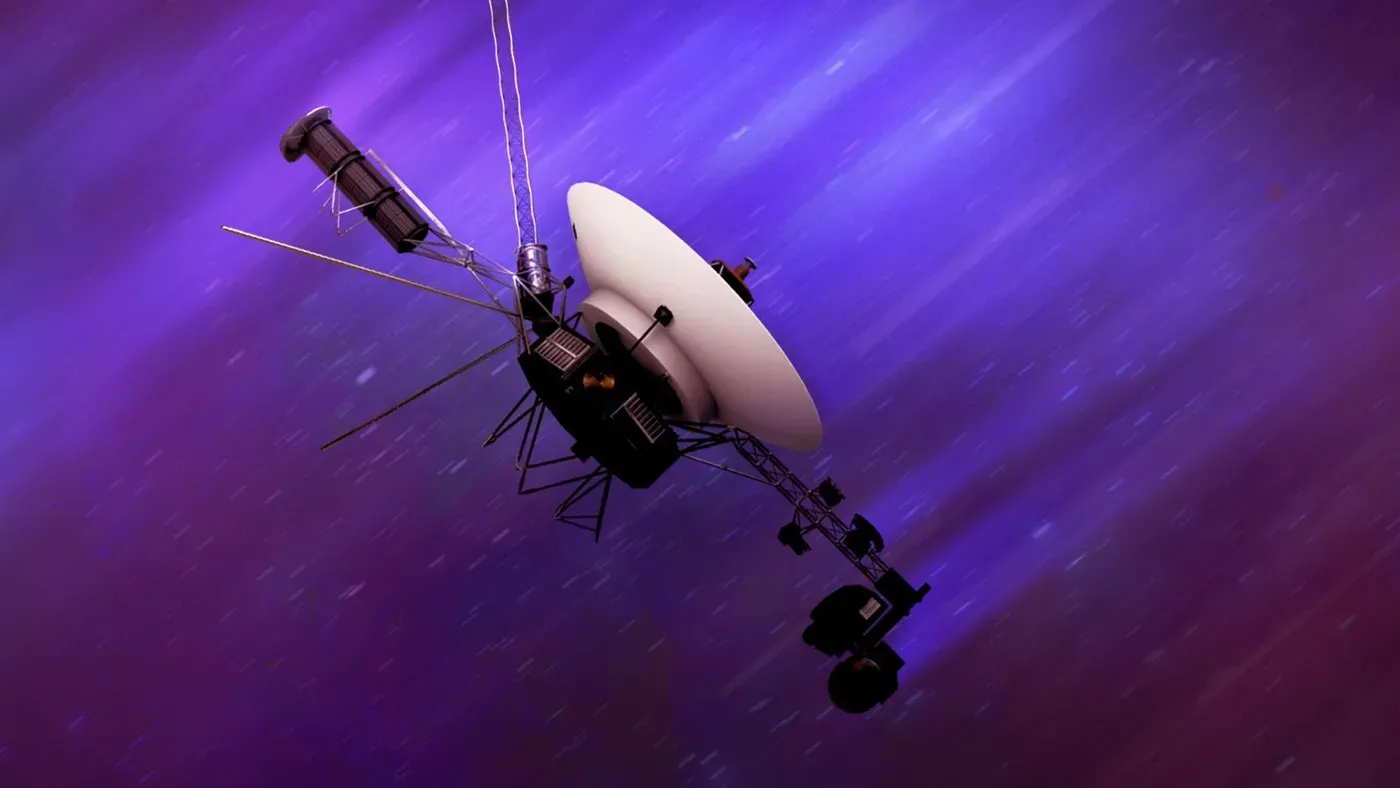
NASA's Voyager 1 probe has been the farthest human-made object in space for decades, but it's about to set another record that celebrates its enduring legacy.
On November 18, the spacecraft will be so distant from Earth that it takes a full 24 hours for light to make the journey back. This means that any signal sent from Earth to Voyager 1 at this point would have to wait an entire day to be received.
The achievement marks a significant milestone in the mission's half-century history, which began with the launch of the twin Voyager probes in September 1977. Despite being designed to operate for just five years, the spacecraft have far outlived many of the engineers who built them and continue to provide valuable data on the outer solar system.
The Voyager probes have made some of the closest observations of the distant planets in our solar system, including flybys of Jupiter, Saturn, Uranus, and Neptune. Researchers who worked on the Voyager program are now reflecting on its accomplishments and what's next for the spacecraft as they move into interstellar space.
Pascal Lee, a planetary scientist at the SETI Institute who was part of the Voyager 2 team during its Neptune flyby in 1989, notes that the Voyagers have transcended generations. They continue to provide insights into our solar system and beyond, long after many of their creators have passed on.
The Voyager probes are now about 16 billion miles from Earth, a distance that's equivalent to one light-day. This means it takes 24 hours for any signal sent from Earth to reach the spacecraft, making communication a slow but not impossible process.
As Voyager 1 continues on its journey into interstellar space, scientists are reminded of the vastness of space and time. "It's still pathetically slow in the grand scheme of things," a team member noted, commenting on the pace at which communication is possible with the spacecraft.
The sheer scale of the solar system becomes apparent when considering Voyager 1's current location. Although it has traveled beyond the heliosphere, the bubble of plasma blown outward by the sun that shields the planets from cosmic radiation, it still remains within the sun's gravitational grasp.
This gravitational influence extends far beyond the Oort Cloud, a vast spherical shell of icy bodies surrounding the solar system. Voyager 1 will need approximately 300 years to reach the cloud's inner edge and potentially up to 30,000 years to exit its vicinity altogether, according to NASA estimates.
Despite its slow progress, Voyager 1 is steadily moving further away from Earth. It will eventually pass within a mere 7 light-years of the dim star Gliese 445 in about 40,000 years, at which point it will be closer to that star than our own sun.
As for its trajectory, Voyager 1's path diverges significantly from that of its twin, Voyager 2. Launched in 1977, Voyager 2 took a different route through the solar system, swinging past Uranus and Neptune after revisiting Jupiter and Saturn.
Currently situated about 13 billion miles from Earth, Voyager 2 will reach its own light-day mark in November 2035, according to NASA predictions.
As Voyager 1 continues its journey into interstellar space, scientists are reflecting on what it means for communication with the spacecraft to reach a distance of one light-day from Earth.
At this point, the time it takes for radio signals to travel between Earth and Voyager 1 becomes significant, with a signal taking 24 hours to reach the probe and another 24 hours for a response to make its way back.
This means that if you want to send a message to Voyager 1, you can expect to wait two days before receiving a reply, according to Suzanne Dodd, Voyager project manager at JPL.
The increasing distance between Earth and Voyager 1 is not the only challenge facing the probe; it's also being affected by its own age.
As the probe relies on nuclear batteries to generate power, the supply of energy is gradually dwindling due to the natural decay of plutonium, which is used to convert heat into electricity.
This limited energy source forces NASA to carefully manage the use of nonessential instruments in order to conserve what remains and extend the mission for as long as possible.
As Voyager 1 ventures further into interstellar space, scientists are reflecting on its groundbreaking discoveries that have transformed our understanding of the outer solar system. The spacecraft has been instrumental in uncovering hidden secrets about Jupiter's moon Europa, which was once a blurry speck but is now recognized as a remarkably smooth and geologically young world.
One of the most significant findings made by Voyager 1 was the discovery of active volcanoes on Jupiter's moon Io, which was first spotted in 1979. This revelation provided scientists with a new perspective on the moon's surface, sparking further research into its geological processes. The presence of these volcanoes also highlighted the potential for life beyond Earth.
The Voyager missions have laid the groundwork for numerous follow-up explorations, including NASA's Galileo mission to Jupiter and the Cassini mission to Saturn. These studies have significantly advanced our understanding of the solar system's dynamics and complexities. By probing the outer reaches of our cosmic neighborhood, scientists are gaining insights into the intricate relationships between planets, moons, and their environments.
The Voyager spacecraft have been instrumental in challenging traditional notions about interstellar space as an empty vacuum. Instead, data collected from these probes suggests that it is a dynamic and complex frontier, teeming with magnetic fields, plasma, and cosmic rays. This understanding has profound implications for our comprehension of the universe's evolution and the potential for life beyond Earth.
As Voyager 1 continues its journey, scientists are grappling with the issue of power conservation. The spacecraft was designed to operate with limited energy reserves, forcing NASA to carefully manage the use of nonessential instruments to extend the mission's lifespan. This delicate balancing act is crucial in ensuring that the probe remains operational for as long as possible.
The Voyager missions have also provided us with a unique perspective on the solar system's structure and composition. By collecting data from the outer planets, scientists are gaining a deeper understanding of their atmospheric profiles, including those of Saturn, Uranus, and Neptune. This knowledge has far-reaching implications for our comprehension of planetary formation and evolution.
The discoveries made by Voyager 1 have not only expanded our understanding of the solar system but also paved the way for future explorations. As scientists continue to analyze data from these missions, they are refining their theories about the universe's origins and the potential for life beyond Earth.
The Voyager spacecraft's power-saving reconfigurations have been crucial in keeping it operational for nearly 50 years.
Engineers have implemented various measures to extend its lifespan, including shutting off high-power subsystems and switching on lower-power alternatives.
One such effort, dubbed the "Big Bang, has bought the team almost two more years without having to turn off any instrument, according to Perry.
As the onboard power dwindles, there's a growing recognition that it won't be operational forever, notes Deana Weibel, an anthropologist at Grand Valley State University in Michigan.
The science mission will be considered complete when no science instruments are operational, and the team has decided to keep the magnetometer as the last remaining instrument.
Even after the science data stops coming in, both Voyager probes may continue sending back basic engineering updates until around 2036, according to NASA's projections.
Despite their eventual silence, the spacecraft will remain intact, allowing scientists to calculate their positions based on their speed and trajectories even after they fall silent.
The Golden Records carried by Voyager 1 are more than just a scientific tool - they're also an artistic expression of human culture and identity.
These records contain a diverse array of sounds, including natural phenomena like wind and animal calls, as well as greetings in 55 languages to potentially introduce humanity to any extraterrestrial civilization that might encounter them. The records also include images of Earth and a celestial map pinpointing the location of our planet. This collection of human creations is intended for a hypothetical civilization capable of retrieving and interpreting these messages.
The inclusion of visual instructions on how to play the records demonstrates the creative thinking behind this project, blurring the lines between science and art. The Golden Records can be seen as an artistic exercise in self-expression, reflecting humanity's capacity to convey its essence through various mediums.
In contrast to the possibility of an alien civilization playing the record, scientists acknowledge that it is more likely for humans to recover Voyager 1 than for extraterrestrial life to find and interpret the messages. The chances of us going after Voyager 1 and bringing it back for the Smithsonian are more believable than any chance of an alien civilization finding it, one scientist noted.
As the spacecraft continues its journey into interstellar space, the Golden Records remain a lasting symbol of humanity's presence on Earth, transcending individual lifetimes. Knowing that Voyager will continue its mission long past my lifetime actually gives me comfort," said Kelly Perry, a member of the Voyager team, highlighting the significance of this cosmic time capsule as a shared legacy of human endeavor.
Facts based on reporting originally published by Live Science.
You may republish this story, in full or in part, if you credit News Central Site and link to it (licence CC BY 4.0). Photos are not included.