SpaceX Booster Rocket Explodes in Gulf of Mexico During Starship Test Flight
The incident occurred during a test flight of SpaceX's Starship program, which aims to demonstrate reusable booster rockets.
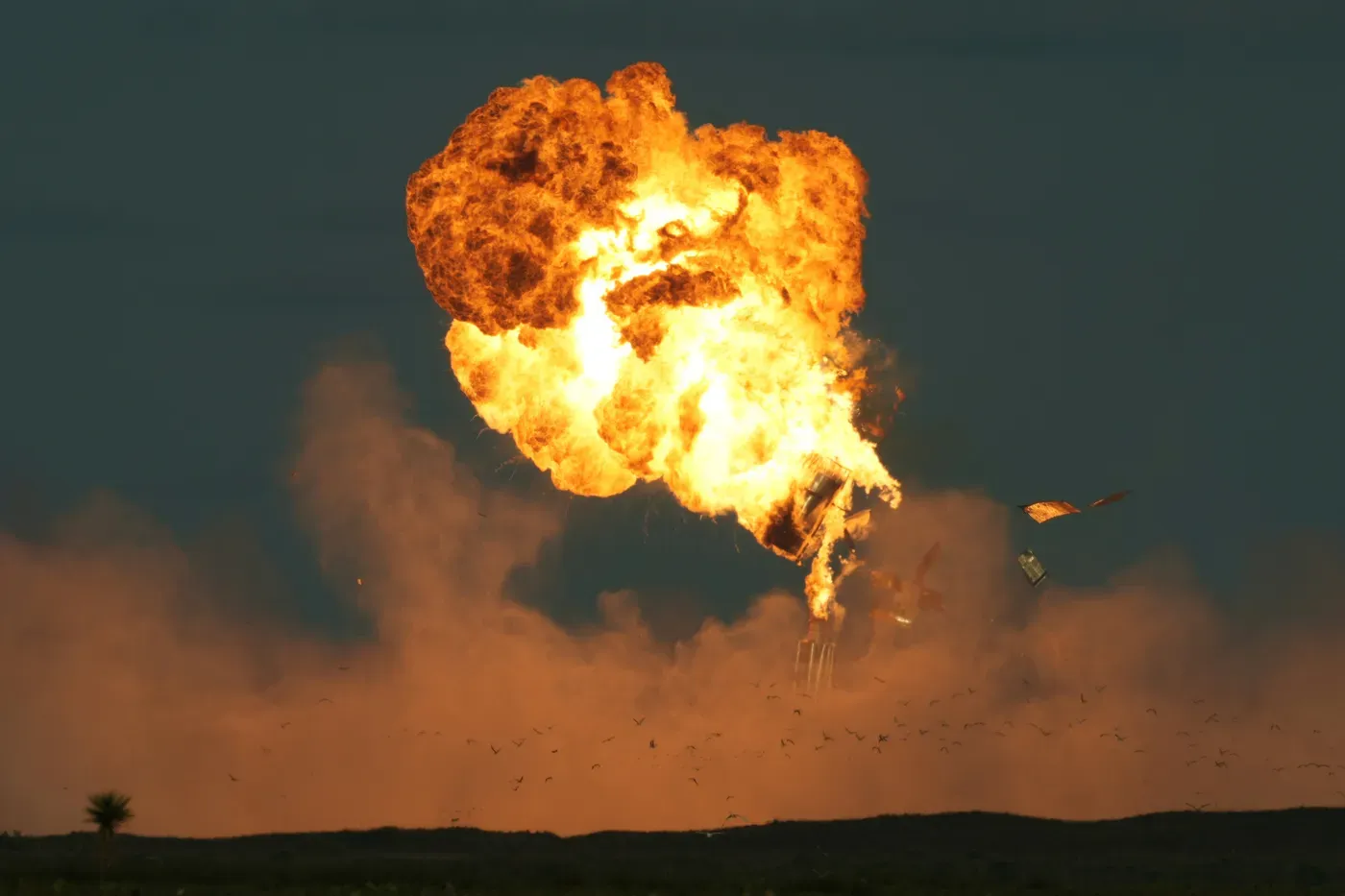
SpaceX's ambitious Starship program suffered a setback on Friday when its booster rocket exploded in the Gulf of Mexico after being diverted from its original landing site. The incident prevented the company from achieving an unprecedented double catch, where both the spacecraft and the booster would be recovered at the launch pad.
The mishap occurred during the test flight of the Starship, which was designed to demonstrate its ability to return to Earth from orbit using a reusable booster rocket. Despite the loss of the booster, the spacecraft continued on its journey, with plans for it to steer towards the launch pad on Saturday, pending further developments.
This daring maneuver is part of SpaceX's efforts to reduce costs and increase launch frequencies by reusing as much of the rocket as possible. The goal is to achieve a level of efficiency that would enable the construction of moon bases and manned missions to Mars, according to Elon Musk's vision for the company.
The original plan was to retrieve both the spacecraft and the booster using mechanical arms attached to the launch tower, a feat that has never been accomplished before anywhere in the world. With the loss of the booster, SpaceX will have to reassess its strategy for achieving this ambitious goal, which relies on the rapid recycling of rocket components.
The Starship spacecraft successfully reached orbit on its maiden voyage, but a dramatic turn of events unfolded when SpaceX attempted to catch the booster in mid-air. Instead, it exploded just as it was about to be retrieved, forcing the company to reassess its strategy for achieving rapid recycling of rocket components.
The loss of the booster is particularly significant because Starship had been tasked with dropping off 26 advanced Starlink satellites shortly after reaching orbit. These satellites will now have to rely on other means to continue their mission, which involves completing 15 laps around the world at an altitude of approximately 170 miles.
Despite having successfully caught three boosters in previous attempts, SpaceX's latest attempt was a major setback for the company. In fact, this was the first time they had attempted to catch the upgraded version of the booster, which measures 236 feet and is intended for use on moon and Mars expeditions.
The explosion also raises questions about the safety protocols in place at Starbase, where SpaceX has been testing its reusable rocket technology. According to launch commentator Kate Tice, the incident was not unexpected given the rigorous safety checks that are always conducted before a launch.
This latest development will likely have significant implications for SpaceX's plans to reuse rocket components on a large scale. With the production model for moon and Mars expeditions now in question, the company will need to reassess its strategy for achieving rapid recycling of rocket components.
SpaceX is gearing up for a busy launch schedule as it prepares to start sending Starships into orbit from Florida within the next few months and from Louisiana in a couple of years. The company's plans call for scaling up its infrastructure and achieving full rocket reusability to support an unprecedented pace of launches.
The key to making this vision a reality is the ability to recover both stages of the rocket, which will be made possible by the Starship's advanced technology. According to SpaceX's Kiko Dontchev, vice president of launch, "how you go from zero launches to 10 to 100 to 1,000 to 10,000 to 100,000" is through this combination of infrastructure and full reusability.
Meanwhile, the company will continue to rely on its smaller Falcon rockets for some missions. These will include carrying astronauts to the International Space Station for NASA and launching Starlink satellites from California. For now, Satellites will still hitch a ride on Falcons, but Musk envisions a future where Starships take over this role as well.
Falcon rockets are not yet fully reusable, with the second stage being discarded after each flight. This is not the case for Starship, which Dontchev says will allow both stages to be caught and recovered. This capability is crucial for SpaceX's plans to use Starships for NASA's Artemis program, which aims to land astronauts on the moon.
The stakes are high for SpaceX, as it has secured billions of dollars from NASA to develop the technology needed to land humans on the lunar surface using Starship. The company will face stiff competition from Blue Origin, Jeff Bezos' private space venture, which is also vying for a spot in the Artemis program.
The Artemis III mission is set to take place next summer, where astronauts will test their skills by docking a capsule with two spacecraft in orbit around Earth: Blue Moon and Starship.
This exercise will lay the groundwork for an ambitious goal - landing on the moon as early as 2028. NASA Administrator Jared Isaacman has expressed enthusiasm for integrating Starlink capabilities into Artemis III, which will provide valuable experience for future lunar missions.
Facts based on reporting originally published by Phys.org.
You may republish this story, in full or in part, if you credit News Central Site and link to it (licence CC BY 4.0). Photos are not included.