Voyager 1 Spacecraft Set to Reach One Light-Day Distance from Earth
The Voyager 1 spacecraft is on track to reach a distance of one light-day from Earth on November 18, surpassing any human-made object in history.
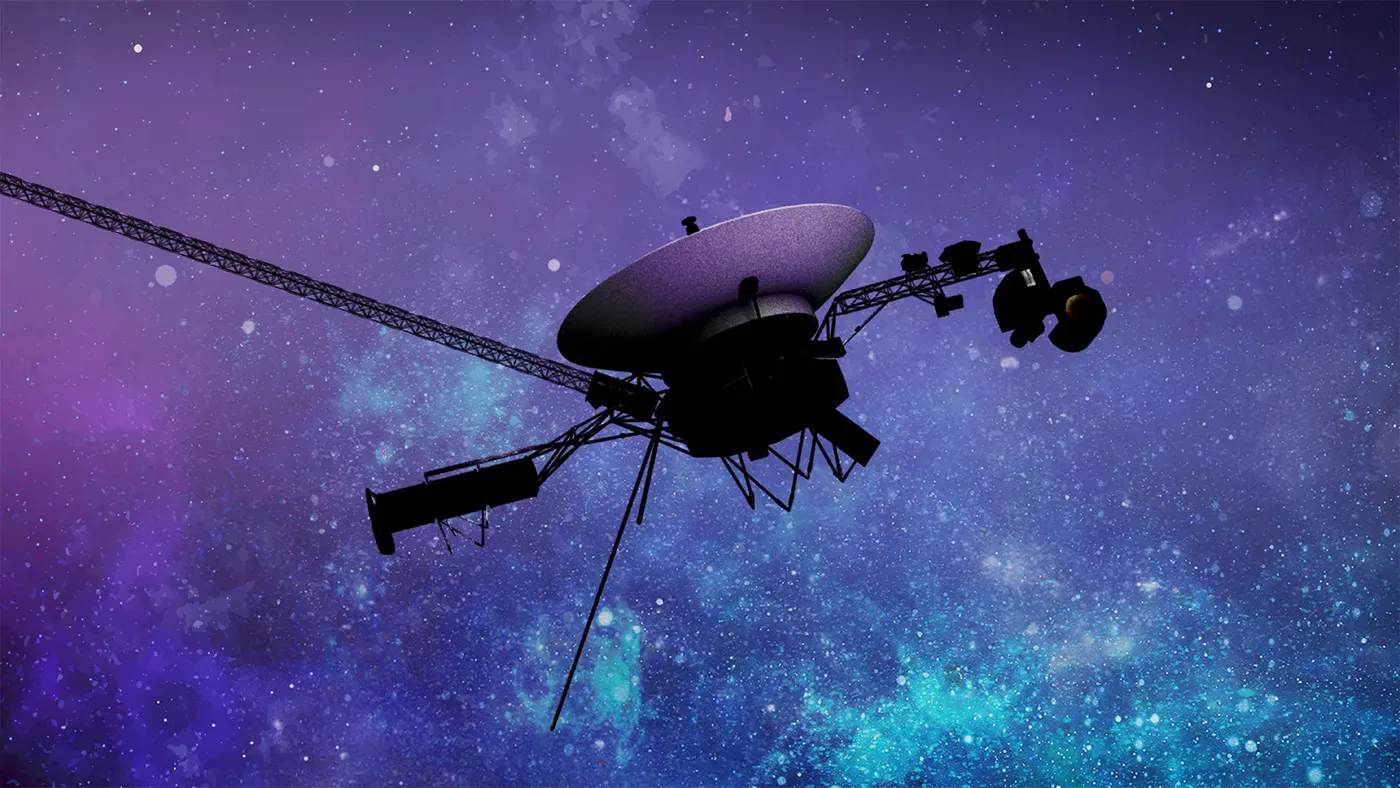
NASA's Voyager 1 spacecraft is on the cusp of achieving another remarkable milestone as its mission enters its fifth decade. On November 18 at 5:16 a.m. ET, the probe will reach a distance of one light-day from Earth, surpassing any human-made object in history.
This feat is all the more impressive considering Voyager 1's humble beginnings in the mid-1970s. One light-day is equivalent to the distance that light travels in a single day at its incredible speed of approximately 186,282 miles per second.
To put this immense distance into perspective, it would take a person walking at an average pace of 3 mph over 612,015 years to cover one light-day. Conversely, Voyager 1 has been traveling through the cosmos at a steady 37,763 mph since 1980, when its gravity-assisted Saturn flyby gave it a significant speed boost.
This milestone marks a significant point in Voyager 1's journey, coming just 14 years after it crossed the heliopause and entered interstellar space. It also represents a major achievement for the spacecraft, which surpassed Pioneer 10 to become the farthest human-made object in space nearly three decades ago.
The probe's steady pace of 37,763 mph has allowed Voyager 1 to cover vast expanses of space over the years, leaving it as one of the most enduring and accomplished spacecraft in history.
The team responsible for Voyager 1's maintenance has been working tirelessly to extend the spacecraft's lifespan. One of their most significant efforts was "The Big Bang" initiative, which aimed to reduce power usage by shutting down non-essential devices and powering on low-power alternatives.
This complex maneuver required the team to carefully coordinate the shutdown and startup of multiple instruments, a task made more challenging due to the vast distances between Earth and Voyager 1. It took almost two days for signals to travel from Earth to the spacecraft and back again, leaving several hours of downtime while the operations were performed.
The Big Bang initiative was not limited to Voyager 1 alone; it was also applied to its twin, Voyager 2. The transition was completed in early September, allowing both spacecraft to conserve power and stay warm enough to continue operating in the freezing conditions of interstellar space.
The team's efforts have been crucial in extending the life of these aging spacecraft. With each passing day, Voyager 1 inches closer to crossing a historic milestone, but it's not without its challenges, as the spacecraft continues to rely on limited power and dwindling resources.
Voyager 1's remaining instruments are now down to two, following a sudden drop in power that forced the shutdown of one of its systems. Despite these constraints, the team remains focused on ensuring the spacecraft's continued operation, navigating the complexities of space travel with precision and care.
Voyager 1's power output has been steadily declining over the years due to the decay of its plutonium-238 fuel. The spacecraft is equipped with three radioisotope thermoelectric generators that convert heat from decaying plutonium into electrical energy.
When Voyager 1 first launched, its RTGs produced around 470 watts of power, but after five decades in space, they now generate about 215 watts, with an average annual loss of approximately four watts. This decrease in power has significant implications for the spacecraft's continued operation.
The reduced power output means that most of the energy generated is used to keep Voyager 1 up and running, rather than powering its scientific instruments. As a result, NASA has had to shut down eight out of the ten instruments on board, preserving only two for continued data collection.
Voyager 1's operational life expectancy is closely tied to its power output. At its current rate of usage and decay, the spacecraft is expected to lose contact with Earth in 2036 due to insufficient energy to transmit radio signals back to mission control.
The same fate is predicted for Voyager 2, which has spent nearly identical amounts of time in space as its twin. While it may not reach the one light-day distance until after its instruments shut down, both spacecraft are likely to experience a gradual decline in power and functionality over the coming years.
As Voyager 1 approaches the one light-day distance from Earth on November 18, it will soon reach another significant milestone - the beginning of the Oort Cloud, a vast, icy shell of comets at the edge of our solar system. This point is approximately 300 years away.
Despite its impending power loss, Voyager 1's speed will remain unaffected due to the near-perfect vacuum of outer space, allowing it to continue on course and reach the Oort Cloud even after it shuts down entirely.
Facts based on reporting originally published by CNET.
You may republish this story, in full or in part, if you credit News Central Site and link to it (licence CC BY 4.0). Photos are not included.