US Data Centers Consume More Electricity Than Entire State of Michigan
A recent study has revealed that just 400 US data centers consume more electricity than the entire state of Michigan, highlighting the significant strain these facilities are putting on the...
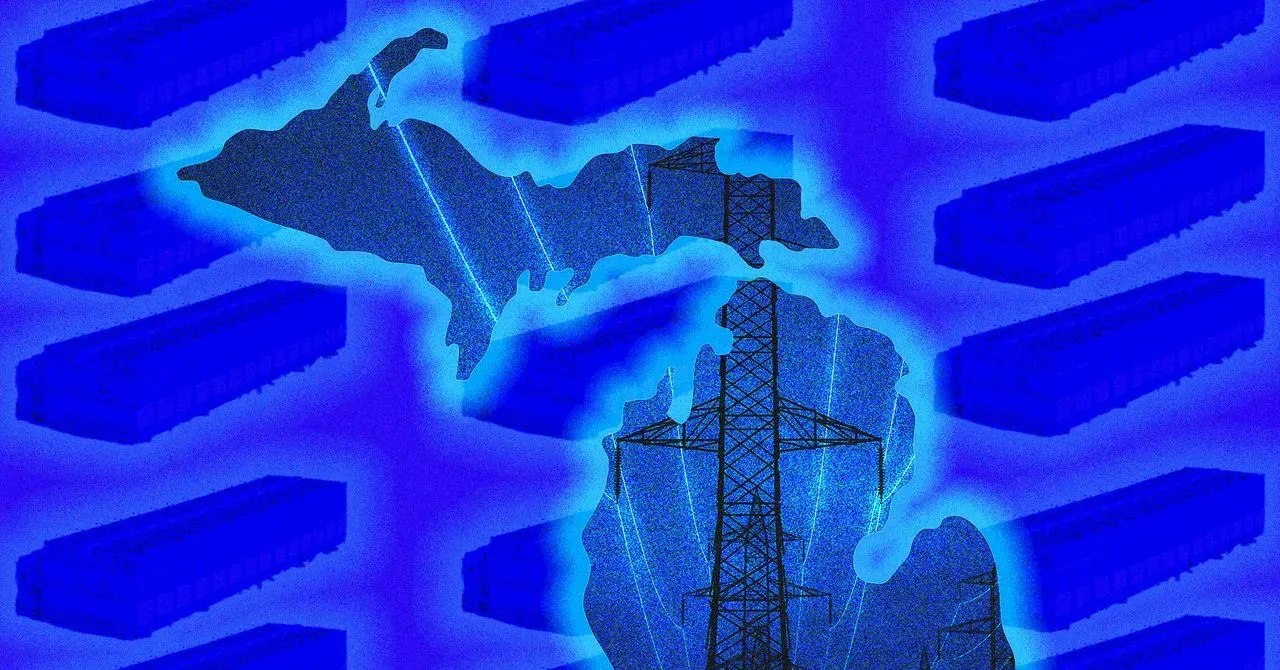
A recent study has revealed that just 400 US data centers consume more electricity than the entire state of Michigan, highlighting the significant strain these facilities are putting on the American power grid.
Despite their massive energy demands, governments at both federal and state levels do not collect data on individual data center usage separately from other power sector users. This lack of transparency makes it difficult to accurately assess the impact of data centers on the national power grid.
Data center operators and utilities often treat this information as proprietary business data, which means they don't have to disclose specific energy consumption numbers to the public. This secrecy has sparked concerns among environmental groups and community leaders who are fighting against the construction of new data centers in their neighborhoods.
The Harvard study focuses on hyperscale data centers, the largest facilities of their kind, that have become contentious issues in local communities across the country. While these massive data centers can be used for various purposes, not all of them are dedicated to artificial intelligence (AI) training or inference.
These massive facilities "have been growing fast, even before the AI boom," notes Jon Koomey, an energy researcher who was not involved in the study but provided valuable insights into the rapid expansion of hyperscalers.
Data centers are not evenly distributed across regions. Four states - Virginia, Oregon, Ohio, and Iowa - account for more than half of the energy consumption in the study. These four states have a high concentration of data centers that contribute significantly to the overall energy use. The first of these states, Virginia, is home to Data Center Alley.
Knowing exactly how much energy data centers consume over a year is crucial information, according to Jon Koomey. A peer-reviewed study provides more accurate results than rough estimates based on limited data. Koomey has been involved in an annual report from Lawrence Berkeley National Laboratory since 2007 that estimates the industry's energy and water usage.
The average size of a facility in this new study is relatively small, at 40 megawatts. However, developers are now building massive campuses with capacities exceeding hundreds or even thousands of megawatts. Some of these proposed data centers are much larger than typical facilities included in the dataset.
Gianluca Guidi, lead author of the study, notes that some of the large-scale campuses being planned today far surpass the average facility size. These developments highlight the rapidly growing scale and complexity of the data center industry. The study does not account for developers who choose to build on-site power plants, known as behind-the-meter power.
Behind-the-meter power is a significant factor in accurately assessing total energy consumption, according to Koomey. He refers to it as a "wild card" due to its potential impact on overall energy use.
As data centers continue to proliferate across the US, plans for on-site power generation are being ramped up at proposed sites. This surge in behind-the-meter power plants has reached an unprecedented level, with a staggering 189 gigawatts of capacity currently in development.
A significant proportion of these facilities rely on natural gas turbines, which are notoriously inefficient sources of energy. This trend raises concerns about the environmental impact of data centers, particularly if they were to be built as planned.
The Energy Information Agency is taking steps to better understand data center energy use, having recently completed pilot surveys across 10 states.
Facts based on reporting originally published by Wired.
You may republish this story, in full or in part, if you credit News Central Site and link to it (licence CC BY 4.0). Photos are not included.