Rising Power Bills Fuel Opposition to Data Centers in Midterm Elections
Voters in several states have expressed strong opposition to the construction of data centers due to rising power bills and environmental concerns.

Voters in several states have sent a clear message to their lawmakers: they want relief from rising power bills associated with the proliferation of data centers across the nation.
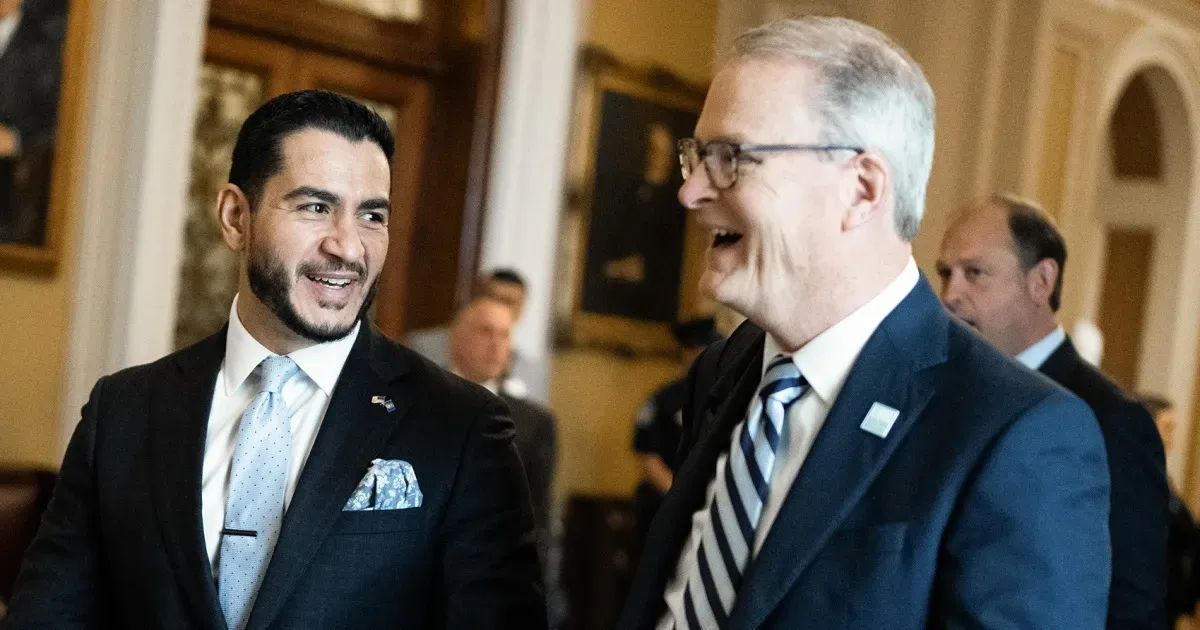
The issue has been a major point of contention in midterm elections, with many Democrats campaigning on promises to curb the growth of these massive facilities. In Ohio, Senator Sherrod Brown won re-election after criticizing his opponent for being closely tied to the industry. Michigan's next senator, Abdul El-Sayed, also made opposition to data centers a key part of his campaign.
Polls have consistently shown that voters are strongly opposed to the construction of new data centers in their areas. A recent Gallup poll found that 71% of Americans are against having a data center nearby, a sentiment that is significantly stronger than opposition to nuclear plants. This widespread opposition has even prompted some Republicans to distance themselves from the president's pro-AI agenda.
The concerns about data centers go beyond just environmental issues and tap into voters' pocketbooks. Wholesale electricity prices near these facilities have skyrocketed in recent years, with prices rising by as much as 267% over a five-year period. According to research by Cornell University, data center operators are often not paying their fair share of infrastructure costs, leaving taxpayers to foot the bill.
The industry's reputation has been further damaged by warnings about the potential job-killing effects of automation and AI. Despite these concerns, however, many lawmakers remain committed to supporting the growth of this sector, which they see as a key driver of economic growth.
As lawmakers grapple with the challenge of addressing voters' concerns about rising power bills and the rapid growth of artificial intelligence, they face a difficult balancing act. On one hand, AI has been touted as a key driver of economic growth by both Democratic and Republican administrations, and its development is seen as crucial for competing with China.
Some lawmakers have proposed moratoriums on new projects, arguing that this would give them time to negotiate better deals and address voter concerns. This approach was taken by governors in New York and Texas before the midterms, who froze permits for new data centers or halted grid connections pending an audit.
Others within the Democratic party are advocating for a more nuanced approach, calling for "democratic oversight of AI development rather than an outright ban. This would allow lawmakers to regulate the sector while still supporting its growth and benefits.
However, not everyone is convinced that moratoriums are the answer, as some see data centers as a source of new jobs and economic opportunities. Even if projects are blocked in one area, they may simply relocate to other communities with more welcoming regulations.
The net result of these efforts remains uncertain, but it's clear that lawmakers will need to find a way to balance competing demands and priorities in order to address voter concerns without stifling the growth of this critical sector.
The Democrats' ability to influence policy in Washington is largely limited to oversight and investigation, as President Trump holds significant veto power. This has led Rep. Greg Casar to suggest that AI CEOs should be summoned to testify under oath, a move echoed by Massachusetts Sen. Ed Markey who joked about the potential for an avalanche of subpoenas.
However, relying on hearings and investigations can be a slow and imperfect way to address voter concerns. The Democrats' efforts may not yield immediate results, especially when compared to the swift passage of legislation that benefits powerful interests.
In contrast, some bills related to AI have garnered bipartisan support in both chambers of Congress. For instance, the Create AI Act would make permanent a National Science Foundation program that provides computing power and data to researchers who cannot afford their own infrastructure. This initiative aims to create a public counterbalance to the handful of companies dominating the AI landscape.
Another safeguard lies with state utility regulators, who hold significant influence over who pays for the power used by data centers. Regulators can require these facilities to cover grid upgrades triggered by their operations, an approach already being implemented in some states.
The potential impact of these regulatory efforts remains uncertain, but one thing is clear: lawmakers will need to navigate competing demands and priorities if they hope to address voter concerns without stifling the growth of this emerging industry.
Lawmakers are considering a new approach to regulating the tech industry, one that targets rising power bills rather than AI development itself.
This strategy may prove more effective in addressing voter concerns without stifling innovation, as it allows for state and local rate decisions that can't be vetoed by the president.
Silicon Valley's leaders once maintained close ties with Democratic administrations, but their relationship has soured due to regulatory pressures they claim have hindered innovation.
In recent years, many tech executives have shifted their allegiances, courting Republican support and donating to presidential campaigns, with some notable figures spending hundreds of millions on midterm elections.
The debate over AI regulation is particularly contentious, with industry groups like Leading the Future advocating for lighter-touch rules while others, such as Public First, push for stronger safeguards.
Some companies have already made concessions in response to public backlash against AI data centers, pledging billions towards community funds and rebranding their facilities as compute campuses".
To alleviate concerns over rising power bills, lawmakers are considering making concessions to AI data centers binding through state law and utility contracts, measures that cannot be vetoed by the current administration.
The massive investments in these facilities have far-reaching implications for the economy. The four largest cloud companies anticipate spending between $720 billion and $740 billion on capital projects next year alone. As a significant portion of the S&P 500, their activities have a substantial impact on the overall market.
Lawmakers face a delicate balance in addressing voter concerns without stalling economic growth driven by AI investment, which now accounts for nearly 37% of U.S. GDP growth according to ING estimates.
Facts based on reporting originally published by Fortune.
You may republish this story, in full or in part, if you credit News Central Site and link to it (licence CC BY 4.0). Photos are not included.