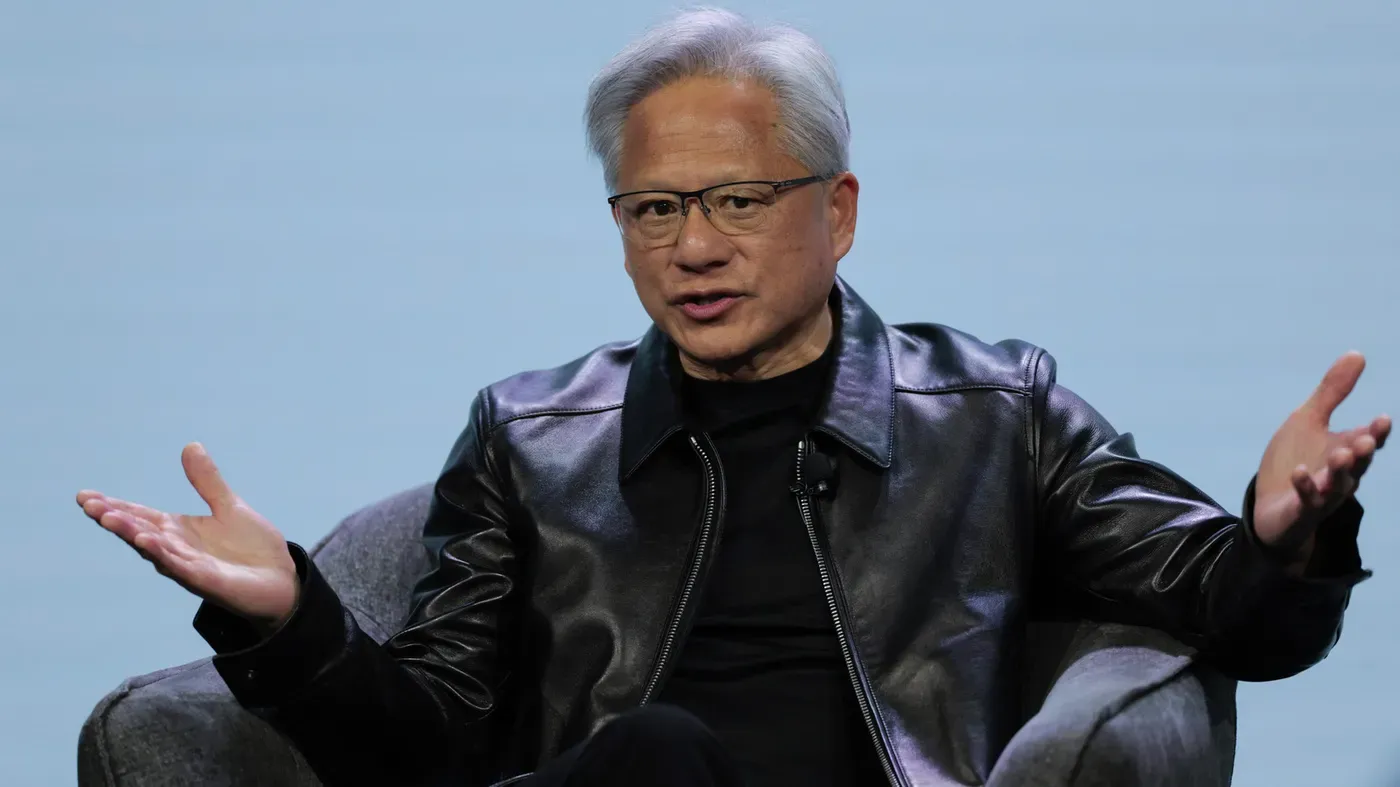
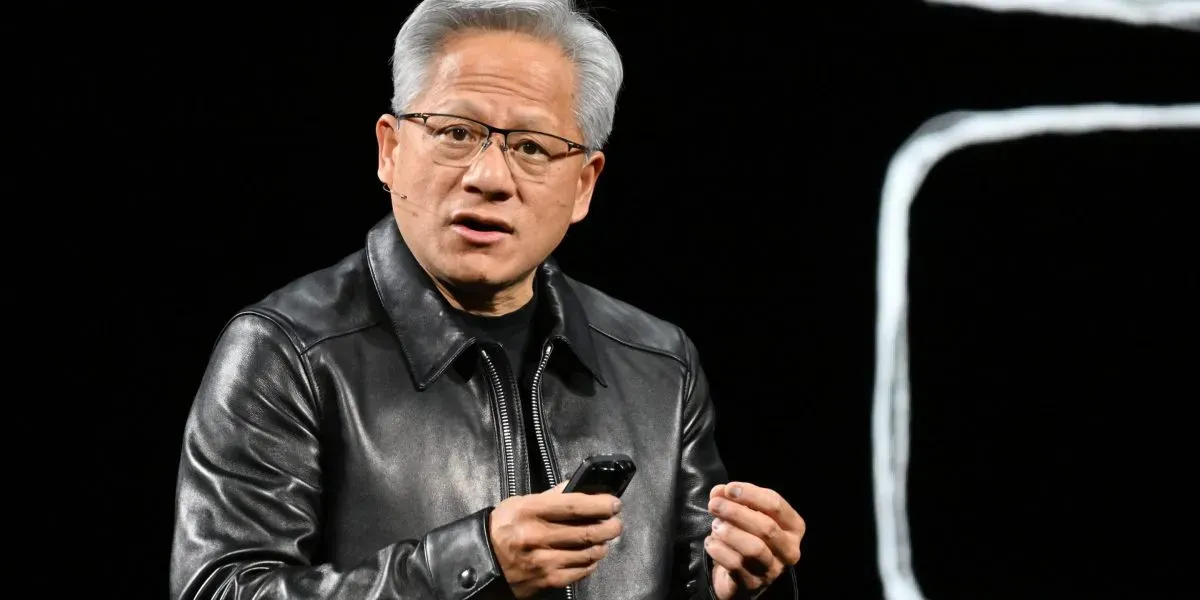
Nvidia's Interim CEO Faces Challenges in First Earnings Call Without Jensen Huang
Kress will need to reassure investors that Nvidia remains on track despite Jensen Huang's departure as the company prepares to release its fiscal 2027 third quarter results.
Nvidia's interim CEO Colette Kress is facing an uphill battle on her first earnings call without Jensen Huang at the helm. As the company prepares to release its fiscal 2027 third quarter results after market close on Tuesday, analysts are bracing for a typically robust quarterly performance.
With $109.3 billion in revenue expected, according to S&P's Visible Alpha consensus, Kress will need to reassure investors that Nvidia remains on track despite Jensen Huang's departure. The company's stock has taken a hit, down 20% since its last quarterly earnings report on August 26, wiping out roughly half a trillion dollars in market value.
Analysts are looking for more than just impressive numbers from Kress; they want to see confidence and stability emanating from the company's new leadership. "There's a complete evaporation of confidence at the moment," said Melissa Otto, global head of Visible Alpha Research at S&P Global, adding that Nvidia needs to refocus on its fundamentals.
The stakes are high for Kress as she attempts to restore investor faith in Nvidia's business model and valuation. With the AI and related tech sectors experiencing a broader selloff, Tuesday's earnings call will be a crucial moment for the company to make its case as a post-Jensen business.
Kress has her work cut out for her as she tries to win over investors who are still reeling from Jensen Huang's departure. Analysts expect Nvidia to deliver on its typical gargantuan quarterly performance, but it's not just about meeting expectations, it's about exceeding them with confidence and conviction.
The next few hours will be crucial in determining whether Kress can successfully navigate the company through this uncertain period and restore investor confidence in Nvidia's future prospects. With so much at stake, Tuesday's earnings call promises to be a closely watched event.
Nvidia's upcoming earnings call is being closely watched by investors and analysts alike, who are eager to see if the company can maintain its guidance for next year despite the recent leadership shake-up.
The data center segment, Nvidia's crown jewel, is expected to deliver a significant portion of the company's revenue in the third quarter, with estimates ranging from $99.7 billion to $110.8 billion. This range is particularly wide, indicating that there are varying degrees of optimism and pessimism among analysts about the segment's performance.
Any signs of weakness in the business during Jensen Huang's final days as CEO would likely add even more uncertainty to Nvidia's prospects, making it essential for the company to reassure investors about its future outlook. The fact that the third quarter ended in late October means that the results were not affected by Huang's ouster, but the impact on investor confidence is still a concern.
Jay Woods, chief market strategist at Freedom Capital Markets, believes that the earnings report will be a major referendum on Nvidia's ability to maintain its leadership position in the AI trade. He notes that colossal results won't resolve the questions surrounding Jensen's departure and that the company needs to demonstrate its commitment to meeting demand, maintaining margins, and keeping financial commitments.
The key issue for investors is whether Nvidia can maintain its guidance for next year, particularly with regards to revenue growth. If the company fails to do so, it could lead to significant volatility in the market. This concern was highlighted by Otto, who noted that a failure to meet expectations would have serious implications for investor confidence.
Nvidia's preliminary expectation for revenue growth of about 70% in fiscal 2028 is being closely watched, and investors will be looking to see if this confidence outlives Jensen Huang's ouster. The company had never guided financial figures a year in advance before, but with demand running well above 70%, Huang felt confident about its prospects.
The recent leadership shake-up at Nvidia has left investors eagerly anticipating the company's first earnings call without its long-time CEO, Jensen Huang.
With demand exceeding 70%, Nvidia's revenue for fiscal 2028 is projected to reach $699.2 billion, according to Visible Alpha's consensus estimates, a figure that will be closely scrutinized during the upcoming earnings call.
Nvidia's board of directors has assured stakeholders that operations, customer commitments, and product roadmap will continue uninterrupted despite Huang's departure, but investors are looking for more concrete answers about the company's future direction.
Interim CEO Colette Kress will likely face tough questions from analysts and investors, who want to know what changes might be made to Nvidia's existing strategy and how they will impact the company's performance.
Some constituencies, including other tech founders, are calling for Huang's reinstatement as CEO, citing concerns that his departure could destabilize the company and lead to a sharp decline in stock value.
The pressure is on Kress and the board to demonstrate that Nvidia can continue delivering strong results without its founder at the helm, especially given the stock's impressive 1,300% surge since ChatGPT's launch.
Nvidia's extensive financial support for its customers has taken on a new dimension through direct investments and guarantees to backstop debt. This backing is particularly significant for neocloud companies, which have benefited greatly from Nvidia's largesse.
The total future commitments made by Nvidia over the next five fiscal years and beyond amount to an impressive $366 billion. A substantial portion of this commitment, $120 billion, falls within the remainder of fiscal 2027, which concludes in late January. This staggering figure is comprised mainly of supply and capacity investments, totaling $279 billion.
The recent surge in these commitments has raised concerns about Nvidia's business model. Some analysts have described it as "circular financing, where the company invests heavily in its customers while relying on future revenue to repay these investments. This approach has been both praised and criticized by investors.
Nvidia's role as a major financial backer of its customers is being reevaluated by some, including interim CEO Colette Kress and her predecessor Jensen Huang. There are indications that they may be reconsidering the company's position as the central bank of the AI industry, with plans to tighten its purse strings.
The implications of this shift in strategy are far-reaching for investors who have been benefiting from Nvidia's investments. Some analysts have pointed out that these initiatives can be polarizing, creating ongoing concerns about the sustainability of the company's business model.
Nvidia's success is heavily dependent on the strength of its technology, and a smooth transition to its next-generation platform, Vera Rubin, is crucial for maintaining market momentum. The company has already seen significant growth with its Blackwell product line but needs to reassure investors that it can replicate this success with Rubin.
As Nvidia ramps up production of Vera Rubin, server racks are being deployed at major partners such as CoreWeave, Google Cloud, Microsoft Azure, Oracle, and Nebius. The company is confident that Rubin will account for around 20% of data center revenue in the third quarter and drive hyperscale growth in the fourth quarter and beyond.
Nvidia's earnings call is set to take place without Jensen Huang at the helm, and investors are eager for signs that expectations are aligned with market realities.
The company had previously lowered its gross profit margin expectations in August, citing industry-wide memory price increases as a major factor.
As a result, Wall Street analysts now anticipate a third-quarter gross margin of 73.1%, followed by a decline to 70.2% in the fourth quarter before rebounding to 72.2% next year, according to Visible Alpha estimates.
The discrepancy between Nvidia's revised guidance and analyst expectations has sparked concerns about a potential negative change in margin forecasts.
A significant shift in margin expectations could have far-reaching implications for the company's stock price, which has already experienced volatility in recent months.
Analysts on Tuesday's conference call will likely scrutinize Kress's responses to gauge whether expectations are indeed aligned with market conditions.
The upcoming earnings call of Nvidia is set to be a critical moment for the company and its interim CEO Colette Kress. The lack of Jensen Huang's involvement has raised questions about whether expectations are aligned with market conditions.
Analysts will likely scrutinize Kress's responses during Tuesday's conference call, which begins at 1:20 p.m. PT, with the actual call scheduled to start at 2 p.m. PT. According to a financial expert, it would be wise for investors to buckle up" and prepare for an unpredictable outcome.
Facts based on reporting originally published by Fortune.
You may republish this story, in full or in part, if you credit News Central Site and link to it (licence CC BY 4.0). Photos are not included.