Rahm Emanuel Sees Parallels Between 2006 and Current Midterm Elections
Democrats are looking to replicate their 2006 midterm success by turning widespread dissatisfaction with a Republican president into a sweeping congressional victory, with Rahm Emanuel playing a key role in engineering that victory two decades ago.
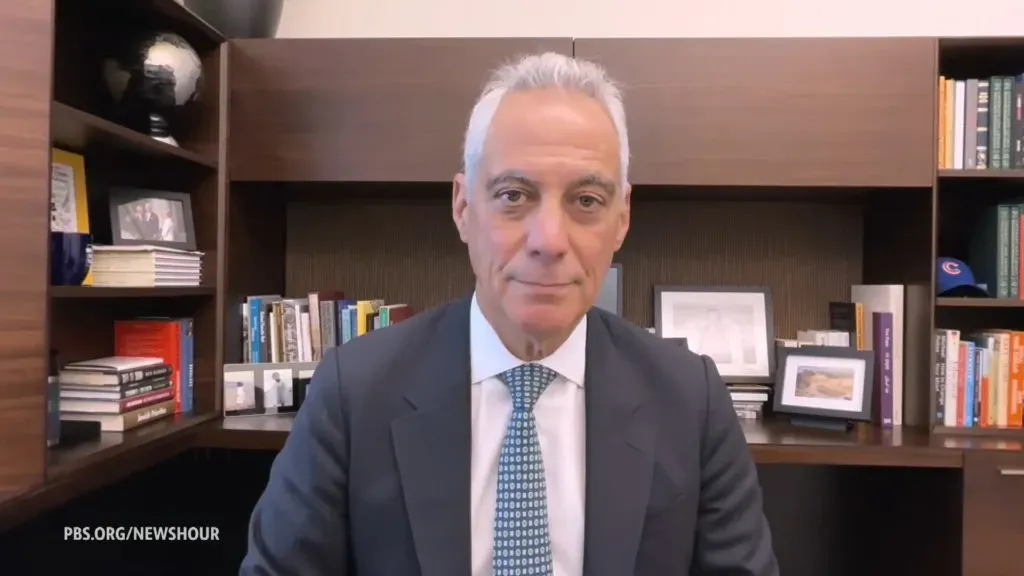
Democrats are looking to replicate their 2006 midterm success by turning widespread dissatisfaction with a Republican president into a sweeping congressional victory.
Rahm Emanuel played a key role in engineering that victory two decades ago, and he believes his party can learn from those lessons today.
Geoff Bennett spoke with Emanuel about what Democrats should do after the midterms, and the former mayor emphasized the importance of connecting with voters on issues that matter to them.
Emanuel noted that in 2006, Democrats were able to capitalize on widespread discontent with President Bush's policies, and he believes that a similar strategy could be effective today.
The calculation of an unpopular president's interest often takes precedence over the nation's, according to Rahm Emanuel. This mindset has been echoed by top military officials who have worked closely with President Trump. The notion that everything is filtered through what serves the president's interests rather than the country's is a concerning trend.
To illustrate this point, Emanuel cites the example of Israeli prime ministers who faced major military setbacks. In most cases, these leaders established independent commissions to investigate and provide an unbiased assessment of their actions. However, President Trump has refused to follow suit, despite his administration being implicated in one of Israel's worst strategic catastrophes since its founding.
With this context in mind, Emanuel shifts the focus to the upcoming midterms. He draws parallels between the 2006 election that saw Democrats regain control of the House and the current situation. The similarities are striking: an unpopular president, corruption allegations, an unpopular war, and rising energy prices have all contributed to widespread discontent.
Emanuel highlights the key difference between then and now. In 2006, people were tired and frustrated with President Bush's policies. Today, anger towards President Trump is fueled by his failure to deliver on his promise of "draining the swamp." Instead, the president has brought the very corruption he vowed to eradicate directly into the White House.
The contrast between these two scenarios serves as a reminder that voter sentiment can shift rapidly in response to perceived injustices. With many Americans feeling betrayed by President Trump's actions, Emanuel suggests that Democrats have a unique opportunity to capitalize on this momentum and drive meaningful change.
The US midterm elections have highlighted widespread discontent among Americans towards President Trump's actions, particularly his handling of key campaign promises.
Many voters feel betrayed by the administration's failure to deliver on its pledges, including ending the wars in which American troops are involved, controlling inflation, and implementing policies that benefit ordinary citizens rather than just those in power.
This sense of betrayal has led to a surge in anger among the electorate, with some Democrats already looking towards impeachment as a way to address their grievances. However, Rahm Emanuel advises against this approach, arguing that it would be unwise for the party to focus on removing Trump from office at this juncture.
Emanuel's view is that the priority should be to capitalize on the momentum generated by the midterms and push through meaningful reforms rather than getting bogged down in impeachment proceedings. He advocates for a more pragmatic approach, one that focuses on passing legislation that promotes transparency and accountability within government.
To deliver on their promises to voters, Democrats need to focus on passing legislation that has tangible benefits for the American people. This can be achieved by introducing measures such as a minimum wage increase, which has been stalled since 2007.
Restricting tariffs is another key area of focus, as it directly addresses concerns around affordability and accessibility. These policies would demonstrate the party's commitment to addressing everyday issues that affect citizens' lives.
By prioritizing these initiatives, Democrats can show voters that they are making good on their campaign promises. This would not only bolster support within their own coalition but also establish a clear mandate for the party ahead of future elections.
The goal is to create a sense of momentum and progress, which can be sustained over time. By delivering on key issues, Democrats can build trust with voters and position themselves as the champions of positive change in American politics.
To maintain this momentum, Democrats must avoid getting bogged down in divisive or partisan debates that fail to deliver tangible results for citizens.
To achieve lasting change, Democrats need to deliver concrete results that benefit citizens quickly and efficiently. By doing so, they can demonstrate to voters that their efforts are indeed making a positive impact on their lives.
By tackling pressing issues such as the minimum wage and lobbying reform, which have gone unaddressed for two decades, Democrats can prove that they are committed to producing tangible outcomes. This approach would not only surprise but also impress Americans who are skeptical of Washington's ability to deliver meaningful change.
Facts based on reporting originally published by PBS NewsHour Politics.
You may republish this story, in full or in part, if you credit News Central Site and link to it (licence CC BY 4.0). Photos are not included.