Midterm Elections: Democratic Party Struggles with Clear Message
National Democrats risk drawing misguided conclusions if they regain control of Congress due to underlying issues within the party.
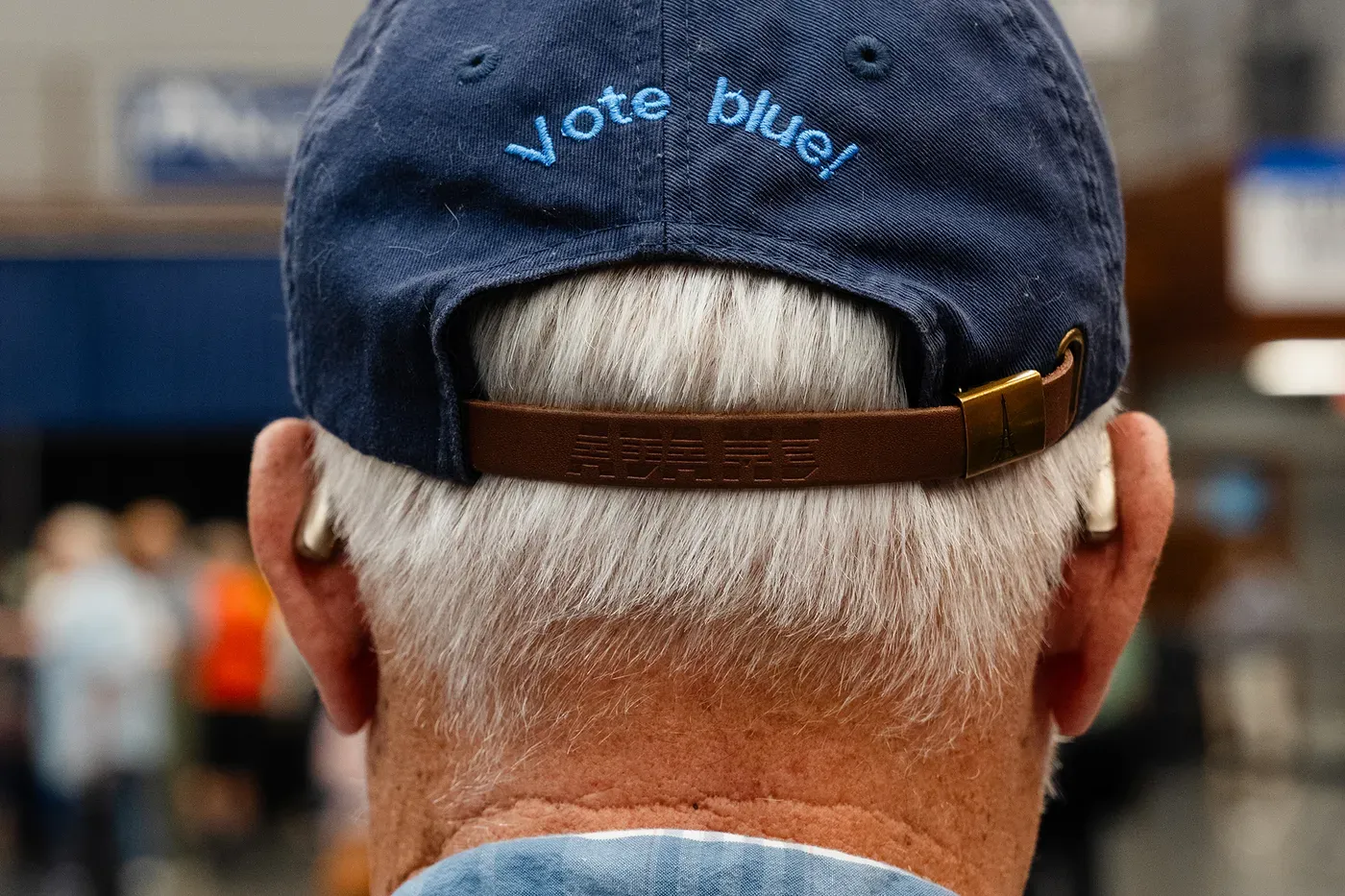
A strong showing by Democrats in next Tuesday's midterms is expected, but party leaders are still searching for a clear message and direction.
National Democrats risk drawing misguided conclusions if they regain control of Congress, warn several lawmakers, campaign strategists, and pollsters who spoke on the condition of anonymity. They caution that a favorable political environment has masked underlying issues within the party. These problems were evident in the 2024 presidential election defeat.
The midterms have become closely tied to President Donald Trump's popularity, but this shift has not significantly improved the Democratic Party's image. Several Democrats acknowledge that their party still struggles with identifying its core message and values. This internal division is a pressing concern ahead of the next presidential election in 2028.
Veteran strategists like Morgan Jackson, senior adviser to Democrat Roy Cooper's Senate campaign in North Carolina, urge caution against assuming victory will validate the Democratic Party's approach. Jackson warned that "don't confuse them losing with us winning."
The Democratic Party's approval ratings have struggled to recover from last year's presidential election, remaining relatively weak despite voters expressing more confidence in Democrats on key issues.
A significant concern for Democrats is the rising cost of living, which has become a top priority for many voters this cycle. However, the party has faced internal disagreements over how to address this issue effectively, with some pushing for a more aggressive approach and others advocating for a more moderate stance.
The infighting between progressive and moderate factions within the Democratic Party has hindered their efforts to develop a coherent message on the economy. This disunity has also led to disagreements over whether to prolong government shutdowns as a means of protesting certain policies, such as funding for Immigration and Customs Enforcement.
As Americans increasingly turned against Trump's agenda and the ongoing war in Iran drove up costs, Democrats shifted their focus towards a broader "costs, chaos and corruption" message that shifts blame away from internal party issues.
Building a winning brand for Democrats after their defeat just two years ago is crucial.
Oliver Libby, a Democratic donor and strategist, believes that solely criticizing Republicans isn't enough to achieve success at the polls. According to him, it's essential to have more than just criticism as a campaign strategy.
A recent poll conducted by PF Global found that over half of Americans attribute Republican losses to either President Trump's actions since taking office or weak Republican campaigns. Only one in four believe a Democratic-controlled Congress would result from the party running strong campaigns.
Democratic strategist Antjuan Seawright emphasizes that voters may be casting ballots against Republicans rather than actively supporting Democrats. This distinction highlights the complexity of voter motivations and expectations.
Lis Smith, a key figure behind Pete Buttigieg's 2020 presidential campaign, notes that Democratic candidates thriving in traditionally Republican areas are those who have distanced themselves from national party affiliations.
The notion that party leaders should take note of this trend is clear, according to Smith. She has been instrumental in establishing moderate groups such as Majority Democrats and The Bench, and is currently advising several Democratic Senate candidates who have chosen to distance themselves from national party affiliations.
These candidates include Adam Hamilton in Kansas, James Talarico in Texas, and Josh Turek in Iowa. In Kansas, for instance, Hamilton has publicly requested that former Vice President Kamala Harris refrain from participating in his campaign. He has also stated that he would vote against Chuck Schumer remaining the party's leader in the Senate.
In Iowa, Turek claims to rarely think about the party, while Rob Sand, the state's Democratic gubernatorial candidate, has expressed a desire to dismantle the two-party system altogether. This approach appears to be paying off for some candidates, as they manage to win over voters who may not typically support Democrats.
Top party operatives are now eyeing the possibility of delivering on long-held promises to voters who have been eager for greater checks on the Trump administration's expansive use of executive power. However, there is a growing concern that leaning too heavily into an anti-Trump message next year could backfire, potentially alienating some voters in the process.
Some Democrats are worried that running a strongly anti-Trump message next year could alienate voters who were won over by Republicans in recent elections.
This concern is particularly relevant in areas where Trump's popularity has endured even after his presidency ended, such as the 3rd district in Wisconsin, which voted Republican in the last few elections.
In this district, William Garcia, co-chair of La Crosse County Democratic Party, has been working to win back voters who switched to the GOP. He and other Democrats are hoping that their party's performance on election day will give them momentum for the next two years.
However, Garcia also acknowledges that voters may have high expectations if Democrats regain control of Congress, which could put pressure on the party to deliver on its campaign promises within a relatively short timeframe.
Democrats have traditionally faced challenges in convincing voters they are equipped to manage the economy effectively. This challenge was evident in 2024 when a majority of voters opted for Trump's economic policies over those proposed by the Democrats. The Democrats were perceived as prioritizing social issues over economic concerns.
The party is likely aware that repeating this mistake will have consequences, and veteran Democratic strategist Pete Giangreco has cautioned that returning to a focus on non-economic issues would be a step backward.
Facts based on reporting originally published by Politico.
You may republish this story, in full or in part, if you credit News Central Site and link to it (licence CC BY 4.0). Photos are not included.