Preserved Log Houses in Norway Contain Toxic Chemicals
Research has raised questions about the heritage preservation project in Norway due to hazardous substances left behind from conservation processes.
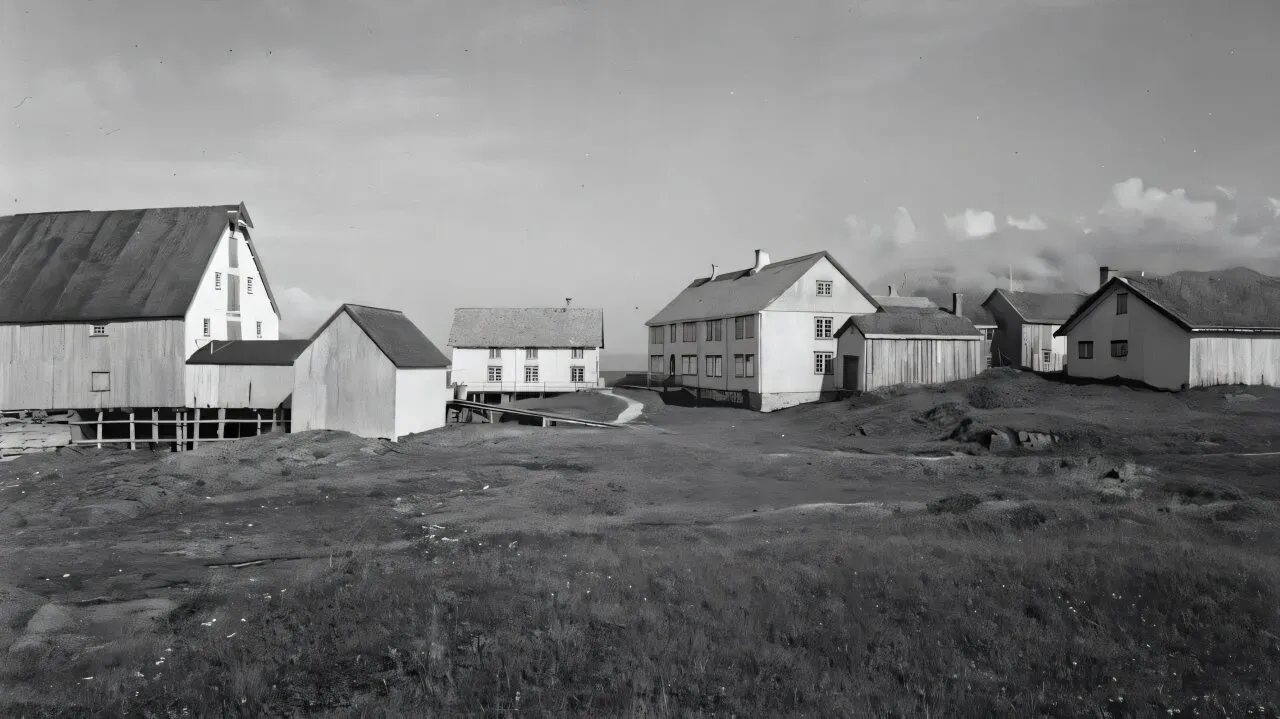
Visitors to Norway's open-air museums can step back into the country's past, surrounded by preserved log-built timber houses and farm complexes set amidst historic landscapes.
The notion of preserving old buildings has been a long-held one, with these structures being considered irreplaceable cultural assets. However, there is an uncomfortable side effect: many of these preserved homes harbor unpleasant odors, often due to toxic chemicals used in their restoration.
According to Anne-Sofie Hjemdahl, a cultural historian at the University of Oslo, research has raised questions about the entire heritage preservation project. This is because Norway's cultural legacy includes an unwanted industrial byproduct: hazardous substances left behind from the conservation process.
Cultural historians have recently begun to acknowledge that toxic chemicals were used in large quantities when restoring old buildings throughout the 20th century. The full extent of this problem remains unclear, and experts are unsure how to proceed with preserving these sites without causing harm.
Hjemdahl has been working closely with Terje Planke, senior curator at the Norwegian Museum of Cultural History in Oslo, who recently led a project to build a traditional crafts center using an old barn as a workshop for demonstrating traditional skills.
The old barn, once destined for renovation as a traditional crafts center, has been deemed unfit due to high levels of toxic substances present inside its walls.
Measurements revealed alarmingly high concentrations of creosote and other hazardous chemicals, prompting concerns about the safety of those working or spending extended periods in such buildings.
According to Planke, who holds a part-time professorship at the Norwegian University of Science and Technology (NTNU), the risks associated with prolonged exposure outweighed any benefits of renovating the old barn.
A new building was subsequently constructed for the crafts center project, leaving the original barn unused except as storage space.
This decision highlights the challenge faced by many countries in balancing preservation efforts with public health concerns, especially when it comes to older buildings that may harbor hidden dangers.
The discovery of hazardous chemicals in nine Norwegian buildings, including Urnes Stave Church, has sparked a wider discussion about the need for more thorough assessments and potentially costly renovations or demolitions.
The debate over preserving historical buildings has taken a new turn in Norway following the discovery of hazardous chemicals in several structures.
According to experts, many of these ancient buildings harbor hidden dangers, including flammable and toxic substances that pose significant health risks to occupants.
The notion of preserving cultural heritage as it stands is being reevaluated in light of these findings, with some arguing that this approach can be naive and overlooks the potential costs and consequences.
It's an optimistic and noble idea, but it comes with certain costs, notes a researcher, highlighting the tension between preserving historical buildings and ensuring public safety.
The presence of wood-eating beetles, listed as threatened in Norway, adds another layer to this complex issue, raising questions about whose right it is to protect cultural heritage.
The consequences of banning toxic substances from old buildings are now being reevaluated as part of a broader discussion on preservation and conservation.
This shift in perspective is evident in the work of researchers who acknowledge that there was initially little consideration given to these issues when the ban was implemented. "Perhaps we buried our heads in the sand," one researcher notes, "but now we have raised them." This newfound awareness has led to a recognition of the need for more comprehensive testing and protection measures.
The approach to preservation is also undergoing a significant overhaul, with a greater emphasis on providing buildings with care that goes beyond mere conservation. This can involve tasks such as installing new gutters, according to one expert.
Some museums are already experimenting with alternative methods for managing insect infestations without relying on hazardous chemicals. Instead of using pesticides, they monitor the activity of insects and take steps to mitigate their impact.
As part of this evolving discussion, heritage researchers are exploring the concept of "curated decay," which involves allowing buildings to deteriorate in a controlled manner to gain new insights and perspectives. This approach could potentially allow museums to convey more nuanced stories about cultural history by incorporating the sounds and experiences of insects that inhabit old buildings.
The preservation of cultural heritage has led to a surge in interest for traditional craft knowledge over the past two decades. This renewed focus comes from both the Directorate for Cultural Heritage and Norway's museums.
Hjemdahl emphasizes that understanding traditional building methods is crucial, equating it to preserving history rather than merely attempting to halt its progression.
Facts based on reporting originally published by Phys.org.
You may republish this story, in full or in part, if you credit News Central Site and link to it (licence CC BY 4.0). Photos are not included.