Nuclear Explosion in Space Could Disrupt Global Communication and Technology
A single nuclear explosion in orbit could cause catastrophic damage to vital systems, leaving recovery efforts taking years.
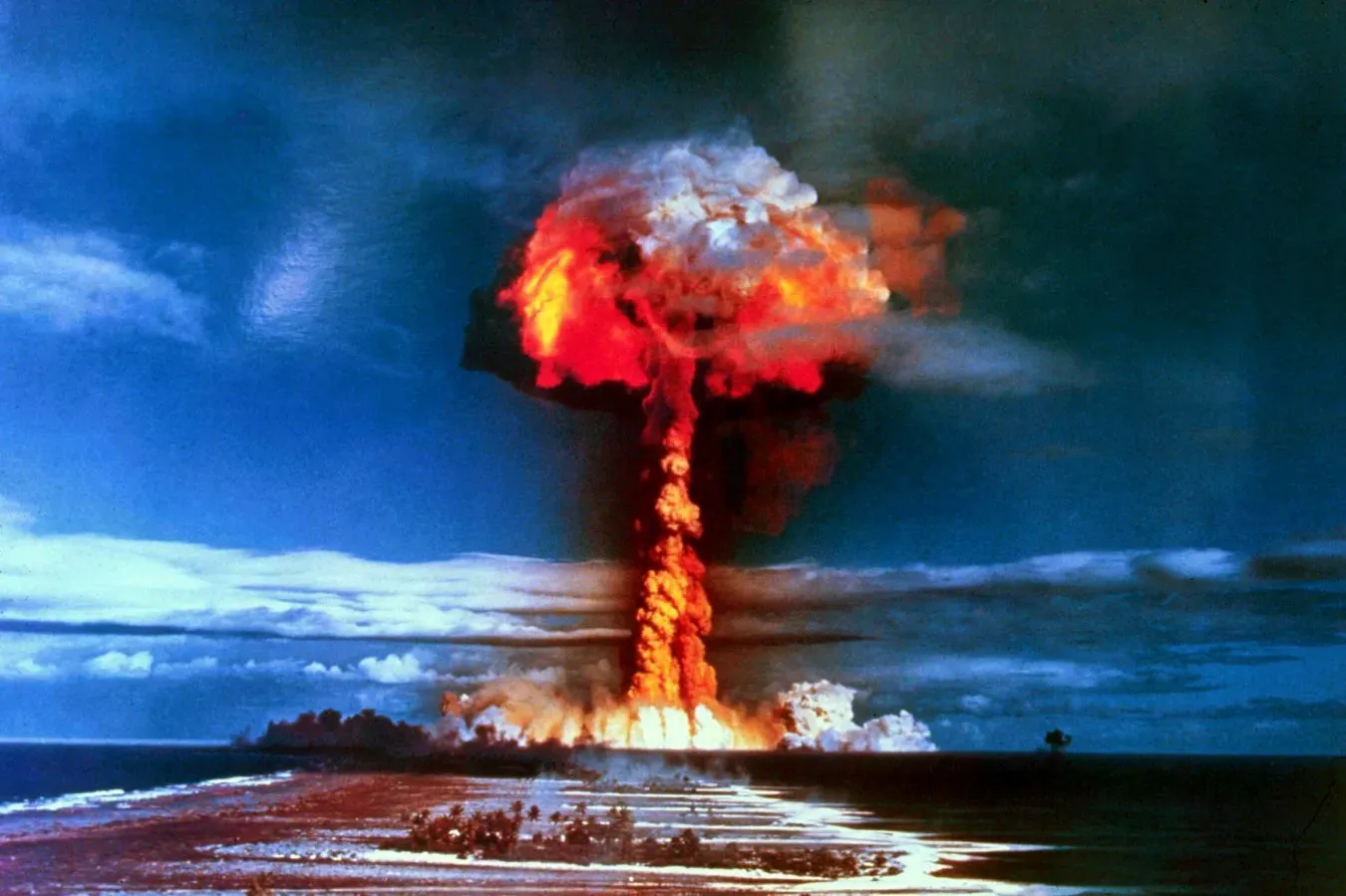
A single nuclear explosion in space could have catastrophic consequences for global communication and technology. Experts warn that a detonation in orbit would leave vital systems reeling from which recovery might take years. The devastating impact is likely to be felt worldwide due to the reliance on satellites for essential services.
Researchers at the University of Wisconsin–Madison have modelled the effects of such an event, assuming a one megaton explosion occurring 500 kilometres above the south Atlantic. Their simulations reveal that even the initial blast would cause significant damage through X-rays, but it's not the most destructive aspect of the radiation released by nuclear fission.
The electrons produced by radioactive fission become trapped in Earth's magnetic field, creating an artificial radiation belt that repeatedly exposes satellites to high-energy particles. This prolonged exposure is likely to be lethal for a large majority of spacecraft. The simulations suggest that 98 per cent of satellites would fail within just one week due to this relentless barrage of radiation.
The researchers also considered the resilience of some modern spacecraft, which employ specialized computer chips designed to withstand radiation damage. However, even with these enhanced systems, the effects are still disastrous, with 97 per cent of satellites failing within two weeks, a testament to the overwhelming impact of such an event.
The sheer number of objects orbiting Earth has increased exponentially since the early days of space exploration, with an estimated 25,000 devices now in space, many still operational and providing critical data for global navigation systems like GPS.
These satellites are not just mere gadgets; they support essential services such as internet connectivity and weather forecasting, which underpin modern society's functioning. The widespread reliance on these satellites makes them a vulnerable target for any catastrophic event that could compromise their operation.
The aftermath of a nuclear explosion in space would be particularly disastrous due to the resulting debris field. Within two years, an estimated 20 collisions between broken satellites and other objects in orbit are predicted, posing a significant risk of triggering Kessler syndrome.
This theoretical scenario depicts a chain reaction of destruction where debris hits other satellites, generating even more debris and potentially rendering orbit lethal for future launches. The long-term consequences of such an event could be devastating, with the possibility of decades or even longer periods of inaccessibility to space.
Despite international agreements like the Outer Space Treaty, which bans the launch of nuclear weapons into space, tensions remain between major spacefaring nations. For instance, a UN vote in 2024 was vetoed by Russia, raising concerns about its intentions and adherence to global norms.
The recent proliferation of low-Earth orbit mega constellations has left them vulnerable to catastrophic failure in the event of a nuclear conflict. According to experts, these satellites would be severely impacted due to their reliance on complex electronic systems.
A significant concern is that individual satellites can be replaced relatively quickly, but recovering from a nuclear attack would not be straightforward. The environment in space would still be affected by elevated radiation levels and increased debris, potentially limiting the operational lifetime of new satellites and impacting their effectiveness.
Rebuilding orbital infrastructure could take years, leaving many services we rely on severely degraded or unavailable for an extended period.
Facts based on reporting originally published by New Scientist.
You may republish this story, in full or in part, if you credit News Central Site and link to it (licence CC BY 4.0). Photos are not included.