Breakthrough in Rocketry Technology with Lecithin-Based Hybrid Fuel Developed
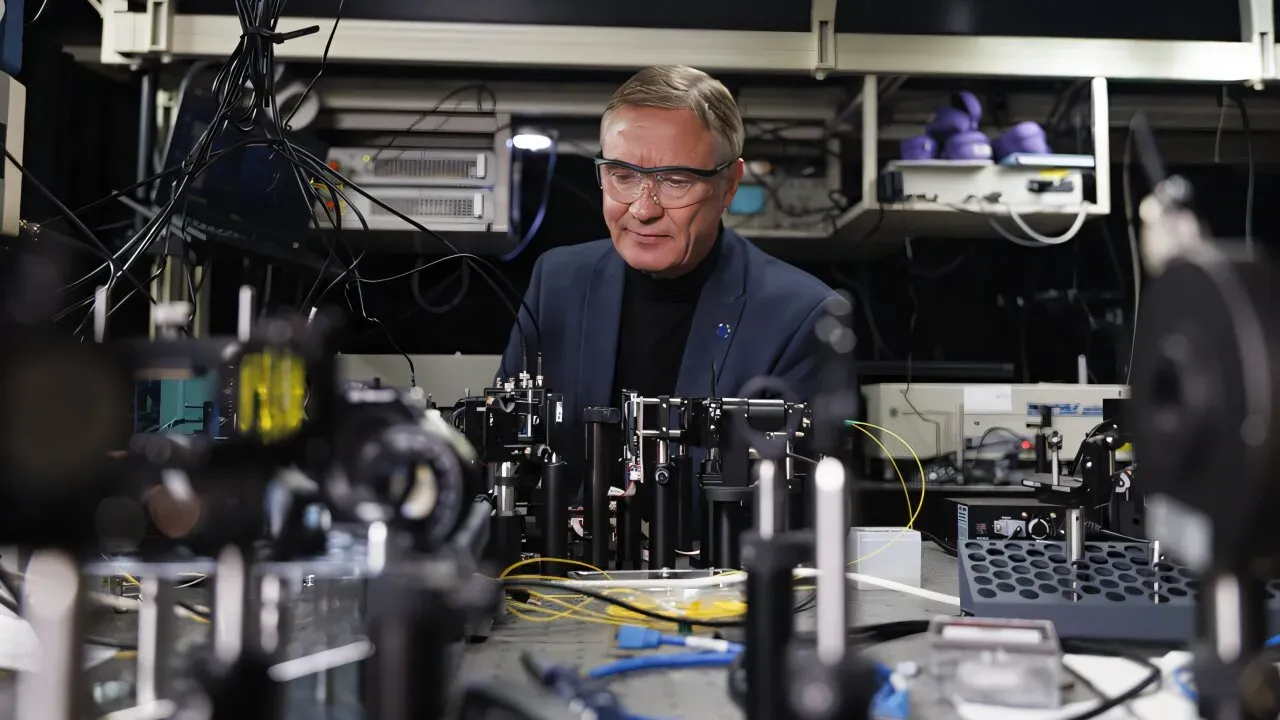
Researchers Pranay Mudaliar and Jerin John have developed a new hybrid fuel using lecithin, an ingredient found in food products.
A breakthrough in rocketry technology has been achieved by researchers who have found an innovative solution to one of the field's oldest fuel problems. The conventional trade-off between solid and liquid rocket fuels has long plagued engineers, each type having its own set of advantages and disadvantages.
The quest for a hybrid fuel that combines the best qualities of both solids and liquids has led researchers down a path of experimenting with gels as a potential solution. However, gels have their own problems to contend with. In an effort to overcome these challenges, researchers have been searching for alternative solutions.
A new study published in the journal Langmuir by Pranay Mudaliar and Jerin John of Concordia has made significant strides in addressing this issue. The researchers used an unusual ingredient called lecithin, typically found in food products, to create a stable emulsion that could potentially replace gels as a hybrid fuel.
Solid rocket boosters are known for their stability, durability, and quick ignition capabilities. However, they also have the major drawback of being impossible to turn off once ignited, requiring the entire propellant to be burned through at once.
Liquid fuels, on the other hand, offer greater flexibility in terms of control and operation. They can be throttled up and down, restarted multiple times, and are generally more controllable than solid-fueled engines. However, liquid fuels also pose unique challenges, particularly in zero-gravity environments where they tend to slosh around in tanks.
This sloshing action can cause vapor pockets that can damage turbopumps if not filtered out beforehand. Additionally, liquids have a tendency to leak or evaporate over time, making them less suitable for extended journeys through the solar system.
Developing a reliable fuel source for long-duration space missions has proven to be a complex challenge. Researchers have been exploring various options to overcome this hurdle, and one promising solution lies in the use of gels as an alternative to traditional liquid fuels.
Gels exhibit unique properties that make them suitable for rocket propulsion systems. They can maintain their density while in storage, but when forced into a combustion chamber, they behave like liquids. However, gels are not without their own set of challenges, including shelf life and temperature-dependent phase changes.
The introduction of an unexpected ingredient has shown great promise in addressing the limitations of gel fuels. Lecithin, commonly used as an emulsifier in food products to maintain texture and consistency, has been found to exhibit remarkable properties when combined with rocket fuel. Its ability to act as a gelling agent makes it an attractive candidate for further research.
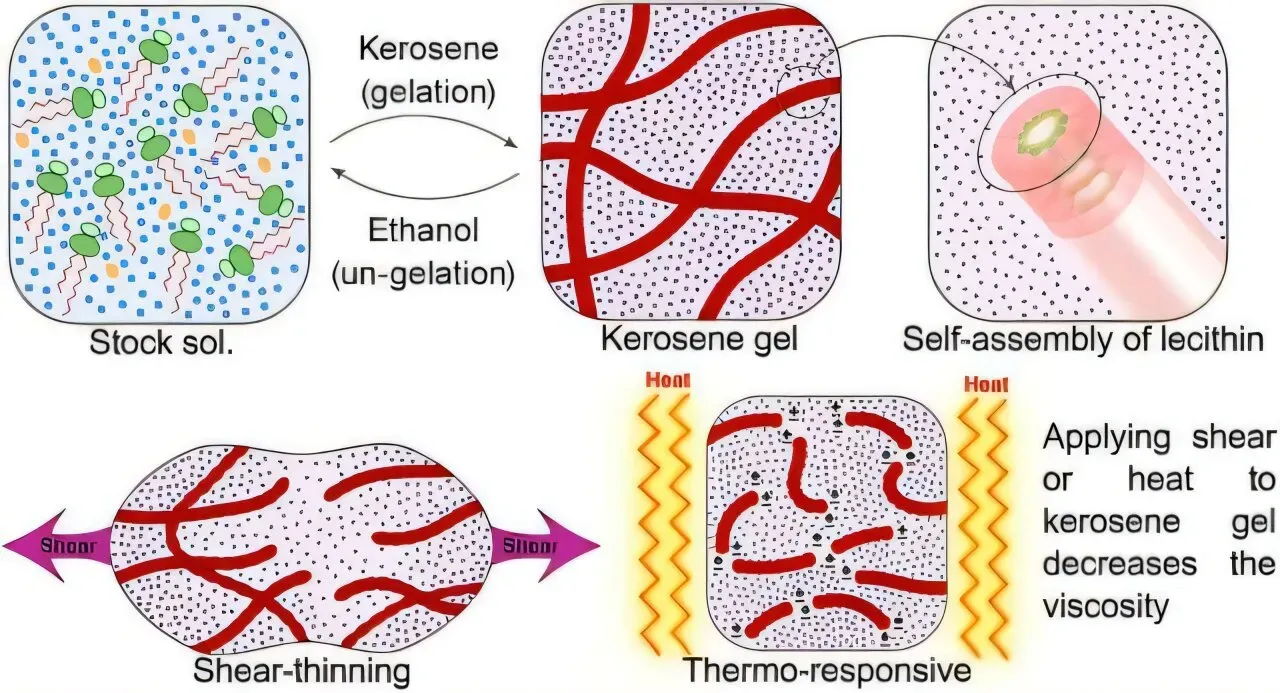
The combination of lecithin with calcium chloride salt leads to the formation of microscopic wormlike structures known as micelles. These structures self-organize and form a 3D mesh that can trap kerosene molecules, creating a stable gel-like fuel. The use of lecithin also eliminates the need for non-combustible thickening agents, which would otherwise act as dead weight in the propulsion system.
The new rocket fuel's unique properties have been observed in a phenomenon called shear thinning. This occurs when mechanical pressure or shear force is applied to the gel, causing it to break apart and temporarily collapse into a liquid.
Measurements taken by researchers show that under these conditions, the gel's viscosity drops dramatically, decreasing by over 100 times. As a result, the fuel becomes easily pumpable and can be sprayed through injector nozzles with ease.
However, when the pressure stops, the material rapidly returns to its original state as a gel. This reversible transformation is an essential characteristic of the new fuel, allowing it to maintain its integrity while still providing the necessary flow properties for efficient propulsion.
The fuel's responsiveness to external stimuli also extends to thermal and chemical triggers. For instance, heating the gel within a specific temperature range can cause localized liquefaction without affecting the rest of the fuel, offering a potential means of controlling the fuel's viscosity in real-time.
The experimental gel fuel's clarity is a significant advantage in research settings, allowing researchers to closely observe its behavior under various conditions. By using optical high-speed cameras and lasers, scientists can gain valuable insights into the gel's structure and spray patterns without any visual obstructions.
One of the most notable aspects of this gel fuel is its remarkable stability over time. In tank tests, it remained stable for over a year with no signs of phase separation, a common issue that affects many other gelatin-like fuels.
Despite these promising findings, significant challenges remain before this new fuel can be considered ready for launch. Its performance under high-pressure injection conditions and ability to withstand the stresses of space travel have yet to be thoroughly tested.
The researchers are continuing their work on refining this gel fuel's properties to make it a viable option for future space missions. While numerous hurdles must still be overcome, the potential benefits of this innovative fuel make its development an exciting area of research.
Researchers are exploring a new potential solution to one of rocketry's most persistent fuel challenges, and it lies in an unexpected source: common food emulsifiers.
These emulsifiers, typically used to stabilize mixtures of oil and water in foods like mayonnaise and salad dressings, have shown promise as a means of creating more efficient and sustainable rocket fuels. According to the researchers, the potential benefits of this innovative fuel make its development an exciting area of research.
Facts based on reporting originally published by Phys.org.
You may republish this story, in full or in part, if you credit News Central Site and link to it (licence CC BY 4.0). Photos are not included.