Murder at the Grand Alpine Hotel Set Abroad for First Time in 50 Years
The novel follows Miss Marple as she becomes entangled in a whodunnit at the luxurious Grand Alpine Hotel, located in the Swiss Alps.
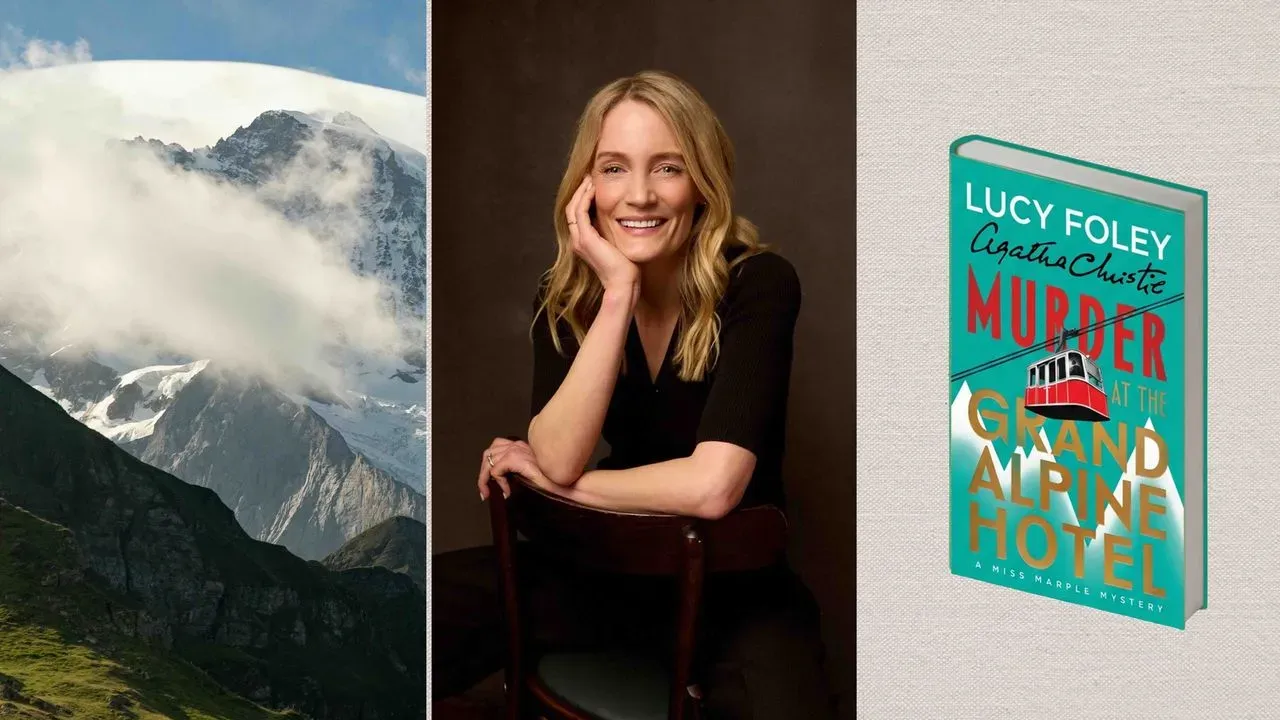
A new mystery is being added to the Agatha Christie franchise, one that takes a notable departure from the typical English countryside setting of her iconic character, Miss Marple. For the first time in 50 years, the elderly amateur detective will be featured in a novel set outside of her usual domain.
The world of June Marple, with its quaint charm and village gossip, is being replaced by the grandeur of the Swiss Alps in Lucy Foley's Murder at the Grand Alpine Hotel. The story follows Miss Marple as she finds herself entangled in a whodunnit at the luxurious Grand Alpine Hotel, a cozy ski chalet nestled deep within the unforgiving mountainsides.
The contrast between this new setting and the familiar English hamlets of St. Mary Mead is striking. Gone are the rolling hills and village fairs; instead, we have hidden speakeasies, ice-skating waiters, and the rugged beauty of the Alps.
Lucy Foley, author of The Guest List, has taken on the challenge of reviving the Miss Marple franchise with Murder at the Grand Alpine Hotel. In conversation with us, she revealed that the location was a key factor in bringing this new installment to life.
Foley's decision to set the story abroad not only adds a fresh layer to the Miss Marple canon but also allows her to explore the rich history of the Alps. With its unique blend of cultures and landscapes, the region offers a rich tapestry for Foley to weave into her mystery.
The author explained that she aimed to create something new while still honoring the spirit of Christie's original works. By transporting Miss Marple to this new and unfamiliar setting, Foley is able to put a fresh spin on the character and her detective work.
As we delve deeper into the world of Murder at the Grand Alpine Hotel, it becomes clear that this novel will be a thrilling departure from the usual Miss Marple formula. With its exotic location and complex plot, Foley's take on the franchise promises to captivate fans of Christie's works and newcomers alike.
To give my take on a Miss Marple book, I decided to deviate from the traditional setting of St. Mary's Mead and explore new possibilities.
I wanted to put myself in Agatha Christie's shoes and consider what she might have done if she were writing today.
This led me to think about how I could update the classic mystery genre while still staying true to its roots.
The idea of taking Miss Marple on another holiday sparked a lot of creative energy, as it is only mentioned once in the original books that she goes on one vacation.
I was intrigued by the prospect of giving her a fresh adventure and exploring new themes.
My research took me to several locations in the Alps, where I immersed myself in the local culture and landscapes.
The rugged terrain and breathtaking scenery provided the perfect backdrop for my story.
From Chamonix in the French Alps to Zermatt and Saint Moritz, I traveled extensively to get a feel for the region's unique character.
I drove through the Mont Blanc tunnel to Le Corbier and visited various Italian resorts, taking note of every detail along the way.
This meticulous research was crucial in capturing the essence of the Alps and transporting readers to this stunning setting.
The Alps have long been a source of fascination for many, but their initial perception was far from romanticized. In fact, before the Romantic era, people viewed mountains as eerie and foreboding places, where death and danger lurked around every corner.
This dichotomy still exists today, with the Alps presenting both breathtaking beauty and treacherous terrain. Skiers and climbers, in particular, expose themselves to risks that are rare in other environments. Even experienced adventurers like those who tackle routes such as the Vallée Blanche above Chamonix cannot help but feel a sense of unease.
The Vallée Blanche is a notorious ski itinerary that takes skiers down parts of the Mer de Glace Glacier, an experience that requires skill and caution to navigate safely. The steep drops and crevasses pose significant hazards, and even experienced guides must be vigilant.
Despite these risks, the allure of the Alps continues to captivate many visitors. For one researcher, a serendipitous discovery led to the location of a charming hotel called Refuge du Montenvers, which sits above Chamonix. Accessible by a quaint red train, this isolated spot offers an unforgettable atmosphere that inspired the setting of a recent book.
The hotel's remote location and stunning views make it an ideal retreat for those seeking solace in nature. As one visitor discovered, the surroundings are almost surreal, with the mountains towering above and a sense of tranquility pervading the air.
In addition to its natural beauty, the Alps have also played host to some fascinating cultural traditions. For instance, certain hotels like Badrutt's Palace Hotel and Kulm Hotel in St. Moritz have a rich history, including photographs of ice-skating waiters that were once a common sight.
These vintage images offer a glimpse into the region's past, highlighting the unique blend of luxury and adventure that defines the Alps.
The luxury hotels in the Swiss Alps played a significant role in the postwar era, hosting high-society guests from across Europe.
These hotels catered to the elite, offering extravagant amenities such as champagne-fueled ice skating parties on frozen lakes.
The author transports readers back in time to a 1950s chalet in Switzerland, where international guests from various countries would converge for a winter getaway.
During this period, the social landscape of Europe was undergoing significant changes, with former enemies now rubbing shoulders at these exclusive resorts.
In the opening scenes of the book, passengers on a train bound for the hotel are introduced, showcasing the diverse nationalities in attendance.
The Italians stood out with their impressive luggage, while the French flaunted their luxurious furs, and the British guests appeared worn down by rationing.
Diana Glass's keen eye for detail notes that the Brits looked particularly underweight and pale due to ongoing food shortages.
The scenic backdrop of the Alpine region provides a fitting setting for this Miss Marple mystery, where past and present collide in unexpected ways.
As it turns out, some characters have been hiding secrets about their wartime experiences, which they have skillfully manipulated to further their own agendas.
These altered backstories are now intertwined with the events unfolding at the hotel, adding layers of complexity to the narrative.
Agatha Christie's formula for crafting a compelling mystery involves presenting an obvious suspect who ultimately proves not to be the culprit.
A hotel setting offers unique opportunities for suspenseful storytelling, thanks to its specific geography and hidden spaces that only favored guests may know about.
The Kulm Hotel is a prime example of this, with its secret bar being just one of the many intriguing features that add to the mystery's allure.
In At Bertram's Hotel, Christie masterfully explores the idea that hotels can be both democratizing and anonymous spaces where people can reinvent themselves.
Detective Miss Marple's unique approach to solving crimes has been a hallmark of Agatha Christie's iconic series. Unlike other detectives, such as Hercule Poirot, she doesn't let superficial appearances deceive her.
Marple sees people for who they truly are, regardless of their background or social status. This ability to cut through pretenses and discern the truth is what sets her apart from other detectives. Her lived experience has undoubtedly played a significant role in shaping this skill.
While Poirot often falls prey to charm and deception, Marple remains steadfast in her judgment. She can spot a villain from afar, unswayed by external appearances or superficial charm. This quality makes her an effective detective, always getting to the heart of the matter.
Marple's enigmatic nature is another aspect that sets her apart from other detectives. Her true self is often hidden behind a mask of calm and composure, making it difficult for others to truly understand her motivations or emotions. However, glimpses of her inner workings can be seen in moments of great intensity or passion.
In some cases, Marple's anger drives her to solve a crime, as seen in A Pocket Full of Rye. In other instances, she assumes the role of nemesis, taking on a powerful and shape-shifting persona, as demonstrated in Nemesis. Her ability to adapt and become whatever another character needs her to be is both fascinating and unique.
If Christie were to send Marple on a new adventure today, it's likely that she would return to a country where Marple spent time in her youth. This would provide an intriguing backdrop for the detective to navigate unfamiliar settings and unravel mysteries once more.
Facts based on reporting originally published by Conde Nast Traveler.
You may republish this story, in full or in part, if you credit News Central Site and link to it (licence CC BY 4.0). Photos are not included.