Kopros B Reduces Emissions from Dairy Manure
A study has found that using microorganisms in cattle housing can reduce methane and nitrogen emissions from dairy manure.
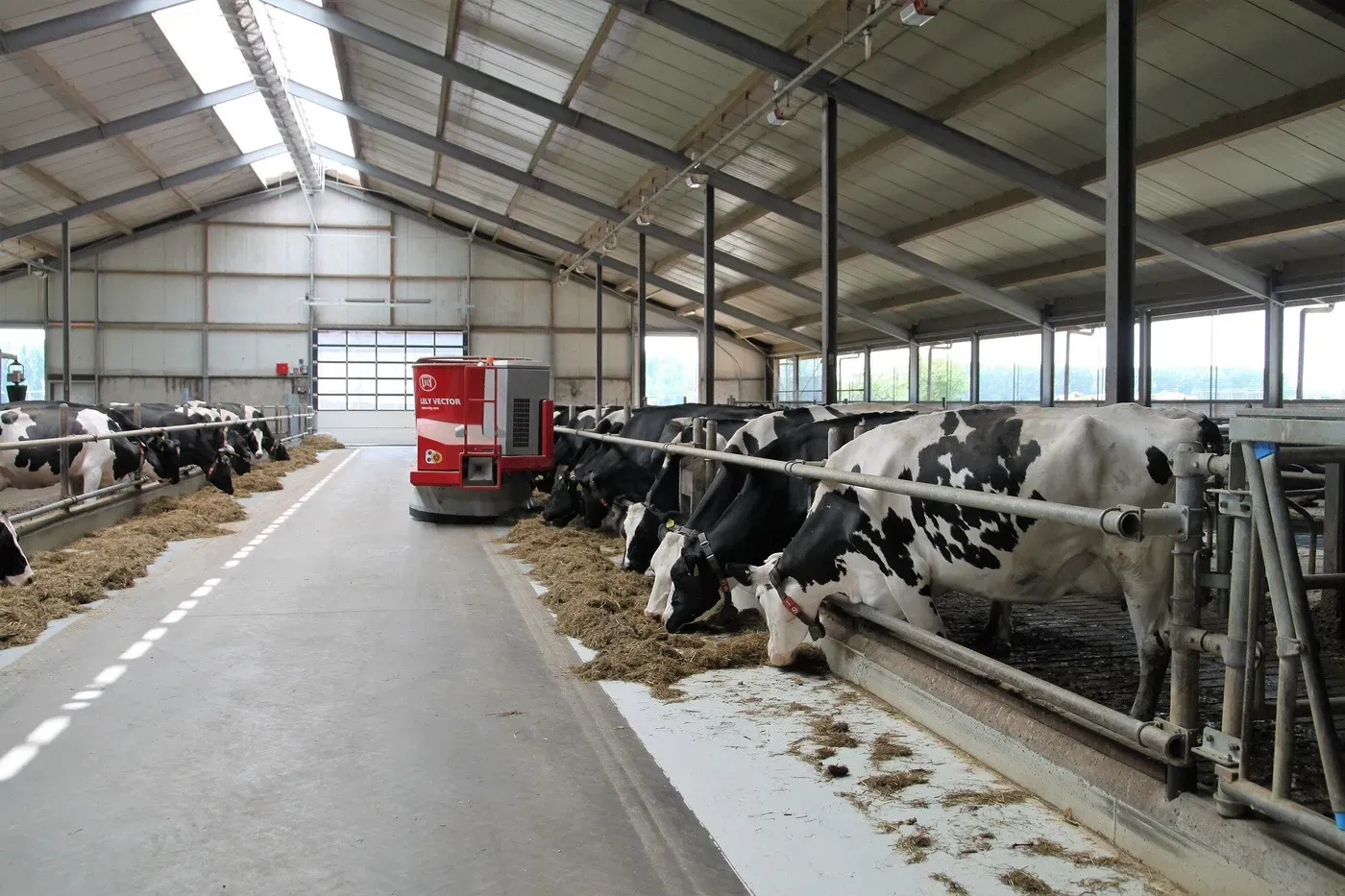
Dairy farmers are constantly seeking ways to reduce emissions from manure while also increasing its fertilizing value for agricultural land. One potential solution is to use additives in cattle housing that can break down the mixture of urine and feces on the floor.
Research has shown that certain microorganisms, such as those found in the product Kopros B, may be effective in reducing emissions while also improving manure quality. These microorganisms are designed to multiply in the manure on the floor of the housing and continue to act in the slurry pit.
The study involved testing the effects of applying Kopros B to cattle housing on various properties of the manure. The results indicated that this treatment could reduce both methane and nitrogen emissions from the manure. Specifically, ammonia emissions decreased by 30% or more during the study period.
These findings suggest that microorganisms may play a key role in reducing emissions from dairy farming. However, further research is needed to fully understand how these microorganisms work and whether they can be effectively used on a large scale.
The exact mechanism behind the reduction in ammonia emissions is not yet clear. One possible explanation is that the microorganisms form a protective biofilm on the housing floor or on the surface of the slurry in the pit, which could help to reduce emissions.
More research is needed to confirm whether these microorganisms can indeed form a biofilm and have this effect. The study highlights the potential benefits of using microorganisms to reduce emissions from dairy farming, but further investigation is necessary before this approach can be widely adopted.
The treated manure showed some characteristics that could potentially lead to increased emissions when applied to agricultural land, but these effects were partly offset by its reduced viscosity, allowing it to seep into the soil more quickly.
To conduct this study, a dairy cattle house with a slatted floor was divided into two sections: one where Kopros was applied regularly and another where no treatment was used. Each section had its own manure collection pit, and the cows in both areas received identical diets throughout the research period.
Manure samples were collected from both pits over several months, from late September 2025 to mid-February 2026, as part of this investigation into the effects of Kopros on dairy cattle waste.
The analysis revealed that various properties of the manure had been altered by the treatment. Notably, the concentration of volatile fatty acids decreased significantly, by more than 60%, which is consistent with observations from farms where treated manure has a less pungent odor.
The reduced levels of organic matter and increased pH in the treated manure also indicated changes to its composition, as did the higher concentrations of ammonium nitrogen and total nitrogen.
The treatment of manure using Kopros appeared to reduce nitrogen emissions from cattle housing. This was indicated by a lower nitrogen-to-phosphorus ratio in the treated manure compared to untreated manure.
Phosphorus does not evaporate from manure, which means that a higher nitrogen-to-phosphorus ratio is likely due to reduced nitrogen loss through volatilization from the treated section of the cattle housing. This suggests that the treatment may be effective in reducing ammonia emissions from manure.
Further research is needed to fully understand the effects of Kopros on manure and its application, including testing under controlled conditions and direct measurements of emissions.
Facts based on reporting originally published by Phys.org.
You may republish this story, in full or in part, if you credit News Central Site and link to it (licence CC BY 4.0). Photos are not included.