Groundbreaking Study Reveals Physical Actions Significantly Improve Learning
Researchers at Florida Atlantic University's College of Engineering and Computer Science have made a groundbreaking discovery in pattern-based learning, revealing that physical actions can significantly improve the way we learn certain tasks.
Researchers at Florida Atlantic University's College of Engineering and Computer Science have made a groundbreaking discovery in pattern-based learning, revealing that physical actions can significantly improve the way we learn certain tasks. Their study challenges long-held assumptions about how people absorb information, suggesting that movement is not just a byproduct of cognitive processing but an integral part of it.
In everyday life, making decisions often involves both visual recognition and motor skills. For instance, assessing whether a road is slippery or spotting a medical anomaly on a scan requires not only mental acuity but also an understanding of how our bodies interact with the environment. However, past research has largely viewed category learning as an abstract cognitive process, neglecting the role that physical movement plays in this process.
The connection between action and cognition has been overlooked for decades, despite its intuitive significance. Most studies have treated physical actions merely as a means to express decisions after they are made, rather than exploring whether these actions can actually impact how well we learn. This oversight is surprising given the fundamental relationship between our bodily movements and our perception of the world.
A new study conducted by researchers from Florida Atlantic University and Brown University has shed light on this long-standing issue. Their findings indicate that larger movements can have a substantial effect on learning, but only when it comes to specific types of categories being learned. This nuance highlights the complexity of human cognition and the need for more comprehensive understanding.
The implications of these discoveries are significant, particularly in fields where accurate pattern recognition is crucial, such as medicine or transportation safety. By acknowledging the interplay between physical movement and cognitive processing, educators and researchers may develop more effective learning strategies that incorporate action-based techniques to improve knowledge retention.
The conventional understanding of category learning suggests that mental representation and recognition of objects are key components, with physical movement playing a secondary role in the process. However, recent research challenges this perspective by indicating that physical responses may actively influence what people learn.
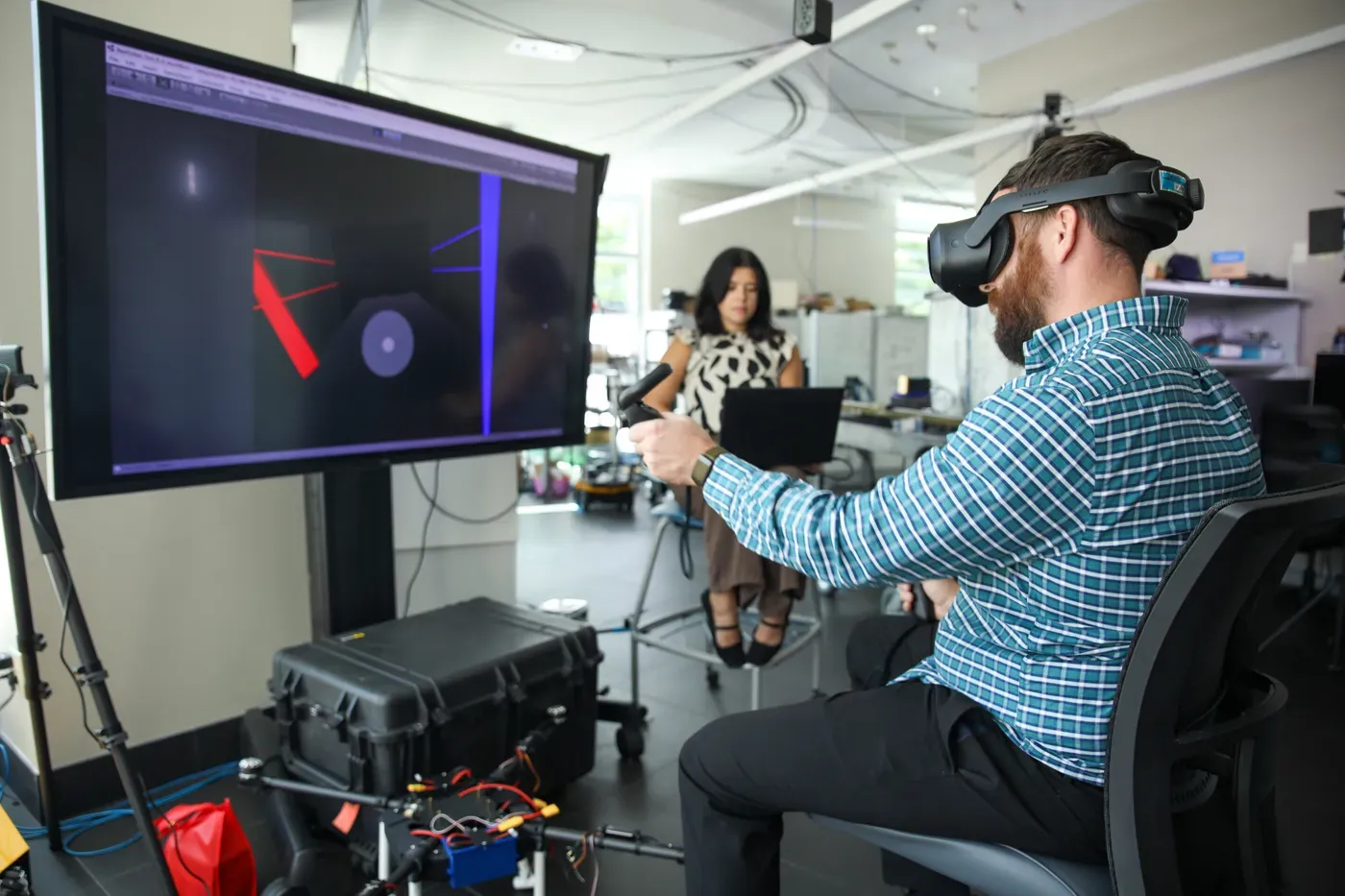
To examine this idea, researchers designed an immersive virtual reality experiment where participants learned to categorize visual patterns using either button presses or larger arm movements. The study focused on two types of category learning: one based on explicit rules and the other requiring pattern recognition and integration of multiple features.
The results showed a significant difference in performance between the two groups. Participants who used larger arm movements were more accurate in recognizing similarity-based categories compared to those using simple button presses. Conversely, there was no noticeable improvement for participants using larger movements when learning categories based on explicit rules.
Further analysis revealed that the task's complexity did not alter the outcome. Even when made more challenging, larger arm movements failed to provide any meaningful benefits for learning categories based on explicit rules.
The researchers were surprised by the selectivity of the effect they observed, noting that larger movements benefited pattern-based learning but not rule-based tasks.
Larger movements had a substantial impact on learning when participants were required to recognize patterns by integrating multiple features, but this advantage did not extend to tasks where explicit rules were used. Furthermore, it didn't matter whether participants swung at the target or punched a separate response box - what mattered was that they made larger movements.
The researchers conducted additional experiments to rule out other factors that could explain their findings. They controlled for differences in viewing time and response speed, and also made the rule-based task more complex, but these adjustments did not eliminate the advantage of larger movements for similarity-based learning.
Interestingly, participants who trained using larger movements retained their advantage even after switching to simple button presses, suggesting that movement strengthened learning itself rather than just making it easier to respond correctly in the moment.
The study's findings suggest that traditional approaches to learning may be overlooking an important aspect of brain function. Movement appears to play a significant role in shaping learning itself, rather than simply directing the body how to respond to new information.
This discovery has implications for various fields where complex tasks require integrating information and recognizing patterns. Medical diagnosis and aviation are two areas where training often struggles to improve performance using conventional methods. Traditional teaching approaches have shown limited success even when supplemented with written instructions on task execution.
The research suggests that incorporating movement into learning could offer a simple yet effective way to overcome these limitations. By leveraging immersive virtual reality, it may be possible to design training programs that harness the benefits of purposeful movement for improved performance.
Further investigation is needed to determine whether the advantages observed in VR settings can translate to real-world applications. The findings also raise questions about the potential drawbacks of minimizing movement in traditional training designs.
The study highlights the importance of movement in learning complex skills, challenging traditional notions that thought and action are separate entities.
Researchers Yuka Sasaki, Ph.D., and Takeo Watanabe, Ph.D., from Brown University, have collaborated with others to shed light on this relationship, suggesting that physical motion plays a crucial role in accelerating category learning. Their findings also raise questions about the potential drawbacks of minimizing movement in traditional training designs.
The implications of this research could lead to new approaches for teaching complex skills and preparing individuals for real-world situations, where decision-making is often demanding.
Facts based on reporting originally published by Phys.org.
You may republish this story, in full or in part, if you credit News Central Site and link to it (licence CC BY 4.0). Photos are not included.