Jonathan Dekel-Chen and Jaser Abu Moussa embark on journey to bridge Israeli-Palestinian divide
Two fathers from opposing sides of the conflict share their stories as they navigate complex emotions and search for ways to heal and find a path forward.
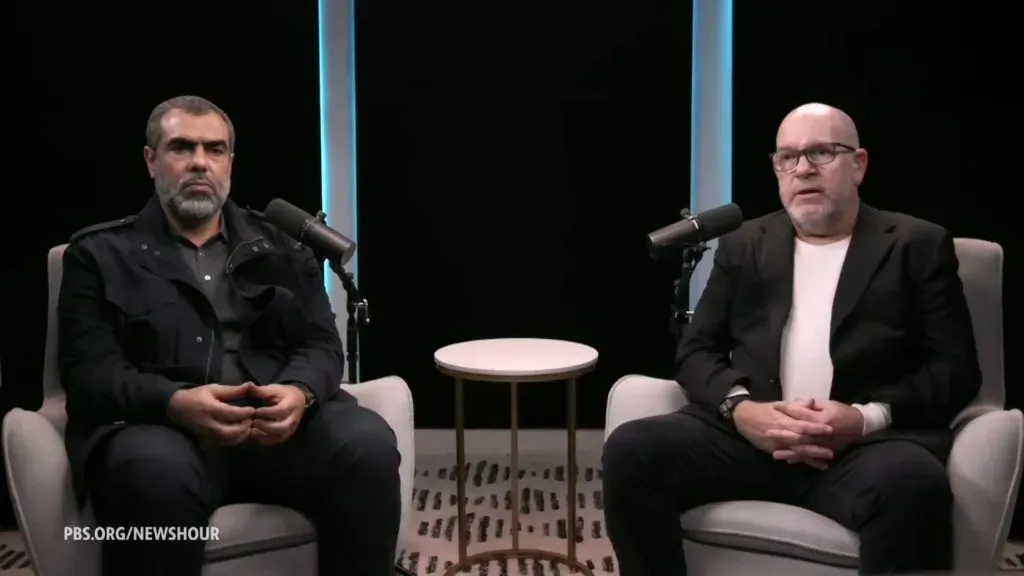
Two fathers from opposing sides of the Israeli-Palestinian conflict have embarked on a journey to bridge the divide between their communities. Jonathan Dekel-Chen's son Sagui was kidnapped and held hostage by Hamas for nearly 500 days after being shot in an incident near Kibbutz Nir Oz.
Jaser Abu Moussa, from Gaza, has also experienced immense loss due to the conflict. His wife and two of his children were killed in an Israeli airstrike on October 15, 2023, which also targeted his home in Khan Yunis. His surviving children were forced to evacuate to the United Arab Emirates for medical treatment.
The incident that triggered the current cycle of violence was the October 7 attack, which sparked multiple wars in the region and had a devastating impact on Gaza. The trauma inflicted by this event has left deep scars on both sides, making it challenging to find common ground.
Jonathan Dekel-Chen's son Sagui was eventually released after nearly 500 days of captivity, but his ordeal has left an indelible mark on his family. Jaser Abu Moussa's loss is equally heartbreaking, with the death of his wife and two children leaving a void that can never be filled.
The stories of these two fathers serve as a poignant reminder of the human cost of the Israeli-Palestinian conflict. As they navigate their complex emotions, they are also searching for ways to heal and find a path forward.
The cost of not having this conversation between Israelis and Palestinians has been devastatingly clear in recent years. For Jaser Abu Mousa, a former Gaza resident, the question is what the consequences would have been if dialogue had taken place before the tragic events that unfolded.
In October 2023, Nir Oz and other kibbutzes were attacked by Palestinian forces, leaving many dead or injured. Among them was Jonathan Dekel-Chen's community, which suffered a similar fate. The loss of life on both sides has left deep scars for families like Jaser Abu Mousa's, who lost his wife and two children in the aftermath.
Jaser Abu Mousa believes that if he and Jonathan Dekel-Chen had been able to have this conversation before the tragedy, it could have made a difference. He hopes that by engaging in this public dialogue now, they can provoke hope for a better future.
The two men acknowledge that their efforts may not be enough to solve the complex problems between Israelis and Palestinians on their own. However, they feel compelled to take action given the devastating impact of the conflict on both sides of the border.
The devastating impact of the conflict on both sides of the border has left deep scars on families and communities. Amidst the trauma and loss, a small but significant gesture of hope has emerged in the form of partnerships between Israeli and Palestinian fathers.
These individuals, scarred by their experiences during and after October 7, have come together to bridge the divides that have long plagued their communities. Their efforts aim to create a more peaceful coexistence through reasonable conversations about improving life for all parties involved.
Their message is one of humanity, seeking to defuse hatred and promote understanding across neighborhoods and even cities like New York. It's a daunting task, but these individuals believe that by working together, they can make a difference.
In this context, it's remarkable to hear Jaser Abu Mousa reflect on his own personal journey, weighing the pain of loss against the potential for progress through dialogue and cooperation.
The personal motivations behind this initiative are multifaceted. Jonathan Dekel-Chen's decision to collaborate with Jaser Abu Mousa was influenced by his children and grandchildren. He wants them to have a chance at peace rather than inheriting anger and pain.
A significant factor in Jonathan's change of heart is the devastating impact of the October 7 attack on their community, a kibbutz that was left completely devastated. This traumatic event has made it clear that perpetuating hate only leads to more suffering.
Jonathan believes that both he and Jaser have witnessed firsthand the consequences of succumbing to cycles of hate and anger. They understand that this path inevitably leads to further devastation and tragedy.
The current reliance on political leaders to resolve conflicts is not a reliable solution, according to Jonathan Dekel-Chen. He fears that if they continue waiting for politicians to take charge, his grandchildren, along with Jaser's children, will be exposed to similar horrors in the future.
Jonathan acknowledges that it's natural to feel overwhelmed by anger and pain after experiencing trauma like the October 7 attack. However, he emphasizes that this cycle of hate must be broken if they hope to create a more peaceful future for their families.
The complexities of the Israeli-Palestinian conflict continue to unfold as two fathers from opposing sides share their perspectives on the violence that erupted three years ago. Jaser Abu Mousa acknowledges the brutal attack by Hamas on October 7, which targeted communities like Nir Ozempic, where Jonathan Dekel-Chen's family was living.
This vicious assault left a lasting impact on both parties, with each side viewing the other as faceless enemies rather than human beings. When Israel retaliated against Gaza, Jaser notes that Palestinian lives were seen as collateral damage or expendable assets, rather than individuals deserving of compassion and respect.
Jonathan Dekel-Chen shares his own thoughts on the Israeli Defense Forces' actions in Gaza during this period, stating that history will ultimately judge their decisions. He concedes that it's a difficult question to answer, given the complexity of the situation. Jonathan emphasizes that most Israelis wanted an end to the violence early on, with the primary goal being to secure the release of hostages and establish a ceasefire.
Jonathan also expresses his disillusionment with Israel's current government, stating that they do not represent the views of the majority of Israelis. This sentiment highlights the deep divisions within Israeli society, as well as the ongoing struggle for peace in the region.
The Israeli-Palestinian conflict has left a lasting impact on the region, and for many, it's hard to imagine a future without the scars of war. The devastating events that unfolded in Gaza three years ago have left deep emotional wounds, making it challenging to move forward.
Despite the difficulties, there are those who choose to focus on finding common ground and working towards peace. By doing so, they aim to break free from the cycle of hate and institutionalized conflict, instead striving for a brighter future where both Israelis and Palestinians can coexist in harmony.
Facts based on reporting originally published by PBS NewsHour World.
You may republish this story, in full or in part, if you credit News Central Site and link to it (licence CC BY 4.0). Photos are not included.