Joe Rogan, The Odyssey, Donald Trump
A significant aspect of how people gather information about politics is often overlooked in research on polarization: popular culture. This includes social media influencers, podcasts,...
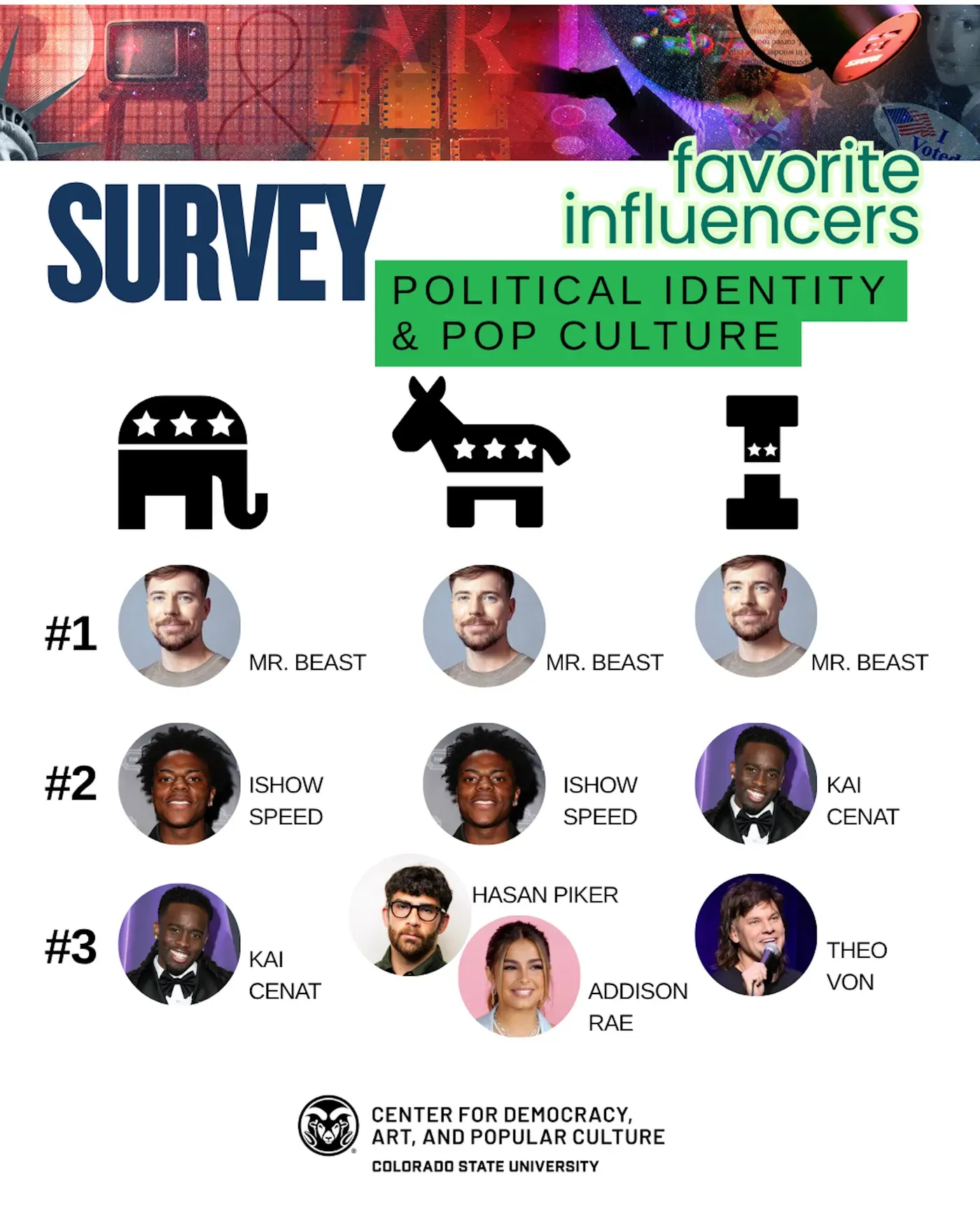
A significant aspect of how people gather information about politics is often overlooked in research on polarization: popular culture. This includes social media influencers, podcasts, comedy, TV shows, and movies, which frequently intersect with politics.
The current president's background as a reality TV star is an example of this connection. He was re-elected in 2024 with the help of influential figures like Joe Rogan, who uses his podcast to discuss various topics, including politics. Movies like "The Odyssey have sparked controversy and become focal points for political debate.
Late-night talk show hosts often walk a fine line when using humor to tackle sensitive topics related to the Trump administration's policies. The boundaries between entertainment and politics are increasingly blurred in contemporary media. A 2024 film, The Odyssey, drew intense attention from politicians and pundits alike, with some interpreting it as a commentary on government policy.
Younger people are more likely than older generations to consume political content through social media influencers and popular culture sources. This trend is concerning for those who study the spread of information in politics, as it creates an environment where individuals primarily encounter views aligned with their own.
Sarah Longwell, a political consultant at The Bulwark, has noted that her focus groups often reveal participants receiving information from algorithm-driven" environments dominated by influencers and comedians. This phenomenon reflects the growing importance of popular culture in shaping people's perceptions of politics.
The overlap between politics and entertainment is creating a distinct atmosphere that influences many individuals' decision-making on political issues. Longwell's observations suggest that this cultural context plays a significant role in how people engage with and process information about politics.
The way younger Americans consume entertainment media often contains elements of politics, which can shape their views on current events. A recent survey conducted by researchers at Colorado State University's Center for Democracy, Art, and Popular Culture sheds light on this phenomenon.
The study focused on the pop culture preferences of Americans aged 18-49 and explored whether the siloing observed in news environments is also present when consuming entertainment media. This is significant because popular influencers who transcend partisan boundaries have a substantial impact on shaping public opinion.
One notable finding from the survey is that many favorite creators and outlets among respondents feature male figures and promote masculinity. This observation raises questions about how societal values are reflected in and influenced by popular culture.
The researchers analyzed responses to identify trends across different content categories, including influencers, podcasts, comedians, musicians, video games, films, and television series. The results showed that answers were diverse but revealed distinct patterns when considering the top three listed by people across various political affiliations.
The study's findings highlight the complex relationship between popular culture and politics, particularly among younger Americans who are increasingly influenced by entertainment media.
The rise of influencer culture has led both major parties to turn to social media personalities as a means of reaching younger voters who are increasingly disengaged from traditional news sources.
In our survey of favorite influencers, several creators stood out for their broad appeal across party lines. MrBeast, known for his viral stunts and entertainment content on YouTube and Twitch, topped the list among Democrats, Republicans, and independents alike.
The same pattern is evident in people's favorite podcasts, with certain shows consistently ranking high across all groups. The Joe Rogan Experience and Call Her Daddy were among the top three podcasts favored by each party group, while Republicans and independents also ranked the Tucker Carlson Show and This Past Weekend with Theo Von.
Notably, several of these popular podcast hosts have backgrounds in comedy or entertainment rather than traditional politics. Joe Rogan and Theo Von got their start as comedians before transitioning to podcasting, while Tucker Carlson rose to prominence as a right-wing pundit.
A recent survey found that among registered voters who listened to at least one podcast per month, half reported that podcasts had some influence on their vote in the 2024 presidential election. Interestingly, these podcast listeners tended to favor conservative candidates.
Our research suggests that popular culture is increasingly becoming a platform for disseminating information about politics. One notable figure who has leveraged this platform to share his views is Joe Rogan, whose libertarian ideology and support for right-wing politicians have made him a favorite among various groups.
Rogan's popularity transcends party lines, with some conservative figures also enjoying a significant following. This phenomenon is not unique to Rogan, as other commentators like Tucker Carlson have built their brand around conservative ideologies, attracting fans from both the Republican and independent camps.
The influence of comedy on politics has been well-documented by scholars, who have shown that comedians can shape public opinion and even sway voter preferences. Our survey reveals a striking overlap in the comedic tastes of people with different political affiliations, indicating that popular culture is bridging the gap between partisan groups.
One notable example of this overlap is Dave Chappelle's immense popularity across party lines. The comedian, known for his irreverent humor and incisive commentary on social issues, has topped the list of favorite comedians among Democrats and Republicans alike, with Bill Burr and Shane Gillis also enjoying significant followings across these groups.
In addition to comedy, video games are another shared space where people from different political backgrounds interact and engage in discussions about politics. Online platforms like Twitch allow players to participate in live gameplay sessions, sparking conversations that often veer into the realm of politics.
The intersection of politics and pop culture continues to blur as more people turn to online platforms for information. The popularity of video games among various age groups and demographics has led some politicians to leverage these spaces in their campaigns.
In a notable example, US Representative Alexandria Ocasio-Cortez livestreamed herself playing the game Among Us with other prominent gamers and politicians, including Ilhan Omar. This move was seen as an effort to boost voter turnout during the 2020 elections, garnering over 4.5 million views.
A closer look at video games reveals some common titles across different political affiliations, such as Call of Duty, Fortnite, and Sims. These games are not necessarily partisan in nature but can be influenced by their creators' ideologies.
Some popular influencers have been accused of promoting misogynistic attitudes through their content. Rogan, Von, Carlson, and Gillis are among the most well-known figures associated with the manosphere, a loose collection of online communities that emphasize masculinity.
Comedians like Dave Chappelle have used satire to critique racism in their work, but some recent stand-up specials have sparked controversy over anti-trans sentiments. Mother Jones characterized these comments as aligning with conservative ideologies.
Academic research suggests that audiences do not passively accept every message delivered by creators. However, the prevalence of male-dominated spaces and misogynistic content is still a significant issue, warranting further examination.
Despite their diverse nature, these groups often have one thing in common: they feature predominantly male participants and misogynistic content. This phenomenon transcends traditional partisan divides, suggesting that certain ideologies are more prevalent within popular culture.
The fact that these groups exist outside of the usual news and social media echo chambers makes their gender dynamics even more striking. These spaces seem to perpetuate a particular type of cultural narrative that is not limited to one side of the political spectrum.
Facts based on reporting originally published by Phys.org.
You may republish this story, in full or in part, if you credit News Central Site and link to it (licence CC BY 4.0). Photos are not included.