Breakthrough in Plant Biology Could Provide Safer Alternative to Forever Chemicals
Scientists have been searching for greener alternatives to PTFE due to concerns over its long-term persistence and impact on human health.
A breakthrough in plant biology could soon provide a safer alternative to forever chemicals like PTFE used in waterproof clothing. Scientists have been searching for greener alternatives due to concerns over the long-term persistence of these substances in the environment and their impact on human health.
The properties that make PFAS so useful, such as high heat resistance and water- and greaseproof qualities, are being matched by researchers who are looking to nature for inspiration. The search has led them to suberin, a plant-based substance that transports water across long distances within plants. Suberin's super-waterproof surface is formed from a combination of fatty acids and lignin, the plant polymer.
Joshua Yuan, a chemical engineer at Washington University in St Louis, Missouri, explains how suberin works: "Plants transport water across very long distances using this structure called suberin." This unique substance has sparked interest among researchers who are working to replicate its properties in man-made materials. They believe that such a development could provide a safer and more sustainable alternative to PFAS.
The potential applications of suberin-inspired waterproof coatings are vast, from clothing and cookware to medical tools and electrical insulation. While the research is still in its early stages, scientists are optimistic about the possibilities of harnessing nature's ingenuity to create greener technologies that minimize harm to human health and the environment.
Researchers have been exploring ways to replace per- and polyfluoroalkyl substances (PFAS) with more environmentally friendly alternatives. One promising approach involves mimicking nature's waterproof coatings found in plants such as roots and stems.
Scientists have discovered that the plant-based coating, known as suberin, is made up of a combination of paper industry waste and animal fat. This unique blend creates a water-repellent barrier when applied to surfaces. When tested on glass, metal, and cotton, the coating demonstrated excellent waterproofing properties.
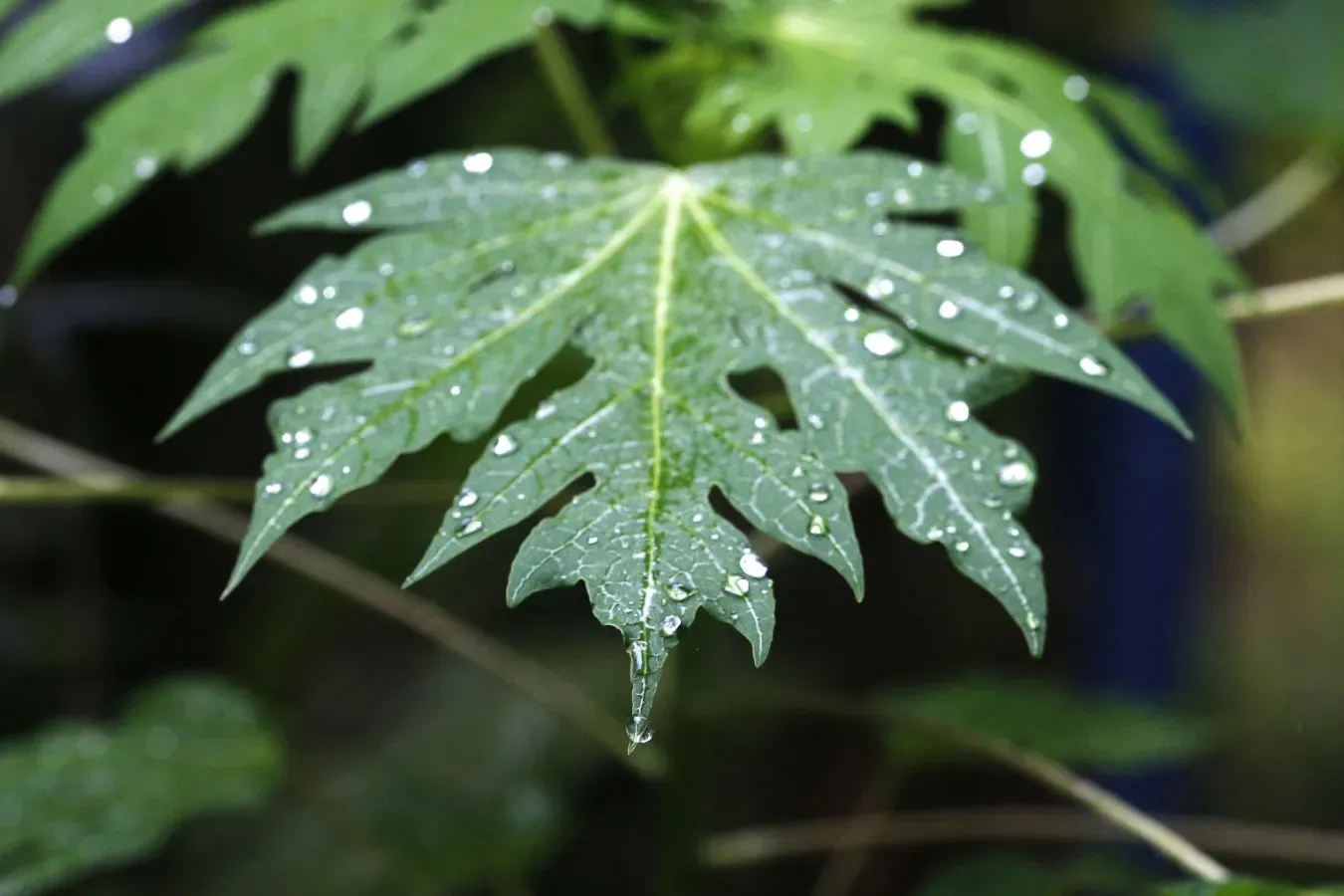
The mechanism behind this natural coating's effectiveness differs significantly from PFAS-based materials. Instead of relying on carbon-fluorine bonds to repel water molecules, the suberin-like slurry creates a precisely nanostructured surface with numerous tiny air pockets. This structure minimizes direct contact between the coated material and water droplets, much like the lotus effect seen on plant leaves.
The results showed that the new coating was resistant to contamination by limescale and mechanical wear, while also offering similar water resistance to state-of-the-art PFAS coatings such as PTFE. As textiles are one of the first industries expected to be impacted by PFAS restrictions, this alternative could prove particularly useful in the near future.
The bio-based coating made from suberin is being considered for various applications, including food packaging such as internal linings of drinks cans. However, its lower heat tolerance compared to PTFE means it's not suitable for bakeware at this time.
The team is exploring the potential uses of this material further, and its completely bio-based nature is a significant advantage according to one researcher. The coating can be easily degraded under composting conditions, breaking down without releasing any harmful residues into the environment.
Facts based on reporting originally published by New Scientist.
You may republish this story, in full or in part, if you credit News Central Site and link to it (licence CC BY 4.0). Photos are not included.