Moth Wing Development Experiment Reveals Flexibility in Pattern and Shape Formation
A groundbreaking experiment on moths has provided new insights into the development of wing patterns and shapes.
A groundbreaking experiment on moths has provided new insights into the development of wing patterns and shapes, supporting the long-held "molecular cookie cutter" theory for butterflies.
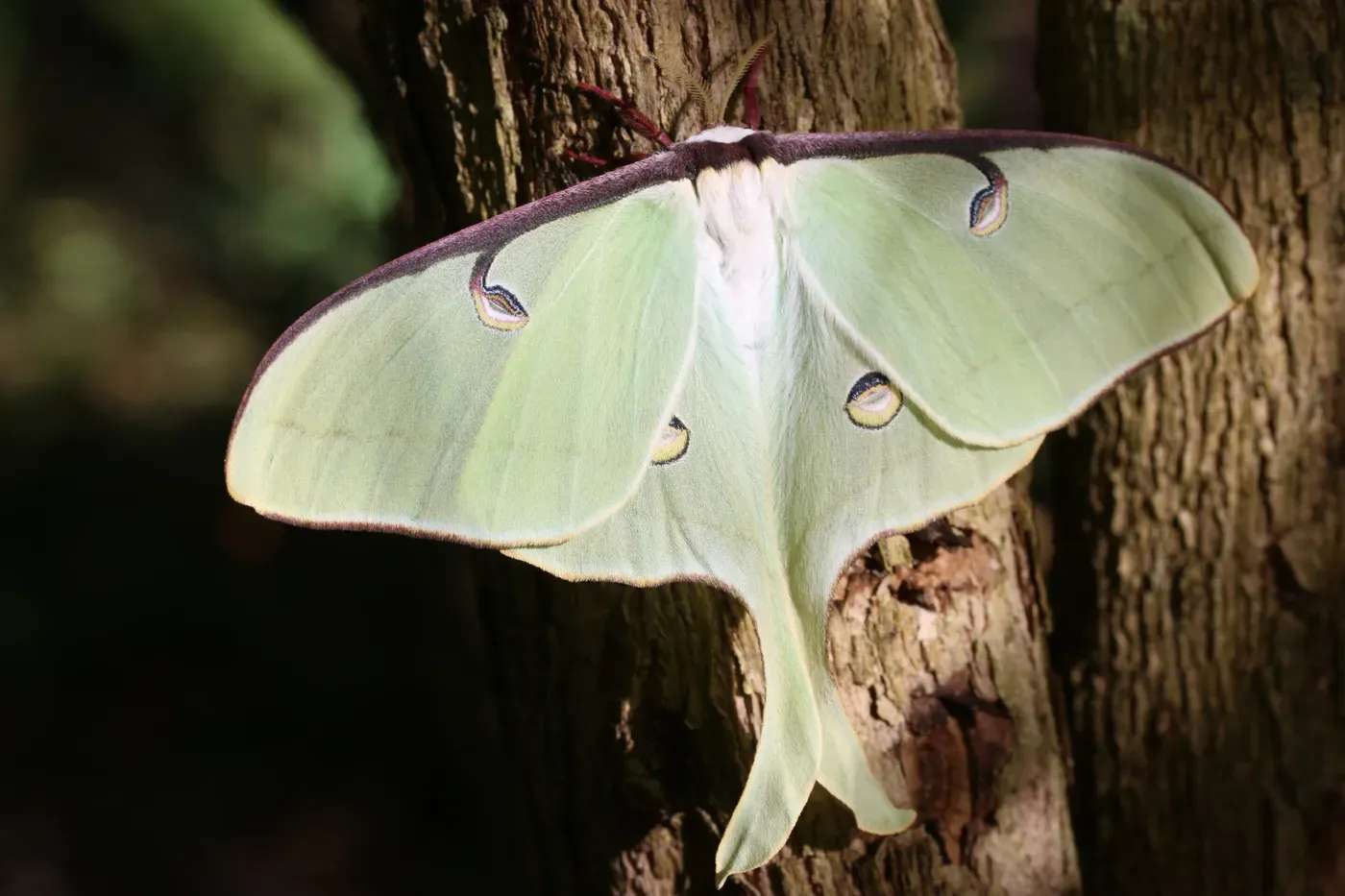
Researchers have been fascinated by the incredible diversity of wing patterns in Lepidoptera, with some species having eyespots that appear threatening to predators while others blend seamlessly into their surroundings. A study on luna and polyphemus moths has now revealed a surprising level of flexibility in wing development.
By adding small amounts of heparin and dextran sulfate during critical stages of development, researchers were able to alter the patterns on luna moth wings dramatically. The once-cryptic coloration transformed into an aposematic pattern, designed to warn off predators.
The experiment had a remarkable outcome: not only did the patterns change, but the shape of the luna moth wings also altered significantly. This was a first in Lepidoptera research, where wing shape is typically thought to be fixed and unchangeable.
The study's findings have significant implications for our understanding of how moths and butterflies develop their unique characteristics. According to the researcher, some species can transform their features from one state to another by simply expanding or contracting existing elements.
The discovery that certain compounds can trigger such drastic changes in wing development opens up new avenues for research into the molecular mechanisms underlying this process.
The study of moths' wing development has led to a significant discovery about their eyespots.
To determine whether these two groups use the same genes to create eyespots or if they converged independently, Sourakov conducted an experiment involving several giant silk moth species. He added sulfated polysaccharides to induce color and pattern changes on their wings.
The addition of external heparin and dextran sulfate in this study triggered a response that was different from what was observed in butterflies. This reaction is linked to the augmentation of wnt proteins, which play a crucial role in development.
Sourakov hypothesized that if two species with distinct eyespots reacted similarly to these substances, it would suggest they share common evolutionary origins. However, further research is necessary to confirm this hypothesis.
The study involved administering heparin during the early development stage of nymphalids, resulting in the deletion of their eyespots entirely.
This finding supports the idea that the evolution of eyespots in moths and butterflies may have followed different paths, with each group developing its unique characteristics independently.
The extensive research on moths conducted by Sourakov has revealed a surprising twist in the study's findings.
After administering tiny quantities of heparin to over 700 luna and polyphemus moths at specific stages of their development, researchers observed some unexpected results.
Initially, no significant changes were noticed in the wing patterns or shapes of these moths. However, after continued experimentation with varying concentrations of heparin and different administration times, a single transformation was achieved.
The altered specimen was a luna moth that displayed a significant change to its wing shape, specifically, its tail grew wider than previously observed. This anomaly prompted scientists to question the relationship between genes responsible for wing patterns and those controlling wing shape.
As researchers continued their investigation, they made further adjustments to the administration of heparin, ultimately yielding the desired changes in eyespots combined with alterations to the wing shape.
The alterations to the eyespots and wing shape in polyphemus moths have resulted in more conspicuous eyespots, with the yellow borders thickening and the surrounding brown scales becoming whiter. The black border surrounding the hindwing eyespots has also expanded, making them even more noticeable. This change is particularly striking when compared to their original appearance.
Similar changes were observed in luna moths, where the circular eyespots on the posterior wings became squinted and developed a thick border of darker pigmentation. These modifications have increased the visibility of the eyespots, allowing the moths to adapt more effectively to their environment.
The ability of moths to rapidly change their appearance is crucial for survival in their ecosystems. For instance, luna moths can blend in with leaves to evade visually oriented predators, but if this camouflage fails, they can quickly develop more visible eyespots within a few generations. This adaptation allows them to protect themselves from potential threats.
The sudden increase in visibility of the eyespots is thought to be driven by a combination of mutations and hunting pressure from birds. If a moth's current appearance no longer provides adequate protection, natural selection favors those with more conspicuous eyespots that can deter predators.
One theory behind the changes observed in moths involves their unique wing growth mechanism. Unlike other flying insects, Lepidoptera wings have programmed cell deaths along the wing margins that terminate their growth, giving them distinctive shapes.
The reason why this phenomenon is not seen in butterflies remains a mystery, and researchers are unsure how to explain it. Sourakov has proposed several theories, but more investigation is needed to fully understand the underlying mechanisms driving these changes.
The process of wing development in moths is influenced by various signaling proteins that control cell growth and differentiation.
One such protein, called cut, plays a key role in mediating the self-destruction of certain cells during wing formation, but it doesn't respond to heparin or dextran sulfate.
In contrast, another protein called wingless, which does respond to these substances, is involved in controlling the size of individual elements within the wing, such as the space between veins.
Wingless has a dual function: it is mostly inactive during eyespot formation but can be turned on and off when needed, including for repairing damaged cells after an injury or growing new cells in wounded areas.
Research has shown that both cut and wingless are active in the tail formation of pipevine swallowtails, suggesting that these proteins may play a similar role in moths as well.
The study of moth development has shed light on a long-standing theory about wing formation in insects. Researchers have been exploring the concept of molecular cookie cutters, which proposes that specific proteins dictate the shape and structure of wings during development. The idea was initially proposed for butterflies, but recent findings suggest it may also apply to moths.
The study's results show that two proteins, cut and wingless, play a crucial role in tail formation in pipevine swallowtails. Interestingly, both proteins are active at different stages of development, suggesting they may work together to shape the wings. This discovery has significant implications for our understanding of wing development in insects.
The findings support the molecular cookie cutter idea, which suggests that specific proteins can dictate the shape and structure of wings during development. It's likely that this concept will be further explored in future studies, providing new insights into the complex process of wing formation in insects.
Facts based on reporting originally published by Phys.org.
You may republish this story, in full or in part, if you credit News Central Site and link to it (licence CC BY 4.0). Photos are not included.