President Donald Trump campaigns for Republican candidates in midterm elections
Trump's campaign strategy relies on his loyal supporters imagining he is running for office, despite low approval ratings and concerns about his impact on the party.
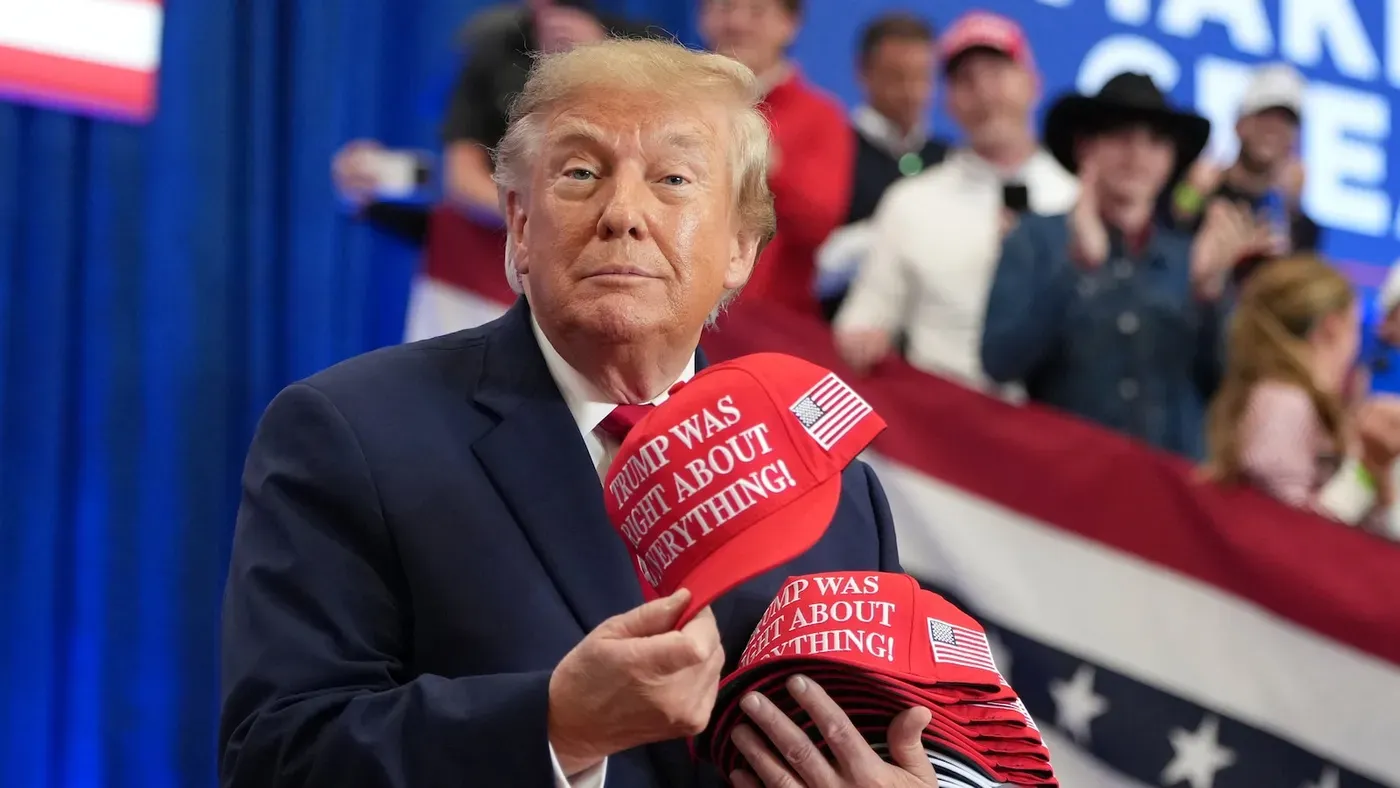
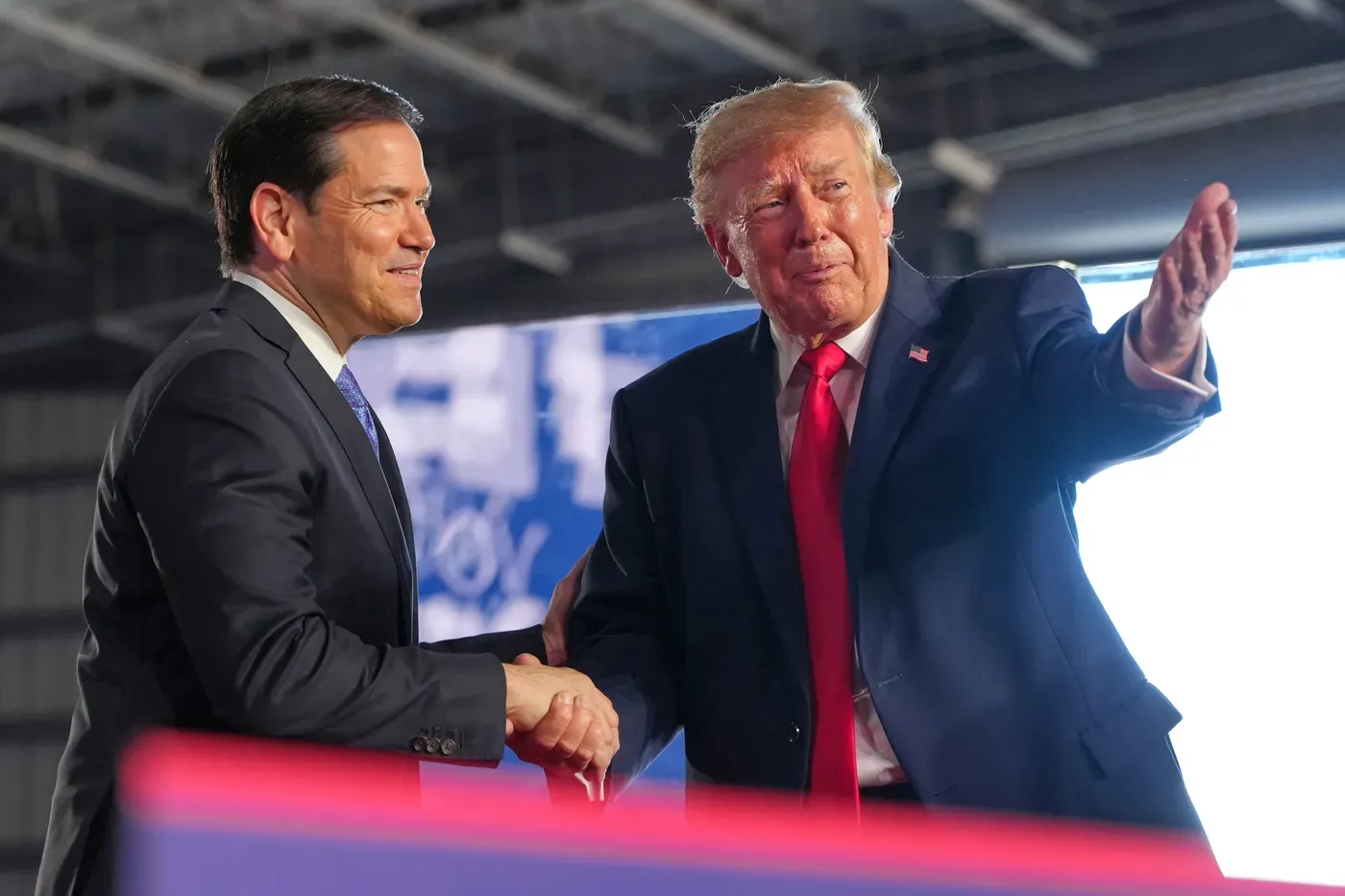
President Donald Trump is attempting to make his presence felt in midterm elections by having voters imagine he's on the ballot. In a series of campaign rallies across the country, Trump is basking in applause from supporters who remain loyal despite his low approval ratings.
Trump's appeal to his base is rooted in self-promotion, with him asking supporters to "close your eyes and pretend he's running for office. This strategy has been effective in keeping Republican voters engaged, but it may not be enough to sway undecided voters or those who are deeply critical of the president.
The midterm elections have been marked by a range of issues, including tensions with Iran, concerns about artificial intelligence, redistricting disputes, and rising energy prices. Trump's personal approach to campaigning might be seen as a gamble in this election cycle, given his low approval ratings.
Despite being unpopular among many voters, Trump remains a dominant figure within the Republican Party. His loyal supporters continue to attend rallies and cheer him on, but experts warn that his presence may ultimately hurt the party's chances of retaining control of Congress.
The Republican Party's midterm woes have prompted President Trump to take a bold approach: more of him. His presence at rallies has been met with enthusiasm from his loyal supporters, who see each event as a win for their cause.
Trump's impact on the party is undeniable, according to White House spokesperson Davis Ingle. He is the unequivocal leader, best messenger, and unmatched motivator for the Republican Party, Ingle said in a statement.
The president has been instrumental in organizing key events, including the first-ever Republican midterm convention in Dallas last month. He not only spoke at the event but also ensured that his presence was felt throughout, from baseball caps to beer cozies, with his image emblazoned on merchandise.
Trump's efforts extend beyond rhetoric and rallies. His personal spin on a pledge to give voters $5,000 if Republicans hold Congress has been touted as a key selling point. However, the idea would require lawmaker approval, highlighting the challenges of implementing such a promise.
The president's political groups have spent a staggering $277 million since September 1 in an effort to boost Republican chances. This sum is substantial but still leaves room for further spending, given that Trump's flagship Super PAC had $416 million on hand at the start of last month.
The Trump administration has continued to make significant changes to the White House, transforming it into a reflection of the president's personal style and preferences. This effort to reshape the presidency has extended beyond the physical space, as Trump seeks to assert his influence over the Republican Party.
A key aspect of this push for control is Trump's willingness to use executive power to advance his own agenda. This has been evident in various ways, from high-profile decisions to more subtle moves that have far-reaching implications. The president's actions are often accompanied by bold statements and boasts about his abilities, as seen during a recent rally in Kentucky.
I can do stuff that is unbelievable, Trump said at the rally, underscoring his confidence in his own capabilities. This swagger has been on display throughout his presidency, with Trump frequently touting his accomplishments and predicting future successes. The president's focus on reshaping Washington extends beyond the White House, with efforts to revamp public spaces and institutions.
Trump's influence is also being felt within the Republican Party, as he wields significant power over its candidates and policies. This has led to some unexpected outcomes, including the defeat of incumbent Sen. John Cornyn in Texas by Ken Paxton, who has faced allegations of legal and ethical misconduct. The general election campaign against Democrat James Talarico is now more competitive as a result.
The president's efforts to assert control over the Republican Party have not been limited to Texas. In North Carolina, Trump's backing of Michael Whatley led to Sen. Tom Tillis's decision to retire from his seat, leaving Republicans concerned about losing the seat to former Democratic Gov. Roy Cooper.
Despite his efforts to boost Republican morale ahead of the midterm elections, President Trump's strategy appears to be backfiring in several key areas.
One major concern is that issues which contributed to his 2024 reelection victory may now work against him and the party, particularly with regards to the economy.
A recent poll found that only 17% of US adults approve of Trump's handling of the cost of living, a significant issue given the current high fuel prices and inflation fears sparked by the ongoing Iran conflict.
The White House has pointed out some potential positives, such as initiatives to reduce prescription drug costs, promote domestic manufacturing, and strengthen border security with Mexico.
However, longtime pollster Richard Czuba from Michigan suggests that Trump's focus on himself may be alienating conservative voters who disagree with him.
The president's campaign strategy has taken him to reliably red states across the country, where he typically receives enthusiastic crowds.
When visiting battleground states, Trump tends to focus on conservative areas, further solidifying his support among loyal followers in these regions.
A common feature of his rallies is a pre-speech video that presents him as a global savior, repeatedly declaring God gave us Trump" and reinforcing the notion that he is the chosen leader.
In his speeches, Trump often spends more time revisiting past grievances than discussing immediate election concerns, which may be an attempt to energize his base without alienating undecided voters in swing states.
The strategy seems designed to maximize Republican turnout while minimizing potential backlash in key battleground areas.
In key battleground states, Trump's strategy appears to be focused on energizing Republican voters while minimizing potential backlash in areas that could prove crucial for his party's midterm prospects.
The approach seems to be having an impact, with Democratic strategists like Mackler of EMILY'S List noting a disconnect between the president's agenda and voter sentiment. In states like Georgia, Florida, and Ohio, Trump's visits have coincided with increased Republican enthusiasm, but also with growing frustration among voters who feel their lives are being made worse by the administration's policies.
The strategy seems designed to maximize Republican turnout while minimizing potential backlash in key battleground areas.
Facts based on reporting originally published by ABC News Politics.
You may republish this story, in full or in part, if you credit News Central Site and link to it (licence CC BY 4.0). Photos are not included.