NASA's Artemis II mission crew experiences navigation system glitch
The incident occurred on the sixth day of their mission when Commander Reid Wiseman noticed the spacecraft exceeded its intended turn-back distance.
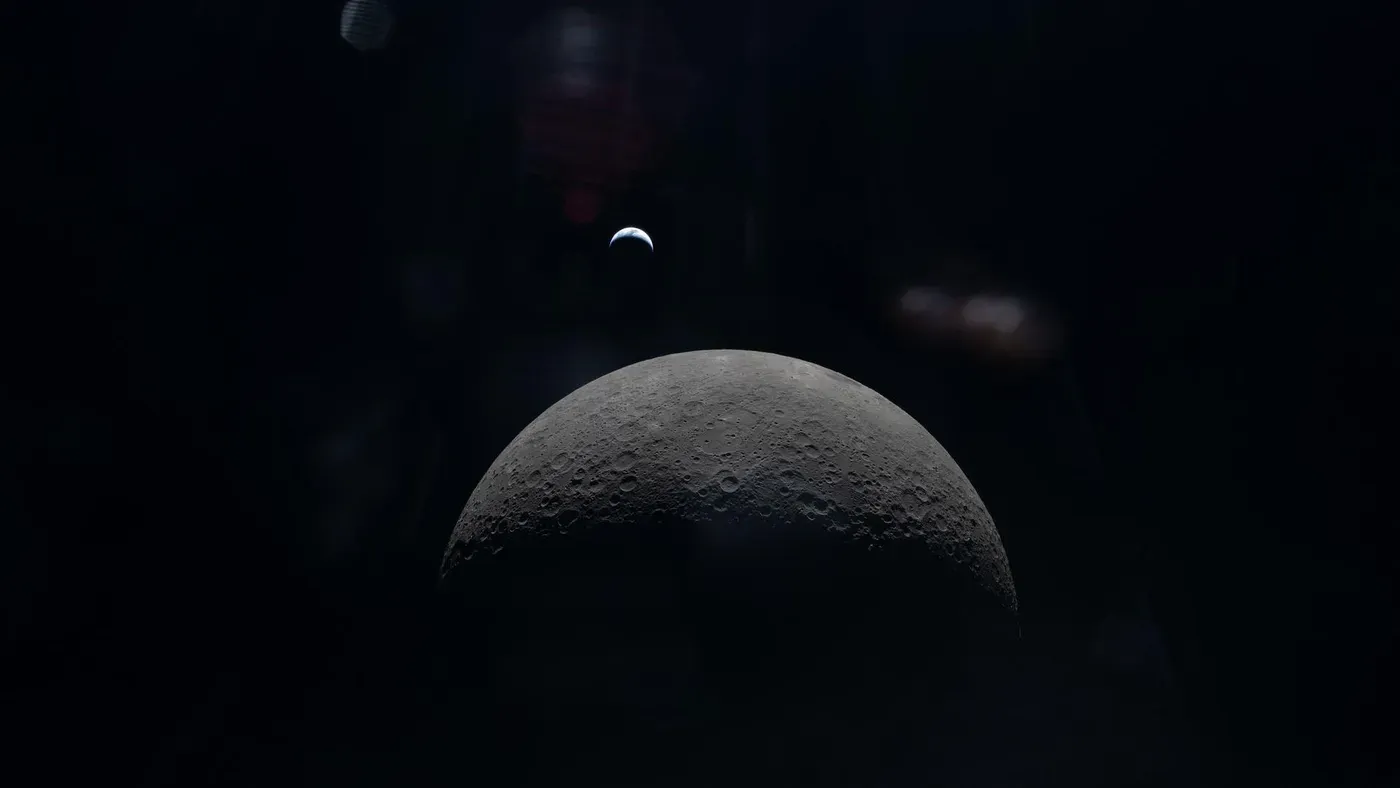
NASA's Artemis II mission commander Reid Wiseman has recounted a harrowing moment from his crew's 10-day journey around the moon.
The incident occurred on the sixth day of their mission when Wiseman and his team failed to reach their intended turn-back point at 219,667 nautical miles from Earth. According to Wiseman, mission control in Houston had explicitly stated that this distance was the maximum they were supposed to achieve before turning back towards home.
As the spacecraft continued to travel further away from Earth, Wiseman began to grow concerned. He started monitoring their progress more closely and noticed that the odometer on board was ticking upwards. At first, he thought it might be a minor glitch, but as the numbers continued to rise, his anxiety grew.
Wiseman revealed that the crew's intended turn-back point had been clearly communicated by mission control in Houston. They were told to expect a maximum distance of 219,667 nautical miles from Earth before beginning their return journey. However, when Wiseman checked the odometer and saw it hit this exact number, he thought they would soon start heading back towards home.
But just three minutes later, something unexpected happened - the odometer continued to rise, exceeding the expected maximum distance. This sudden increase in their trajectory sparked a sense of unease within Wiseman, who began wondering if there was an issue with the spacecraft's navigation system or if something else was amiss.
The incident has left many wondering what could have gone wrong during the mission. As Wiseman recounted this moment from his journey, it became clear that even seasoned astronauts can experience moments of uncertainty and concern when faced with unexpected developments in space exploration.
The Artemis II mission's commander has revealed a harrowing moment during his 10-day journey around the moon when he feared that the spacecraft had traveled too far to return safely.
This concern arose when the odometer on the spacecraft suddenly jumped from 219,668 to 219,669 nautical miles. The commander felt an intense sense of fear at this point, worrying that they might not be able to make it back home.
Meanwhile, other crew members were focused on their tasks, oblivious to the commander's anxiety. NASA astronauts Victor Glover and Christina Koch were conducting science observations of the moon from a window on the spacecraft, while Canadian Space Agency astronaut Jeremy Hansen was sending updates to mission control.
The commander's moment of fear lasted only briefly before he noticed that the odometer began to drop back down to its previous reading. This change in numbers brought with it an overwhelming sense of relief and a renewed hope for a safe return journey.
As the crew breathed a collective sigh of relief, the commander acknowledged that their success was not solely due to his own efforts or those of his fellow astronauts on board. Instead, he credited NASA's Earth-based teams, who had worked tirelessly to ensure the spacecraft's safe operation throughout its mission.
The Artemis II mission was a historic moment in space exploration, marking the first crewed flight of the Orion space capsule since its development. Launched from NASA's Kennedy Space Center in Florida on April 1, the spacecraft embarked on a grueling 10-day journey around the lunar far side and back to Earth.
This remarkable feat is all the more impressive considering that it was the first time humans have traveled to the moon since Apollo 17 in 1972. The crew's activities were closely monitored by NASA's Earth-based teams, who worked tirelessly to ensure the spacecraft's safe operation throughout its mission. Their dedication paid off, as the Artemis II crew successfully completed their journey.
The success of the Artemis II mission has generated immense public interest and excitement around space exploration. As a result, many people are now eager to learn more about the mission and its significance in history, making it an ideal time for fans of NASA and space travel to brush up on their knowledge.
Facts based on reporting originally published by Live Science.
You may republish this story, in full or in part, if you credit News Central Site and link to it (licence CC BY 4.0). Photos are not included.