Hunter's Moon set to appear on eastern horizon this weekend
Skywatchers will have two opportunities to witness the rise of the almost-full moon, coinciding with October's full moon.
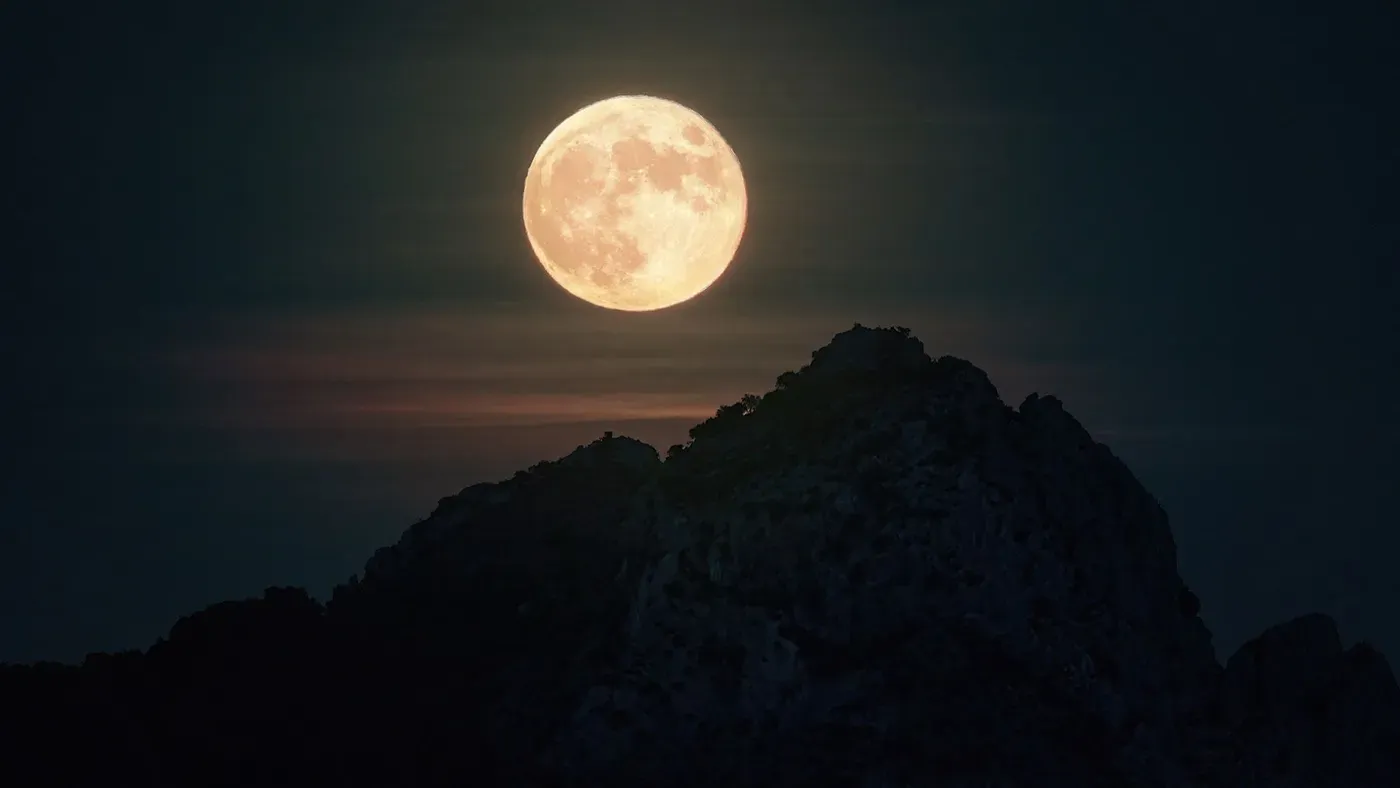
The full "Hunter's Moon is set to appear on the eastern horizon this weekend, providing skywatchers with two opportunities to witness its rise.
This lunar event coincides with October's full moon, which gets its nickname from traditional hunting practices that signaled the approach of winter. Hunters would prepare for the cold months by hunting and preserving meat, according to cultural associations.
The Hunter's Moon will appear almost perfectly full as it rises on both Sunday and Monday evenings, allowing skywatchers to observe it in a relatively short time frame. The moon officially reaches its full phase at 12:11 a.m. EDT on Monday, but its appearance as a full moon is already imminent.
As the Hunter's Moon rises over the eastern horizon, it will be accompanied by the planet Saturn, creating an impressive celestial sight for observers. Sky conditions permitting, this weekend offers a rare chance to see both the moon and Saturn in close proximity.
The first opportunity to witness the Hunter's Moon comes just before sunset on Sunday, when the almost-full moon will rise into view. The second chance arrives on Monday evening, with the moon again rising after sunset against a slightly darker sky.
As Sunday evening arrives, the moon will be rising into the constellation Aries, a celestial sight that can be appreciated by anyone with a clear view of the eastern horizon. The optimal viewing location would be an open field or coastline, as these spots offer unobstructed views and allow for a more immediate observation of the moon's appearance.
To maximize the experience, it is recommended to find a spot with a low elevation and arrive shortly before the moon rises in your area. This will give you ample time to settle in and take in the breathtaking view that is about to unfold.
A telescope or binoculars can be used to get a closer look at various lunar features, but even without these tools, the full moon will still be an awe-inspiring sight with the naked eye. The combination of the Hunter's Moon rising alongside Saturn creates a truly unique and spectacular display in the night sky.
The appearance of the Hunter's Moon may seem unusually large due to the moon illusion," which is caused by our brains' tendency to judge size based on proximity to familiar objects near the horizon. This optical illusion can make the moon appear bigger than it actually is, adding to its already impressive presence in the evening sky.
With this weekend's viewing opportunity, astronomy enthusiasts are reminded that October's Hunter's Moon marks a brief interlude before four consecutive supermoons take center stage in November and December. The next full moon, the Beaver Moon, will be on November 24, followed by three more notable full moons in the subsequent months.
The full moon known as the Hunter's Moon is expected to rise in the eastern sky on Saturday evening, coinciding with the planet Saturn visible just above it. This alignment provides a unique opportunity for stargazers and astronomers to observe both celestial bodies simultaneously.
The Hunter's Moon will be followed by three more notable full moons in the subsequent months: the Beaver Moon on November 24, the Cold Moon in December, and the Long Night's Moon in January.
Facts based on reporting originally published by Live Science.
You may republish this story, in full or in part, if you credit News Central Site and link to it (licence CC BY 4.0). Photos are not included.