Feeding Habits of Australian Scavengers Revealed as Complex Decision-Making Process
A new study suggests that scavengers in Australia do not simply devour everything in sight and then disappear, but instead approach a carcass like a buffet, carefully selecting which parts to eat first.
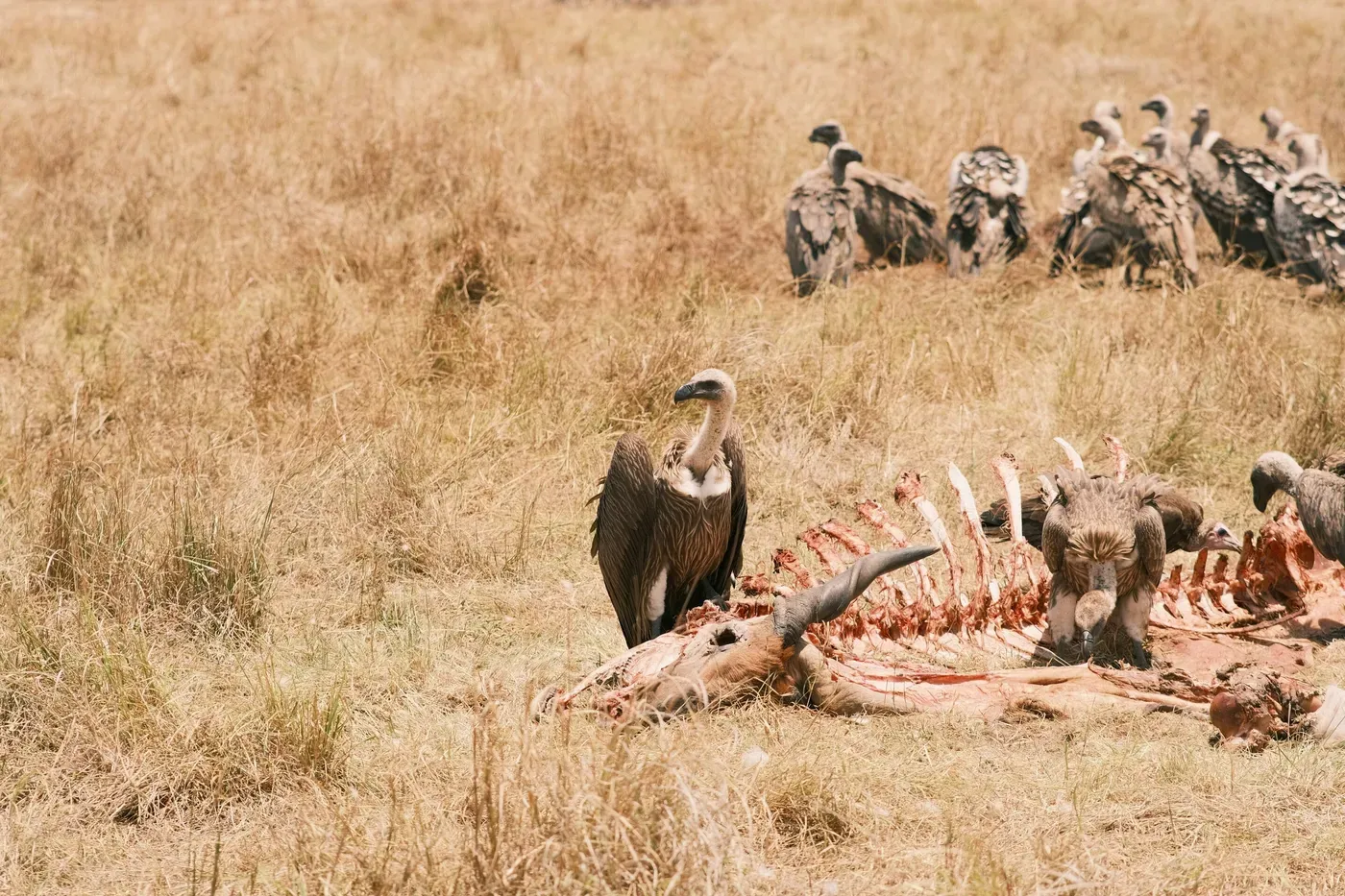
A new study has turned conventional wisdom on its head when it comes to scavengers in Australia, revealing that they don't simply devour everything in sight and then disappear. Instead, these animals seem to approach a carcass like a buffet, carefully selecting which parts to eat first.
Scientists have long assumed that scavengers are opportunistic feeders, consuming whatever is available without discerning between different types of food. However, research published in Royal Society Open Science suggests this may not be the case. When it comes to macronutrients such as carbohydrates, lipids (fats), and protein, carcasses contain a mix of all three.
This complexity is similar to that found in foods like eggs, which have high-protein whites and higher-fat yolks. Given this variety, it's surprising that scavengers don't appear to just eat everything without preference. In fact, the study suggests that these animals are capable of making informed choices about what they consume.
The researchers' findings raise questions about how scavengers prioritize different parts of a carcass when feeding. Do they focus on high-protein areas or those rich in fat? And do individual species have distinct preferences for certain types of nutrients? The answers to these questions could provide valuable insights into the behavior and nutritional needs of Australia's scavenging animals.
The feeding habits of scavengers are not as simple as previously thought. Contrary to assumptions that they merely consume whatever is available, research suggests a more complex decision-making process.
To study this behavior, scientists monitored the carcasses of 40 eastern gray kangaroos in the Blue Mountains of New South Wales over two seasons - summer and winter. Camera traps recorded all activity at the sites, allowing researchers to track which body parts were consumed by different scavengers.
The data revealed distinct feeding patterns among the three common scavengers present: dingoes, wedge-tailed eagles, and red foxes. Each species showed a preference for specific areas of the carcass when they first arrived.
Dingoes tended to target the tail of the kangaroo, while eagles consistently chose to feed at the head and abdomen. Foxes, however, were often outcompeted by the other two species and limited to consuming scraps from the carcass.
As apex scavengers, dingoes and eagles play a crucial role in shaping their ecosystems. Their dominance at carcass sites is evident in how quickly they arrive and consume large amounts of biomass.
When examining the feeding behavior of these top predators, it becomes clear that they target areas rich in fat. This makes sense given that kangaroos, while generally lean animals, do store concentrated fat around specific points on their bodies - near the base of the tail, surrounding internal organs, and within the brain.
However, as carcasses decompose, their composition changes significantly. As a result, scavengers adjust their feeding preferences over time. A notable shift in behavior is observed among eagles, which transition from focusing on high-fat areas to targeting more protein-dense regions of the carcass.
In particular, eagles begin to favor muscular areas such as the hindlimbs of the kangaroo, indicating a change in their feeding strategy as the carcass undergoes decomposition.
As the seasons change, Australian scavengers exhibit interesting patterns in their feeding behavior. Specifically, both dingoes and eagles tend to focus more on the abdomen when they encounter a carcass during winter months compared to summer. This shift may be attributed to the cooler temperatures and scarcity of alternative food sources, which could make fats a crucial component of their diet.
The idea that scavengers simply eat as much as possible with minimal effort has been debunked by recent research. Instead, these animals are capable of balancing different nutritional requirements through a concept known as nutritional geometry. This means they have an internal system for tracking and regulating the intake of various macronutrients to ensure they don't consume too much or too little.
Our study found that scavengers make deliberate choices about what parts of a carcass to eat first, with fat-rich areas being their top priority. However, this preference is contingent on who has access to the carcass initially, as the availability of these high-fat body parts can be limited by early arrivals.
The discovery of fat-rich areas often leads to a change in feeding behavior among scavengers, but it also raises questions about how they adapt to different circumstances. As we continue to explore the complex dynamics of scavenger interactions with carcasses, new insights are emerging that challenge our previous understanding of these animals' foraging strategies.
The study of scavenger behavior has revealed that these animals do not simply feed on carcasses and then disappear. Instead, they approach a carcass in a more complex manner, vying for access to their preferred parts.
Scavengers seem to have a discerning palate when it comes to the different body parts of a carcass, with some species targeting specific areas over others. This selective feeding behavior is observed across various seasons and species, suggesting that scavengers are not just opportunistic feeders but rather have evolved strategies for exploiting their food sources efficiently.
Facts based on reporting originally published by Phys.org.
You may republish this story, in full or in part, if you credit News Central Site and link to it (licence CC BY 4.0). Photos are not included.