Newly Discovered Species of Jellyfish Found in Mediterranean Sea
Researchers at the University of Alicante have identified a previously unknown species of jellyfish in the waters off the coast of Alicante.
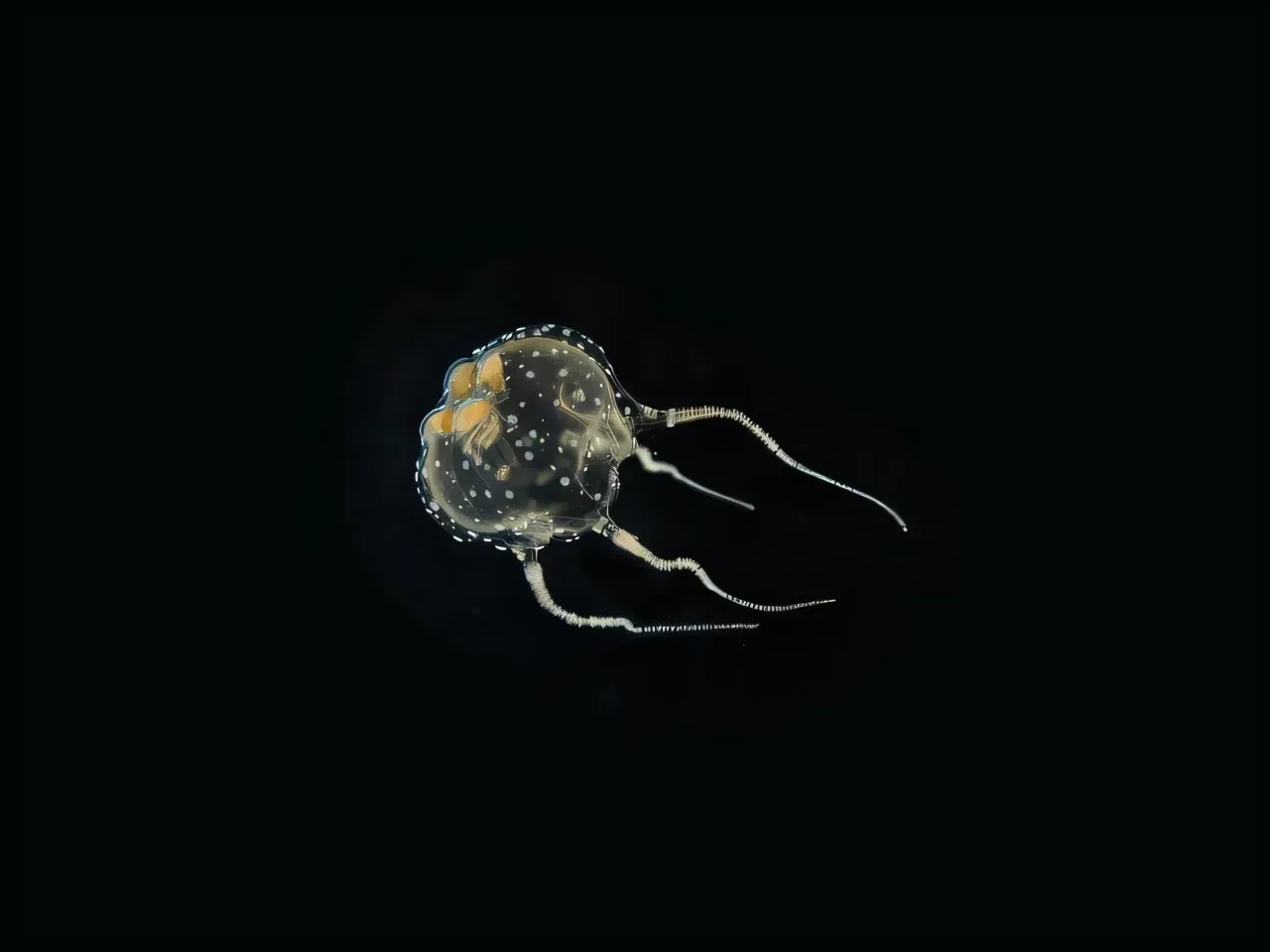
Researchers in Spain have unearthed a previously unknown species of jellyfish lurking in the waters off the coast of Alicante. This latest find adds to the growing list of mysterious creatures discovered in the Mediterranean Sea, which is often considered one of the most thoroughly studied bodies of water on the planet.
The newly identified species, Copula lucentia, measures only a few millimeters in diameter and has been found to be the second box jellyfish species documented in the Mediterranean. This classification comes after Carybdea marsupialis was described by Swedish botanist Carl Linnaeus back in 1758.
Researchers at the University of Alicante's Marine Laboratory collected specimens of Copula lucentia between 2016 and 2018, measuring them to be anywhere from 1 to 7 millimeters in size. In order to formally describe the species, researchers combined morphological studies with genetic analyses conducted in collaboration with international specialists.
According to Dr. Eva Fonfría, lead author of the study and a researcher at the University of Alicante, the discovery was made during a sampling campaign. Initially, researchers were surprised by the jellyfish's small size for that time of year, and its unique morphological features didn't quite fit with what they had expected.
Researchers used genetic analyses to confirm the identity of Copula lucentia as a distinct species. The study, published in 2024 in the journal Marine Biodiversity, represents an important step forward in understanding the biodiversity of the Mediterranean Sea.
The team of scientists behind the discovery analyzed the jellyfish specimens and compared them with known species, which revealed distinctive features that warranted classification as a new species.
Further investigation confirmed that the organism belonged to the genus Copula but exhibited characteristics that set it apart from other members of this group.
A Latin name has been assigned to the newly discovered species: Copula lucentia. This designation pays tribute to Lucentum, the ancient Roman name for Alicante, where the specimens were found.
The region off El Campello on the Alicante coastline is now recognized as a significant site for further research into this new species and its behavior in its natural habitat.
The discovery of a new jellyfish species in the waters off Alicante in Spain has significant implications for marine research. According to César Bordehore, senior lecturer in the Department of Ecology at the University of Alicante, this finding marks a major milestone in the field.
Bordehore emphasizes that there is still much to be learned about the biodiversity of the Mediterranean Sea. The identification of a second box jellyfish species highlights the need for continued research into the region's marine ecosystems.
Despite the importance of this discovery, many questions remain unanswered about the new jellyfish. Its reproductive cycle, its role in the food web, and its ability to sting are all areas that require further investigation.
The presence of small marine organisms such as salps, tintinnids, and jellyfish can have a significant impact on key areas like fisheries. These tiny creatures prey on fish eggs and larvae, which is crucial for understanding their role in maintaining the balance of marine ecosystems.
As part of an ongoing effort to restore fish stocks in the Mediterranean while protecting vulnerable species, a team led by Bordehore is working on the Sea4Future project. This Horizon Europe initiative brings together partners from 12 countries to study interactions with gelatinous organisms and promote sustainable fishing practices.
The Oceanogràfic is playing a key role in this collaborative effort, providing expertise in marine fauna recovery and public awareness of the importance of protecting and restoring marine ecosystems. By working together, researchers aim to gain a better understanding of the complex relationships within these ecosystems.
The sampling campaign organized with the Oceanogràfic in Valencia has yielded a significant haul of specimens from the newly discovered jellyfish species.
Over 200 individuals have been collected for further study, providing researchers with valuable material to analyze and understand this previously unknown species.
Some of these animals are being kept and displayed in the Medusa Lab at the Oceanogràfic, where scientists are working to help them grow and explore whether their life cycle can be completed under controlled conditions.
Biologists are particularly interested in bringing the specimens to sexual maturity so that they can reproduce, a challenging task given that this is the first time this species has been kept in an aquarium.
As part of the ongoing research, experts from the University of Alicante's marine ecology department are collaborating with Oceanogràfic staff to gain insights into the jellyfish's biological requirements.
The discovery of a new jellyfish species off the coast of Alicante in Spain has significant implications for our understanding of marine biodiversity. The research team is working to identify the biological requirements that allow this species to thrive in its specific environment.
This effort involves analyzing data on water temperature, salinity, and other factors that may influence the jellyfish's behavior and survival. By gaining insights into these conditions, scientists can better understand how to protect and conserve marine ecosystems worldwide. This research will contribute to a broader understanding of the complex relationships between species and their environments.
Facts based on reporting originally published by Phys.org.
You may republish this story, in full or in part, if you credit News Central Site and link to it (licence CC BY 4.0). Photos are not included.