Australian coral reef systems face critical juncture due to ocean warming
A global assessment warns that every shallow-water ecosystem in Australia may collapse by 2075 if drastic action is not taken to address projected ocean warming.
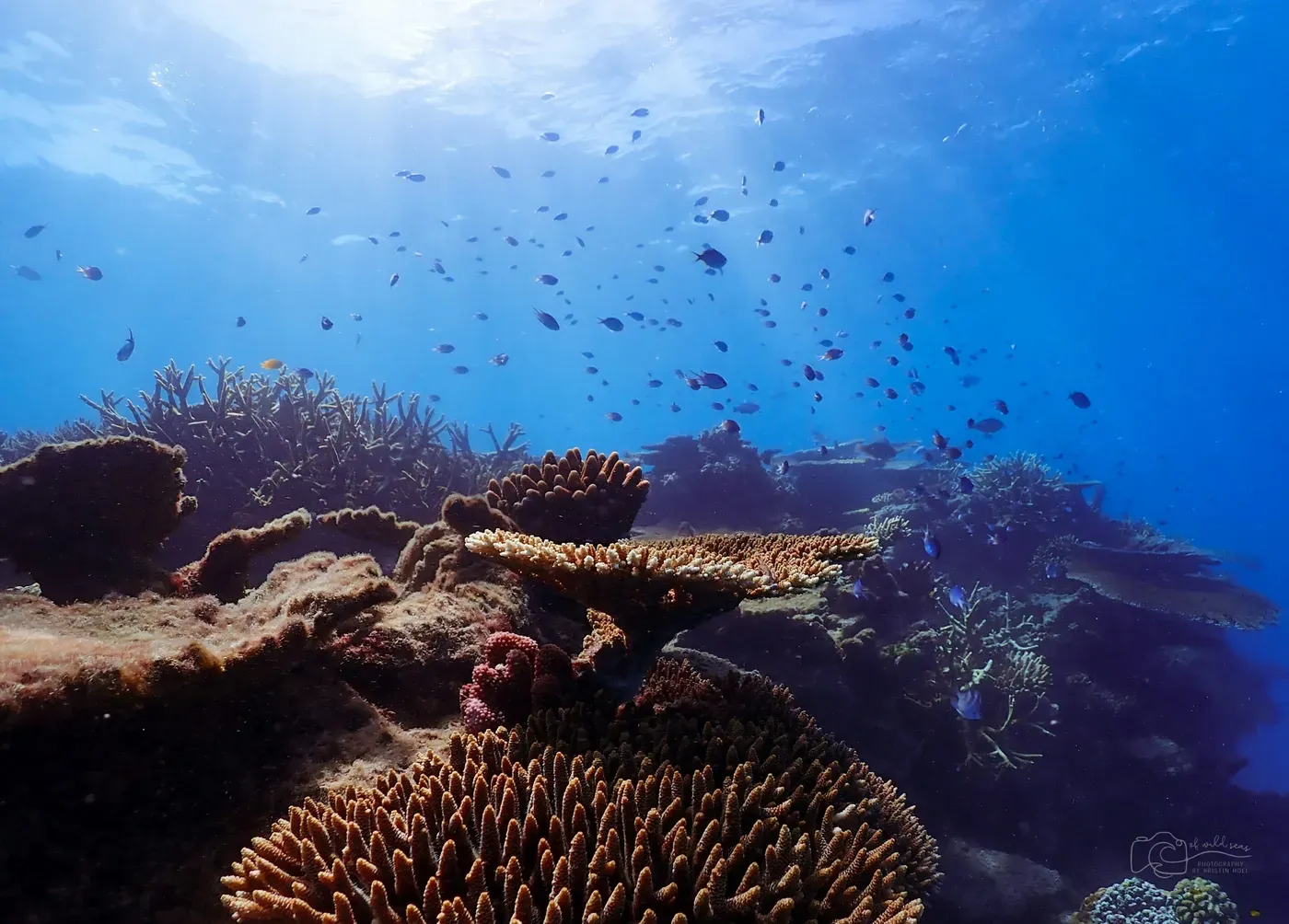
Australian coral reef systems are facing a critical juncture, with a global assessment warning that every shallow-water ecosystem in Australia is at risk of collapse by 2075 if drastic action is not taken to address projected ocean warming.
The assessment, conducted by the International Union for Conservation of Nature (IUCN) in collaboration with researchers from the University of Melbourne and over 250 experts worldwide, has found that a staggering 96% of coral reef ecosystems globally are now classified as critically endangered under the IUCN Red List of Ecosystems.
This dire prediction is based on an evaluation of coral reef systems in 127 tropical and subtropical marine ecoregions around the world, including some of the most extensive and biodiverse reef complexes such as Australia's Great Barrier Reef and the Coral Triangle in Southeast Asia.
The assessment classified all 17 Australian coral reef ecosystems as critically endangered due to increasing marine heat stress and mass bleaching events predicted under future climate scenarios. This alarming trend is evident across the globe, with climate-driven ocean warming emerging as the most widespread and severe threat to coral reefs worldwide.
Climate change is having a devastating impact on coral reefs, with rising sea temperatures triggering mass coral bleaching events that are causing unprecedented pressure on these delicate ecosystems.
The alarming rate at which Australian coral reefs are deteriorating has sparked a sense of urgency among conservationists. According to Dr. Mishal Gudka, research fellow at the University of Melbourne and scientific lead of the global assessment, the risk of collapse is escalating rapidly.
Despite their remarkable ability to recover from devastating bleaching events, coral reefs face an existential threat. Pockets of resilient coral reefs can still survive in the future, but only if drastic measures are taken to support them.
The findings of the global assessment reveal that much of the risk of collapse is driven by projected changes that have not yet fully materialized. This presents a critical window for scaling up conservation and climate efforts to prevent catastrophic loss.
Dr. Ben Fitzpatrick, director of Oceanwise Australia and adjunct research fellow at the University of Western Australia's Oceans Institute, warns that local management efforts are being overwhelmed by the impacts of climate change on Australian coral reefs.
The projected intensification of climate change under current trajectories is expected to further exacerbate these impacts, making the risk of collapse exceptionally high for all coral reefs.
Australian coral reefs are facing a high risk of collapse within the next 50 years unless drastic action is taken to address climate change and protect these vital ecosystems.
Coral reefs support an incredibly diverse array of marine life despite covering less than 1% of the ocean floor. They provide essential habitats, food sources, and breeding grounds for thousands of species, while also supporting fisheries, tourism, and coastal protection for millions of people worldwide.
A coral reef ecosystem is considered collapsed when hard corals largely disappear and are replaced by algae, rubble, and other organisms, fundamentally altering the delicate balance of the ecosystem. This transformation can have far-reaching consequences for marine biodiversity and coastal communities.
IUCN Director General Dr. Grethel Aguilar emphasized the importance of coral reefs as a vital indicator of ocean health. She noted that their decline threatens not only biodiversity but also coastal communities and industries reliant on healthy marine ecosystems.
The global assessment, coordinated by IUCN and involving over 250 experts from more than 80 countries, highlights the urgent need for decisive action to address climate change and protect coral reefs.
The global assessment of coral reefs has been compiled from decades of data on ecological monitoring, coral reef health, and satellite observations of ocean temperatures.
This extensive research highlights the alarming rate at which coral reefs are deteriorating worldwide, with 44% of the 892 species assessed as being threatened with extinction. This finding is based on a recent reassessment of the IUCN Red List of Threatened Species.
The urgent need for action to protect coral reefs and mitigate climate change has been underscored by this comprehensive assessment, which underscores the risk of collapse within 50 years without drastic measures.
Facts based on reporting originally published by Phys.org.
You may republish this story, in full or in part, if you credit News Central Site and link to it (licence CC BY 4.0). Photos are not included.